
Material Integrity in Premium Golf Bags: What True Luxury Requires
Material Integrity in Premium Golf Bags: What True Luxury Requires
Luxury in golf bags is too often reduced to appearance. A smooth exterior. A polished silhouette. A refined pocket layout. A premium price. A strong first impression. Yet none of these, on their own, define true material integrity. The real test of a golf bag begins after purchase, once it enters the conditions it was supposedly built to endure. Sun. Heat. Sweat. Travel. Cart pressure. Repeated loading. Repeated lifting. Repeated rounds. A premium golf bag should not simply look composed in a product image. It should remain composed under real life.
This is where the conversation becomes more serious. A golf bag is not decorative. It is a working object. It bears weight, absorbs contact, resists friction, protects equipment, and moves through changing environments week after week. For that reason, the difference between surface luxury and structural luxury becomes enormous over time. Surface luxury is persuasive at first sight. Structural luxury earns trust through resistance, consistency, and calm endurance.
The premium golf market has matured enough that golfers are no longer satisfied with image alone. They ask better questions now. What happens after a season of play. How does the surface respond to routine exposure. Does the structure remain stable over time. Does the bag continue to feel correct after repeated use. Does it age with dignity, or does it begin to reveal shortcuts that were hidden at launch. These are not niche questions. They are the central questions of ownership.
That is why material integrity matters. Material integrity is not one isolated property. It is the union of surface chemistry, internal architecture, hardware reliability, seam behavior, resistance to abrasion, resistance to heat, resistance to moisture, and the ability to maintain function without demanding constant caution from the owner. A serious golf bag should not require the golfer to tiptoe around ordinary conditions. It should be engineered to live among them.
In the world of luxury golf, this distinction separates considered design from theatrical design. Considered design begins with reality. It asks what the bag will actually face and builds backward from those conditions. Theatrical design begins with impression. It asks what the bag must look like at launch and then hopes that the deeper demands of use will remain hidden long enough. One approach builds permanence. The other builds appeal. Only one deserves to be called luxury.
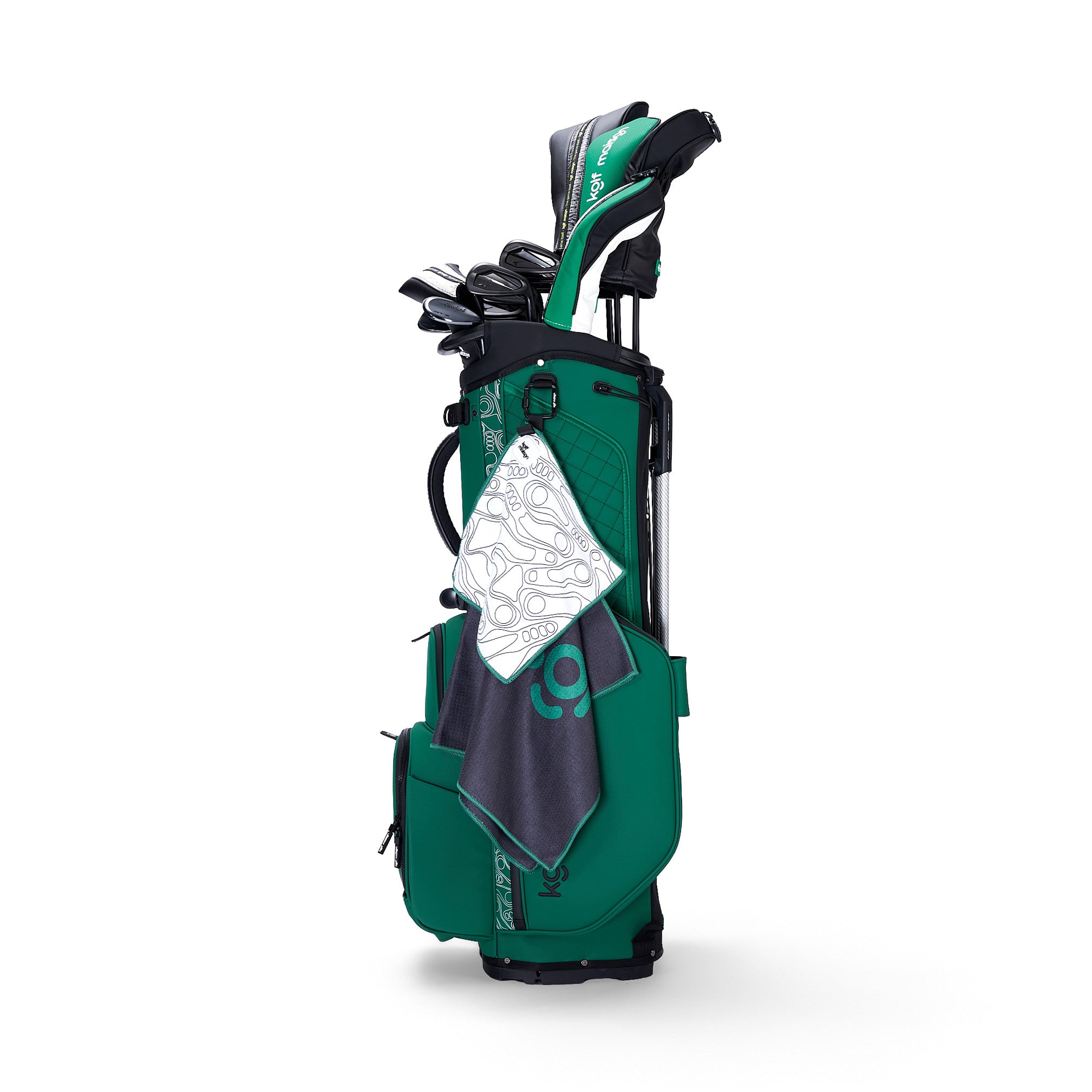
At Kolf Maison, this principle sits at the center of the brand. The bag is not treated as a fashionable shell or seasonal object. It is approached as a long term instrument of use, one that must preserve structure, surface composure, and tactile confidence over time. This philosophy runs through the brand story itself, through the ideas explored in A Statement, Not a Utility: The Kolf Maison Philosophy and through the material focus outlined in Kolf Maison Materials: The Core of Luxury Golf Bags.
The reason for this article is simple. Golfers deserve a clearer framework for evaluating what premium actually means in the category. The language surrounding luxury golf bags is often vague, and that vagueness benefits weak products. Terms such as premium, elevated, tour inspired, and luxury are used generously across the market, but they often refer to styling cues rather than engineering substance. The result is confusion at the point of purchase and disappointment later in ownership.
A better framework begins with performance over time. A luxury golf bag should preserve its finish without becoming delicate. It should preserve its structure without becoming cumbersome. It should preserve usability without becoming cluttered. And above all, it should preserve confidence. Confidence is the truest mark of luxury because it removes the need for vigilance. The golfer should not spend the round protecting the bag from ordinary life. The bag should quietly protect itself through good design.
This article therefore focuses on the areas that matter most. Chemical resistance. Structural stability. Delamination risk. Surface fatigue. Hardware reliability. Ownership psychology. Replacement culture. Long term value. These are the categories where real material integrity is revealed. A bag may perform beautifully in one and poorly in another. But over time, it is the union of all of them that determines whether the object remains worthy.
For golfers interested in the broader topic of durability, two useful companion pieces are What Makes a Golf Bag Durable: Engineering, Materials, and Longevity Explained and Golf Bag Durability and Longevity: Ending the Two Season Fatigue. Both reinforce the same core truth. Durability is not accidental. It is the visible result of deliberate engineering choices made long before the bag reaches the course.
There is also an economic dimension to this conversation. The premium golf bag is rarely evaluated only by price. It is evaluated by whether the purchase feels settled. The golfer wants to feel that the search has ended, not that a future replacement has merely been postponed. This is why long term material performance matters so much. Once a premium object begins to feel temporary, its value collapses. A bag that invites doubt has already undermined the very reason it was bought.
This relationship between ownership and replacement is explored directly in Choosing Once Versus Replacing Often and also in Luxury Golf Bags Worth the Price. Both pieces reflect a more disciplined idea of value. Value is not the thrill of acquisition. It is the freedom from reconsideration.
So what does true material integrity require. First, it requires honesty about the environment. Golf bags do not live in controlled conditions. They face ultraviolet exposure, repeated abrasion, heat cycling, moisture variation, uneven loading, stand deployment, cart strap compression, and countless interactions with hands, towels, gloves, clubs, and accessories. If a material system is only stable in ideal conditions, it is not premium in any serious sense.
Second, it requires internal discipline. Surface beauty cannot compensate for weak structure. A refined finish cannot rescue poor skeletal stability. Premium materials are not merely selected. They must be integrated into a complete system where exterior, internal support, reinforcements, hardware, and stitching all behave in harmony. If one part is overdesigned while another is marginal, the bag will still lose authority over time.
Third, it requires the courage to reject speed as the governing principle. The more aggressively a product is scaled, the more pressure is placed on yield, throughput, sourcing flexibility, and interchangeable build logic. That pressure almost always works against strict material discipline. This is one reason why limited production matters in luxury. Not as theater. As operating logic. The fewer units produced, the greater the possibility of scrutiny, correction, and consistency.
The Kolf Maison position on this subject is clear. The annual production limit exists because permanence demands control. It is easier to scale a look than to scale true integrity. It is easier to scale branding than to scale disciplined inspection. It is easier to scale novelty than to scale composure. The entire premise of intentional limitation is that fewer, better objects are more worthy than more, weaker ones.
This philosophy is closely tied to the brand language explored in Quiet Luxury in Golf Equipment Explained and Why Golf Style Is About Restraint. Quiet luxury is not simply visual softness. It is engineering confidence expressed through refusal. Refusal to overdecorate. Refusal to overpromise. Refusal to build for attention at the expense of endurance.
With that framework established, the next step is to examine the actual domains where premium golf bags succeed or fail. The first is chemical stability. Because no matter how sophisticated a bag appears, a surface that cannot tolerate ordinary environmental exposure is not luxury. It is only presentation.
Chemical Stability, Surface Behavior, and the Reality of Exposure
The first serious question any premium material program must answer is whether the surface remains stable in the presence of ordinary use conditions. Golf is not a sterile environment. It involves heat, sunscreen, sweat, body oils, friction, moisture, dust, and repeated contact with accessories, towels, carts, and vehicle interiors. A golf bag marketed as luxury should not be shocked by these conditions. It should be built around them.
Chemical stability is especially important because many surface failures begin not with obvious abuse, but with perfectly normal exposure. When a golfer applies sunscreen, stores the bag in a warm trunk, handles the bag with damp or treated hands, or leaves it in direct sunlight after a round, the material is being asked a fundamental question. Are you truly suitable for the game, or were you selected mainly for how you look in controlled conditions.
This distinction matters because modern synthetic surfaces vary dramatically in formulation quality. Two bags may appear equally refined at launch and yet perform very differently over time. The difference lies in chemistry, curing discipline, coating logic, adhesion control, and resistance to plasticization. None of this is visible in a glamor shot. All of it becomes visible in ownership.
Polyurethane based systems, for example, are not inherently weak. They can be engineered with considerable sophistication. But they can also be pushed toward cosmetic yield, softer hand feel, fast production compatibility, and visual consistency at the expense of environmental tolerance. When that happens, the surface may be beautiful at first encounter and vulnerable under routine conditions. This is where the illusion of premium begins to separate from the truth of premium.
Many golfers do not think in polymer language, nor should they have to. What they experience is simpler. A surface that becomes tacky. A finish that marks too easily. Panels that respond poorly to heat. Areas of unexpected softening. Loss of visual cohesion. The owner may not know the technical cause, but the emotional effect is immediate. The object begins to feel fragile. Once that feeling enters ownership, luxury has already been compromised.
The logic of proper material engineering is different. A responsible material program starts from exposure. It asks what the bag is likely to encounter, then tests for those realities using adjacent standards and exposure logic. This is why frameworks such as ASTM D1308 matter conceptually. The standard itself may come from another category, but the principle is universal. Does the finish remain stable when confronted by substances it is likely to touch.
The same is true of weathering logic. Accelerated exposure methodologies such as ASTM G154 and color fastness concepts associated with ISO 105 B02 are meaningful because they show whether a material was chosen for life or only for launch. The important point is not to recite standards for prestige. The important point is to understand what a serious material program is trying to prove. Stability. Repeatability. Resistance. Integrity under time.
This philosophy is central to Science of Matte Microfiber Composite and also to Matte Microfiber Composite Leather vs Conventional PU Leather. The point of those discussions is not to romanticize materials. It is to show that different surface systems age differently because they are built differently.
A well chosen surface behaves with indifference. It does not panic under sunscreen. It does not become unstable under heat. It does not degrade simply because the golfer used the bag like a golfer. That kind of calm resistance is one of the deepest forms of luxury because it eliminates the burden of caution. The owner is free to use the object naturally.
This freedom matters psychologically. Luxury should not increase anxiety. It should reduce it. A premium golf bag that forces the owner to remember what must not touch it, where it must not sit, or how carefully it must be handled has already introduced friction into the ownership experience. Friction is the enemy of luxury because it constantly reminds the golfer that the object is more vulnerable than it appeared.
That is why chemical resistance is not a side topic. It is a primary expression of honesty. Surfaces that remain composed under ordinary conditions create trust. Surfaces that falter under those same conditions create caution. Trust deepens ownership. Caution weakens it.
At Kolf Maison, the objective has never been to create a bag that merely looks refined. The objective is to create a bag whose refinement survives contact with life. That means surface systems are evaluated not just for first impression, but for stable behavior across repeated use conditions. Heat, sweat, contact, and exposure are treated as baseline realities, not inconvenient exceptions.
This approach is inseparable from the brand view on durability explored in How to Choose a Golf Bag That Lasts for Years and Why Most Golf Bags Wear Out Too Fast. Bags wear out too fast not because aging is inevitable, but because many are engineered with too little margin in the places where exposure accumulates most quickly.
Surface composition is only one part of that story. Adhesion is another. A material may appear strong at the top layer and still fail over time if the relationship between surface and backing lacks long term cohesion. This leads to a different form of deterioration, one that is often more psychologically damaging than surface marking because it reveals not wear, but shallowness.
Delamination, Edge Fatigue, and the Difference Between Coating and Cohesion
Delamination is among the most revealing failure modes in premium synthetic goods because it exposes the distinction between true material depth and cosmetic layering. A bag can look rich, feel refined, and still be fundamentally dependent on a thin surface logic that begins to separate once repeated stress enters the picture.
Golf bags are constantly flexed, lifted, twisted, strapped, and compressed. They are not static. Those movements generate shear forces, especially near seams, edges, corners, base transitions, and pocket openings. If the material system relies heavily on layered films bonded to textile backings, those shear forces accumulate where the structure is asked to move repeatedly. Over time, the bag begins to tell the truth.
The truth is usually quiet at first. Edge lifting. Small signs of peel. A visible transition between layers. Surface separation near stress points. The functional impact may initially seem minor, but the symbolic impact is severe. A scratch suggests use. Delamination suggests pretense. The owner realizes that what looked substantial may have been primarily cosmetic.
This is why material cohesion matters so deeply. A unified composite behaves differently from a system that depends on a decorative upper layer doing most of the visual work. Cohesion resists flex without revealing itself as a stack. Cohesion maintains dignity at edges and seams. Cohesion allows the object to age like one thing, not several things trying to remain attached.
This broader theme is reinforced in Luxury Golf Bag Materials Explained and From Factory to Fairway: The Making of Luxury Golf Bags. True materials are never just about what the surface resembles. They are about how the entire construction behaves when stressed by time and use.
The Kolf Maison approach favors cohesion over illusion. The goal is not simply to resist peeling for a season. The goal is to build a surface system whose visual character and structural character are aligned. That alignment is what allows the bag to remain convincing under repeated use. It does not need to rely on theatrical freshness. It remains credible through behavior.
Once surface chemistry and material cohesion are understood, the next layer of the conversation becomes impossible to ignore. Even the best exterior cannot save weak structure. And in the life of a golf bag, structure is not a background issue. It is the silent condition of trust itself.
Structural Stability, Load Logic, and Why Upright Geometry Matters
Structure is often underappreciated when golfers first evaluate a bag. The eye is drawn naturally to color, texture, branding, pockets, top layout, and silhouette. Yet structure is what determines whether the object continues to feel correct over time. A bag can look refined and still lose authority once internal geometry begins to drift. The moment a premium bag starts leaning, collapsing, twisting, or standing incorrectly, the ownership experience changes at a fundamental level.
This is because golf is a sport of order. Clubs belong in specific places. Repetition matters. Rhythm matters. Equipment that maintains balance contributes to that sense of calm. Equipment that introduces instability creates friction, even if only subtly. A bag that no longer stands properly, carries unevenly, or appears to remember the wrong shape interrupts the ritual every time it is handled.
From an engineering perspective, this issue usually comes down to margin. Lightweight internal supports, minimal structural stays, flexible liners, and marginal frame systems may perform well enough at first. Under real use, however, they encounter sustained off axis loading, cart strap compression, trunk heat, uneven club distribution, repeated lifting, and long periods under asymmetrical stress. What matters then is not showroom balance, but recovery. Does the structure return to its intended geometry after use, or does it gradually begin to accept deformation as its new normal.
This phenomenon is what many golfers describe informally as the lean. In engineering language, it aligns more closely with creep and plastic deformation. The bag does not fail suddenly. It drifts. It settles. It loses architectural confidence by degrees. That quiet progression makes it especially corrosive because the owner often notices the problem only after the feeling of newness has already passed.
Why does this happen so often in the premium category. Because the premium category is not always engineered for permanence. It is often engineered for compelling first ownership. In a scaled production environment, internal structures may be specified close to minimum acceptable thresholds to reduce weight, accelerate assembly, and preserve cost discipline. That can work if the goal is good initial usability. It does not work if the goal is long horizon correctness.
This distinction is central to Physics of Balance in Golf Bags and The Anatomy of a Modern Golf Cart Bag. A bag is not merely a shell with compartments. It is a suspended load system. The internal frame, reinforcement logic, weight distribution, top structure, base behavior, strap attachment geometry, and cart interaction all contribute to whether the object remains composed after prolonged use.
Structure also determines whether the design itself feels honest. A bag that looks architectural but behaves softly over time creates a mismatch between visual promise and lived reality. A bag that maintains poise under asymmetric loading earns the right to its silhouette. This is why internal discipline matters more than decorative sophistication. Form only deserves admiration when it is structurally defended.
At Kolf Maison, the bag is approached as an architectural object rather than an apparel accessory. The governing question is not how light the object can feel in a showroom. It is how stable, upright, and composed it remains after repeated rounds, repeated transport, repeated handling, and repeated exposure to uneven load paths. Weight matters, of course. But weight reduction is treated as a secondary optimization, never the primary ruler of the system.
This logic is reinforced in The Signature Build Code in Our Golf Bags and Why Golf Bag Design Matters More Than Features. Features are visible. Build logic is not. Yet build logic is what determines whether the features still feel meaningful after time has applied pressure to the object.
There is also a deeper ownership issue here. A premium bag should not force the golfer into small acts of compensation. Rebalancing clubs to correct posture. Avoiding certain loading patterns. Adjusting how the bag is set down. Managing its weaknesses through habit. That is not premium ownership. That is quiet accommodation of structural compromise. A true luxury object should reduce behavioral adjustment, not require it.
For stand bags, this question becomes even more demanding because deployment mechanics add another layer of stress. The stand system must resist wobble, preserve leg confidence, and support the bag without transferring instability into the chassis. That is why the walking bag conversation is inseparable from structure, as explored in The Stand Bag: A Perfect Partner for Your Walk and Best Luxury Golf Bags for Walking and Carry Comfort.
For cart bags, the question shifts slightly but remains just as important. Cart straps, trolley contact, vertical compression, and repeated mounted use all create pressure in concentrated zones. A cart bag that is visually refined but poorly protected at those points will begin to reveal weakness where contact is most repetitive. This is one reason why thoughtful strap management and pressure isolation matter, a subject treated directly in Luxury Golf Bag Protection: The Critical Role of the Strap Sleeve.
Hardware, Seams, and the Quiet Signals of Long Term Quality
Hardware rarely leads the buying decision, yet it frequently determines the long term feel of a product. Zippers, anchor points, grab handles, stand mechanisms, reinforcement patches, and seam stability all shape whether a bag continues to feel premium after repeated use. A surface may remain beautiful, but if the tactile system of interaction begins to feel weak, the bag loses confidence in the hand.
This is why luxury cannot be judged only by panels and finishes. It must also be judged by the precision of repeated contact. Does the zipper remain clean and controlled. Do the handles maintain confidence. Do stress points remain calm. Does the hardware still feel intentional after cycles of friction, load, and weather. These details are not peripheral. They are where the owner touches the truth most often.
Weak hardware creates a peculiar kind of disappointment because it turns premium ownership into a sequence of small excuses. The bag still looks good, but this zipper feels rough. The structure remains appealing, but this pull point feels stressed. The design remains beautiful, but this repeated motion no longer feels worthy of the price. Luxury begins to collapse not through one dramatic failure, but through repeated moments of reduced confidence.
This gradual erosion is one reason why material integrity should always be discussed as a system rather than a single property. Hardware, seams, and reinforcements do not merely support the surface. They confirm it. They prove whether the object was designed for repeated reality or only for initial admiration.
Kolf Maison treats this system level harmony as essential. Surface, structure, reinforcements, handles, cart interaction, dividers, and pockets are all expected to age coherently. That expectation is inseparable from the brand focus on restraint. Restraint is not only visual. It is functional. It means fewer weak points disguised by louder styling. Fewer decorative decisions that complicate future performance. More emphasis on precision where the object is actually handled.
The practical result is that the bag should remain reassuring in the hand. It should continue to open, carry, sit, lift, and organize itself with calm. That is a more meaningful expression of luxury than any exaggerated visual cue because it reaches the owner through repeated physical confirmation rather than one time spectacle.
Once structure and hardware are understood, the conversation expands beyond engineering and into economics. Because the premium golf bag is never judged only by how it performs. It is judged by whether it ends the cycle of replacement.
Replacement Culture, Ownership Psychology, and the Meaning of Value
One of the most revealing questions in the premium golf market is not whether a bag looks luxurious, but whether it feels final. Finality is the deepest form of value because it ends the search. It tells the owner that the decision was not provisional, not seasonal, not merely acceptable for now. In luxury, the highest compliment is not excitement. It is settled confidence.
Yet much of the modern premium category quietly relies on the opposite psychology. Bags are made to feel elevated at purchase but not always to remain convincing over years of use. The result is replacement culture. Objects do not always fail catastrophically. Instead, they age just enough to encourage reconsideration. The owner begins to think about what might be next before the object has truly earned retirement. This is one of the most expensive forms of weakness because it turns a premium purchase into a short horizon cycle.
That cycle is explored from several angles in Are Premium Golf Bags Worth the Price, How Often Should You Replace a Golf Bag, and The Difference Between Premium and Considered. The key distinction is simple. Premium can refer to price and presentation. Considered refers to discipline, longevity, and design choices made against replacement rather than toward it.
Economically, this matters far more than golfers sometimes realize. A bag that feels slightly less expensive upfront but invites replacement after a short period may end up costing more than a more disciplined bag that remains worthy over many seasons. Cost is immediate. Value is cumulative. Luxury pricing is only defensible when it extends the ownership horizon rather than merely intensifying the first impression.
There is a psychological side to this as well. Once a golfer begins to speak about a premium object with qualification, the object has already lost authority. It still looks good, but. It still works, but. It still feels premium, but. That phrase marks the moment when ownership has shifted from confidence to rationalization. Rationalization is not a luxury experience. It is a compensation pattern.
This is why so much of true luxury is bound up with silence. Not silence as emptiness, but silence as the absence of complaint, vigilance, and regret. The object does not need defense. It does not need explanation. It simply continues. This idea sits at the heart of Psychology of the Silent Bag and Luxury Golf Bag Status and Presence. Presence is most powerful when it is not maintained by noise.
Kolf Maison was built around that premise. The aim is not to compete for attention through louder branding, faster cycles, or increasingly theatrical claims. The aim is to create an object that feels resolved. That means resisting the cultural habits that weaken luxury over time. Constant discounting. Artificial urgency. Repetitive sales language. Shallow seasonal novelty. All of these habits train the market to treat objects as temporary. Kolf Maison rejects that logic openly in Why Luxury Golf Brands Never Discount, Discounting Versus Dignity: The Cost of Seasonal Urgency, and Why Craftsmanship and Clearance Cannot Coexist.
Those ideas are not marketing posture. They are extensions of the same material philosophy explored throughout this article. A product that is engineered for endurance should be sold with the calm of endurance. A product that is designed as a terminal choice should not be placed inside a culture of perpetual urgency. The way a luxury object is built and the way it is offered to the world should agree with one another.
That agreement is one reason why Kolf Maison treats integrated accessories as part of the system rather than as scattered additions. A serious golf bag should arrive complete, not fragmented. It should not force the owner into a long sequence of secondary purchases simply to feel whole. This logic is explored in Why Kolf Maison Includes Luxury Accessories With Every Golf Bag and Luxury Golf Accessories That Actually Matter. Completeness is not extravagance. It is continuity.
There is also a visual dimension to long term value. Some bags chase presence through louder expression, while others pursue restraint. Neither choice is automatically wrong. But only one tends to age more quietly and more gracefully. Restraint reduces the risk that a product will become tiresome, visually brittle, or too dependent on novelty for its appeal. This is why understated design often lasts longer psychologically than louder styling. It allows the bag to remain correct rather than merely current.
This is one reason why articles such as Why Professional Golfers Avoid Loud Golf Bags and What Makes a Luxury Golf Bag Truly Luxury matter in the broader conversation. Luxury is not just about possession. It is about the durability of correctness. The object should feel as appropriate later as it did at the start.
So what, finally, defines true material integrity in a premium golf bag. It is not one dramatic specification. It is the sum of disciplined decisions. Surface systems selected for real exposure rather than only initial beauty. Internal structures designed to resist creep rather than merely feel light at purchase. Cohesive material construction that resists edge failure and delamination. Hardware and seam logic worthy of repeated contact. A production philosophy that values scrutiny over throughput. A design language that ages with calm. A value proposition that resists replacement rather than quietly depending on it.
True luxury begins where vigilance ends. When the golfer no longer thinks about protecting the bag from ordinary use, adjusting behavior around subtle weaknesses, or anticipating future dissatisfaction, the object has achieved something rare. It has become trustworthy. Trust is the highest form of refinement because it turns ownership from management into ease.
That is the standard Kolf Maison pursues. Not image without substance. Not softness without resistance. Not spectacle without permanence. The object should remain composed, stable, useful, and dignified over time. It should not merely survive. It should continue to feel correct.
For readers who want to continue this line of thought, the most natural next pieces are Best Luxury Golf Bags 2026, The Best Luxury Golf Bags in 2026: Engineering, Materials, and What Serious Golfers Actually Choose, and The Kolf Maison Manifesto: The Architecture of a Luxury Golf Bag. Together, they extend the same central thesis. Luxury that endures is never accidental. It is built through disciplined refusal, material honesty, and the quiet confidence of objects designed not to be replaced.
Kolf Maison. The Game Itself.
Frequently Asked Questions
What defines material integrity in a premium golf bag?
Material integrity refers to how well a golf bag maintains its surface, structure, function, and appearance over time. It includes resistance to abrasion, heat, moisture, repeated loading, surface fatigue, and long term deformation.
Why do some premium golf bags wear out faster than expected?
Many premium golf bags are designed to make a strong first impression, but not all are engineered with the same long term structural and material discipline. Surface coatings, lightweight internal supports, and marginal reinforcements can reduce durability over time.
Can sunscreen, heat, and normal exposure affect a golf bag?
Yes. A golf bag is exposed to sunlight, heat, sweat, friction, and chemical contact during normal use. If the material system is not selected for environmental tolerance, the surface may soften, mark, discolor, or lose stability more quickly than expected.
Why is structural stability important in a golf bag?
Structural stability determines whether the bag remains upright, balanced, and composed after repeated rounds, travel, and loading. A bag that begins to lean, twist, or lose its form weakens both performance and ownership confidence.
What is delamination in a golf bag?
Delamination occurs when bonded material layers begin to separate over time, often near seams, edges, or stress points. It usually signals that the surface system was built more for appearance than for long term cohesion.
Are expensive golf bags always true luxury products?
No. Price alone does not define luxury. True luxury in a golf bag is expressed through material honesty, structural consistency, refined usability, and long term resistance to wear, fatigue, and replacement pressure.
How can I tell if a golf bag is built for long term use?
Look for stable structure, durable material systems, strong reinforcement in stress zones, clean hardware performance, thoughtful pocket architecture, and signs that the product was engineered for repeated real world use rather than only visual appeal.
Why does limited production matter in luxury golf bags?
Limited production allows for tighter inspection, greater material consistency, better control over build quality, and more disciplined attention to detail. It supports permanence by prioritizing scrutiny over volume.
What makes Kolf Maison different in its approach to material integrity?
Kolf Maison approaches the golf bag as an architectural object, focusing on composure over time rather than short term spectacle. Surface behavior, structural stability, tactile refinement, and long horizon ownership are treated as essential, not optional.
Why does long term durability matter more than first impression?
Because a premium golf bag should remain worthy after repeated use, not just at the moment of purchase. First impression creates interest. Long term durability creates trust, and trust is what makes luxury feel final.
Related authority includes luxury golf bags, golf bag durability, considered luxury, hydrolysis, sun bleaching, white bag care, stand bag and cart bag.