

How to Clean a Golf Bag: The Complete Stain Removal, Care, and Protection Guide
Golf bags experience far more abuse than most golfers realize. Every round exposes them to moisture, dirt, grass, cart paths, sunscreen, sweat, beverages, travel handling, and prolonged UV exposure. Over time, these contaminants accumulate and can dramatically affect the appearance and longevity of even premium golf bags.
Ironically, many golf bags are damaged not by use, but by improper cleaning. Harsh chemicals, abrasive scrubbers, bleach, and aggressive stain removers can permanently damage finishes, discolor materials, and shorten the life of a bag that would otherwise last for years.
The good news is that most stains and contamination can be removed safely using the correct techniques. Whether you own a white golf bag, a black golf bag, a premium stand bag, or a luxury cart bag, proper maintenance can preserve its appearance and structural integrity season after season.
This guide covers everything from routine cleaning and preventative maintenance to removing difficult stains such as sunscreen, grass, grease, dye transfer, ink, and mold. If you are interested in the engineering and durability side of golf bags, you may also find our guides on Golf Bag Durability and Material Integrity in Premium Golf Bags useful.
Why Golf Bags Become Dirty Faster Than Most Golfers Expect
Most golfers assume dirt and mud are the primary causes of contamination. In reality, the biggest offenders are often invisible.
Body oils, sunscreen, sweat, beverage residue, and environmental contaminants gradually accumulate across exterior surfaces. These substances attract dirt and dust, creating stains that become increasingly difficult to remove if ignored.
The most common golf bag contaminants include:
- Sunscreen and skin oils
- Sweat residue
- Grass stains
- Cart path dust
- Golf cart grease
- Dye transfer from clothing
- Beverage spills
- Mud and sand
- Moisture trapped inside pockets
- Mold caused by improper storage
Routine maintenance is significantly easier than stain removal. Most golfers can prevent 90 percent of long term discoloration simply by wiping down their bag every few rounds.
Understanding Modern Golf Bag Materials
Not all golf bags require the same cleaning approach.
Traditional leather, synthetic leather, nylon, canvas, and composite materials all react differently to moisture and cleaning products.
Many premium golf bags today utilize advanced synthetic materials because they offer excellent durability, weather resistance, and ease of maintenance.
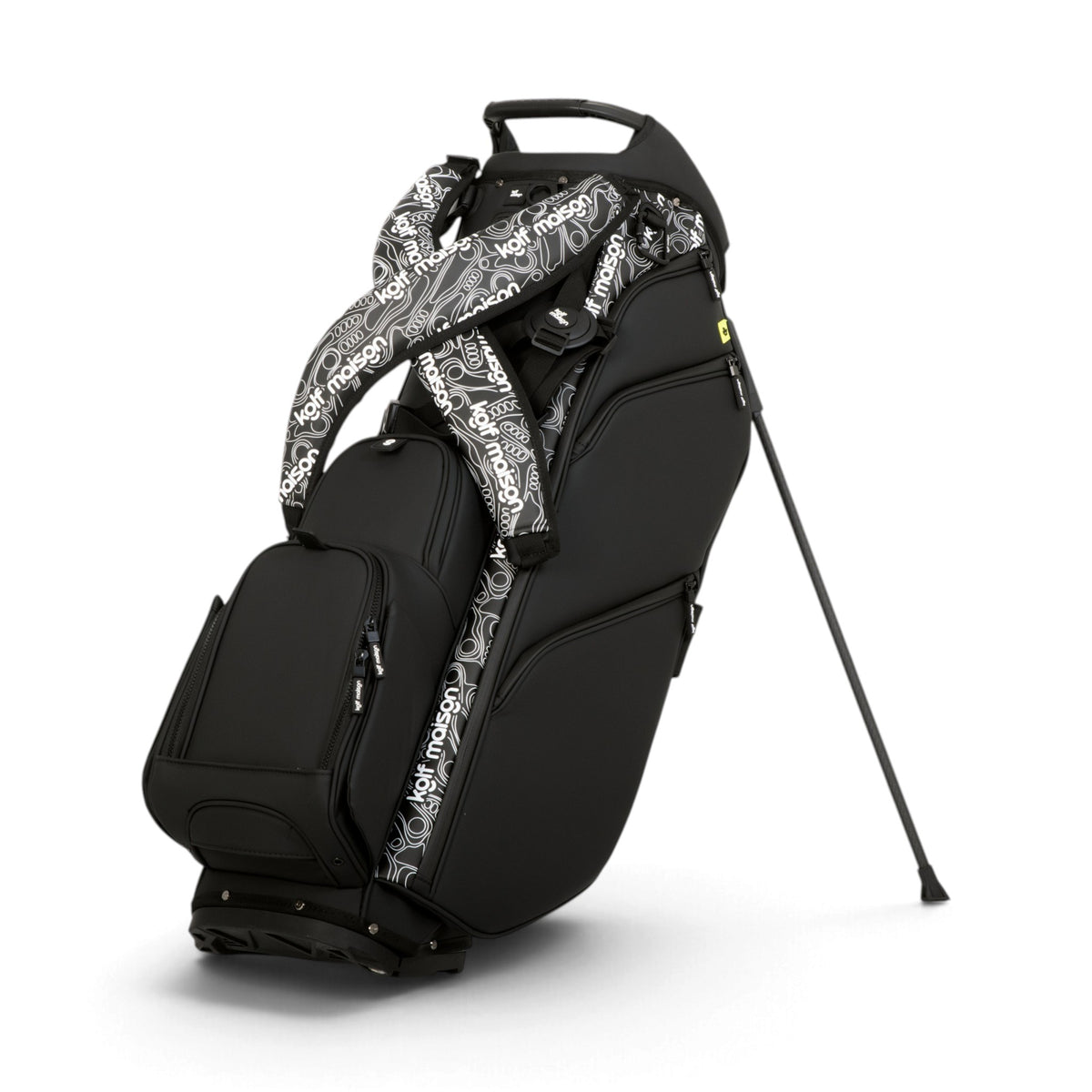
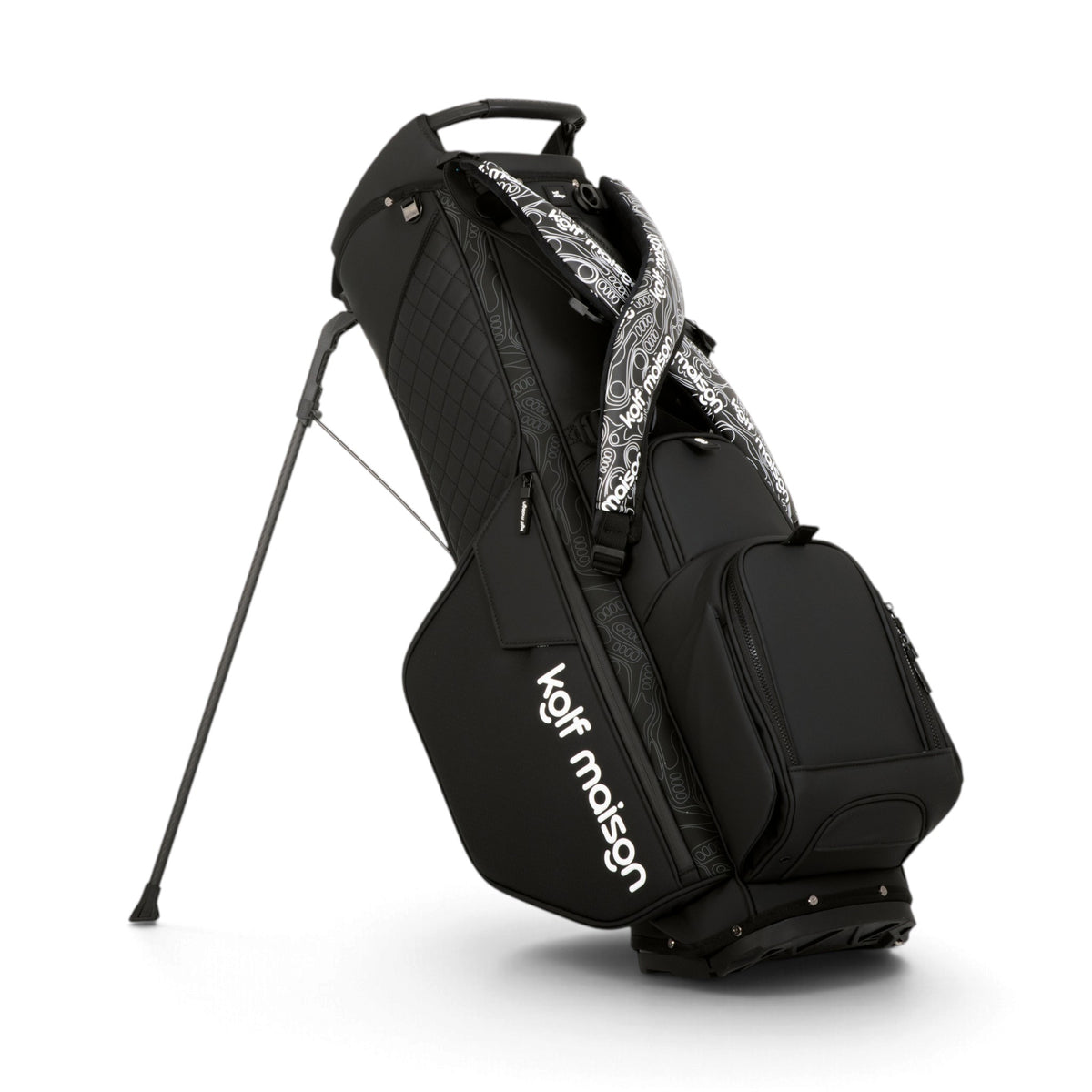
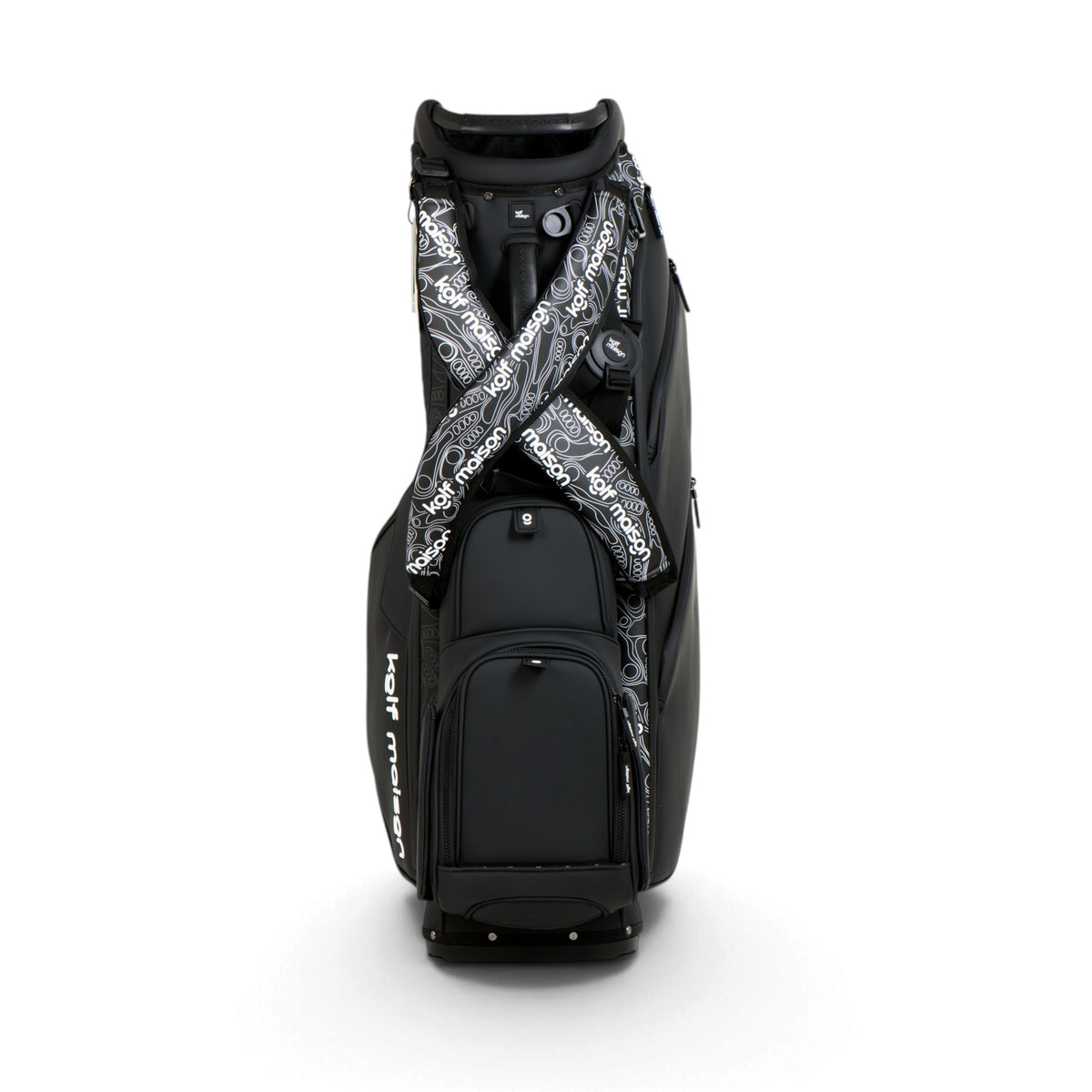
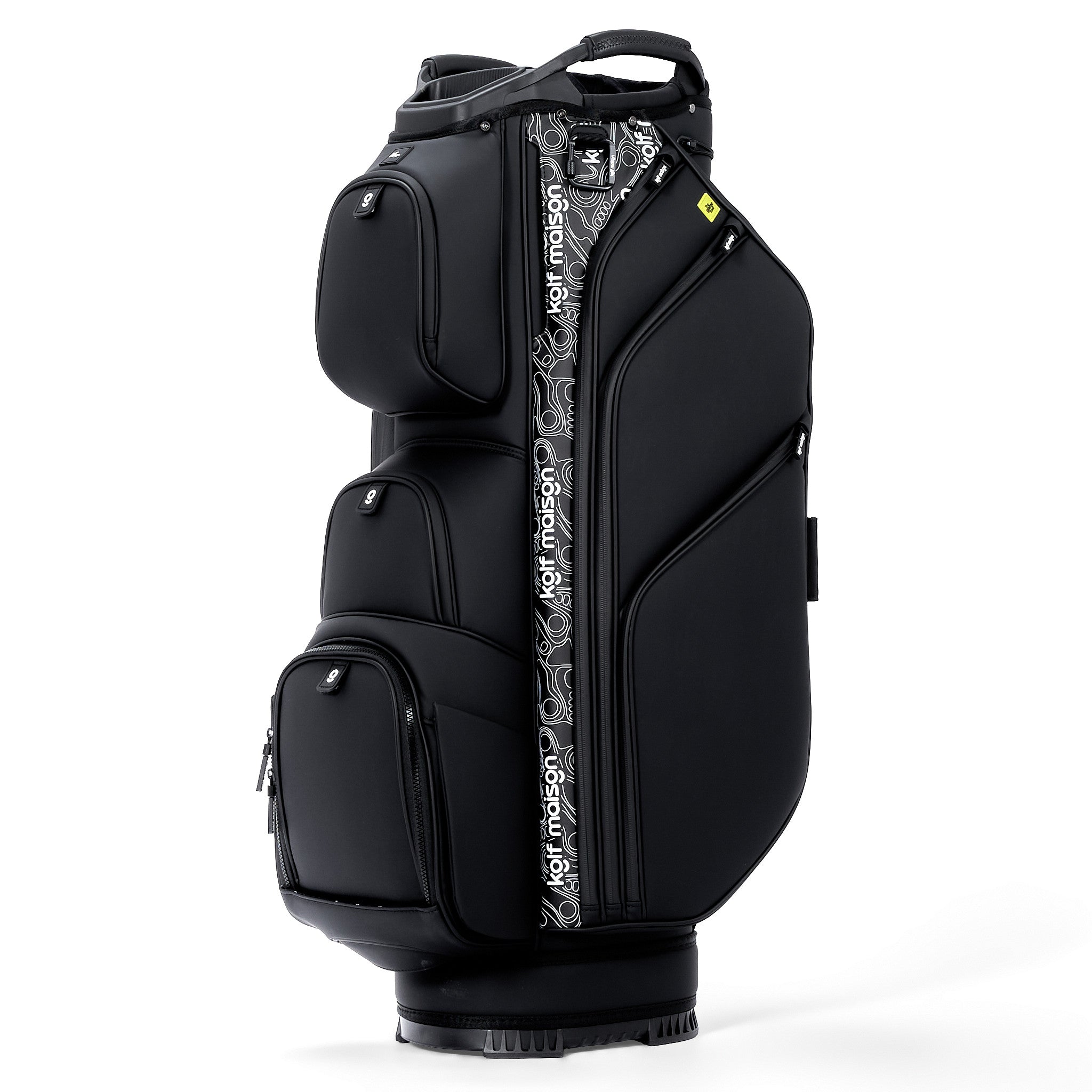
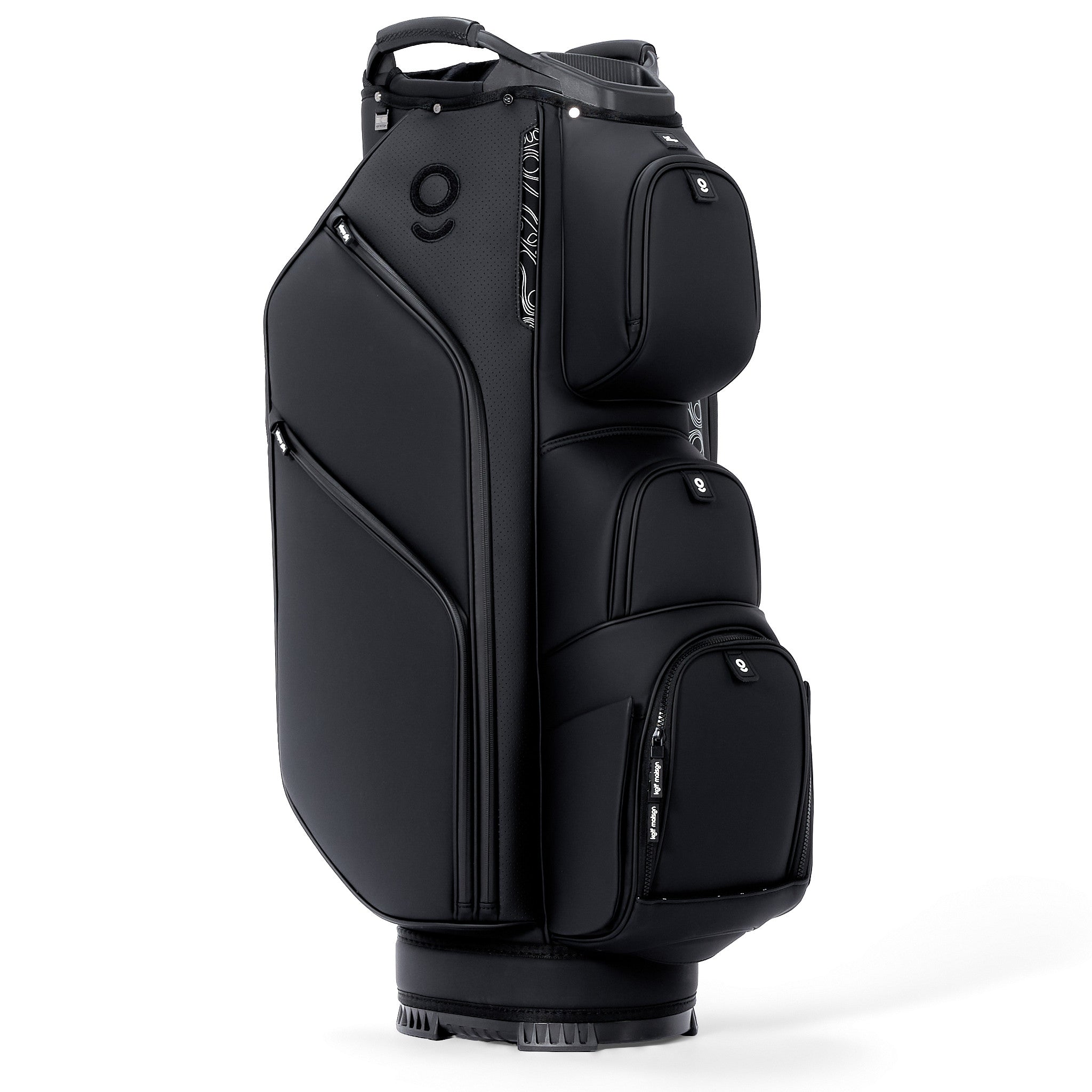
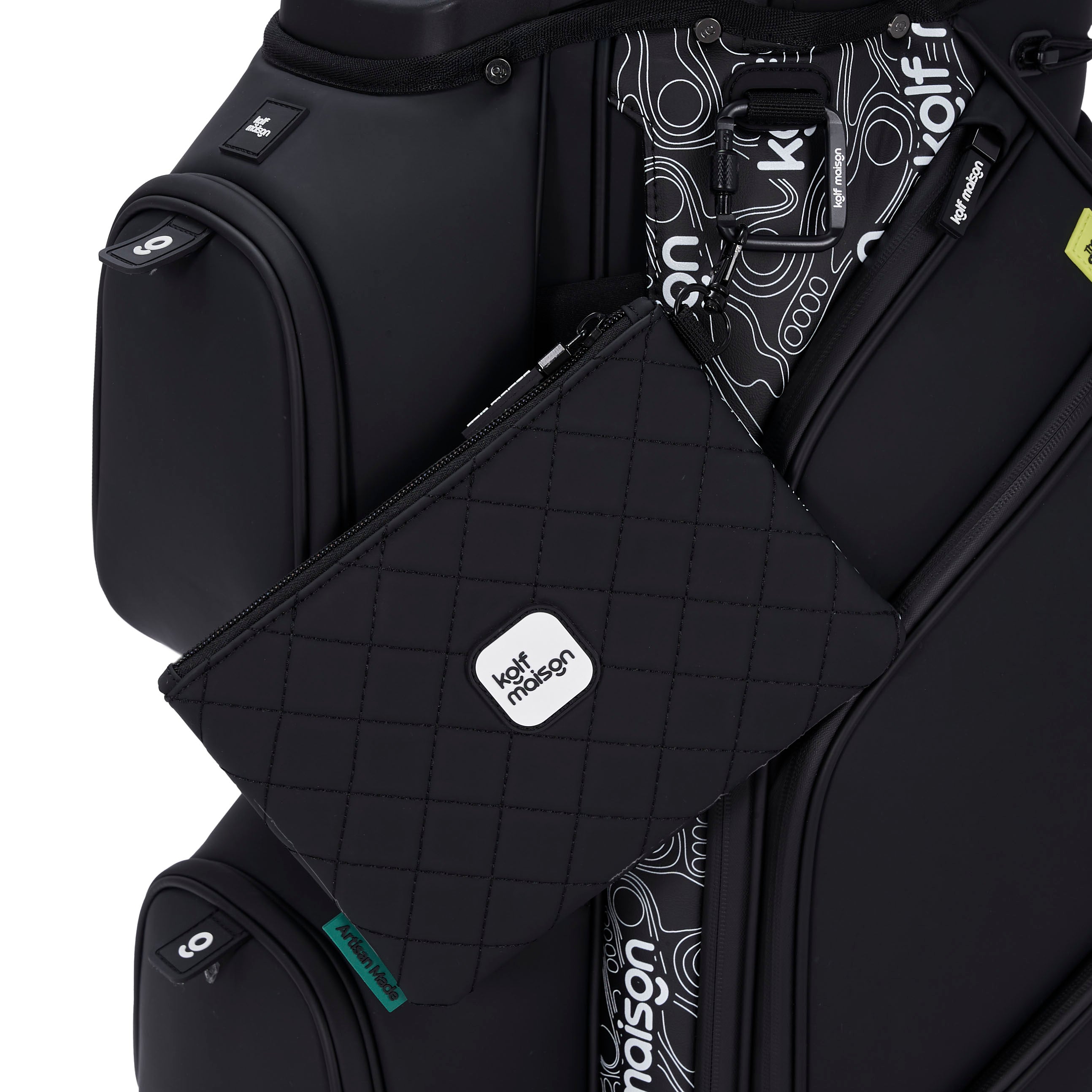
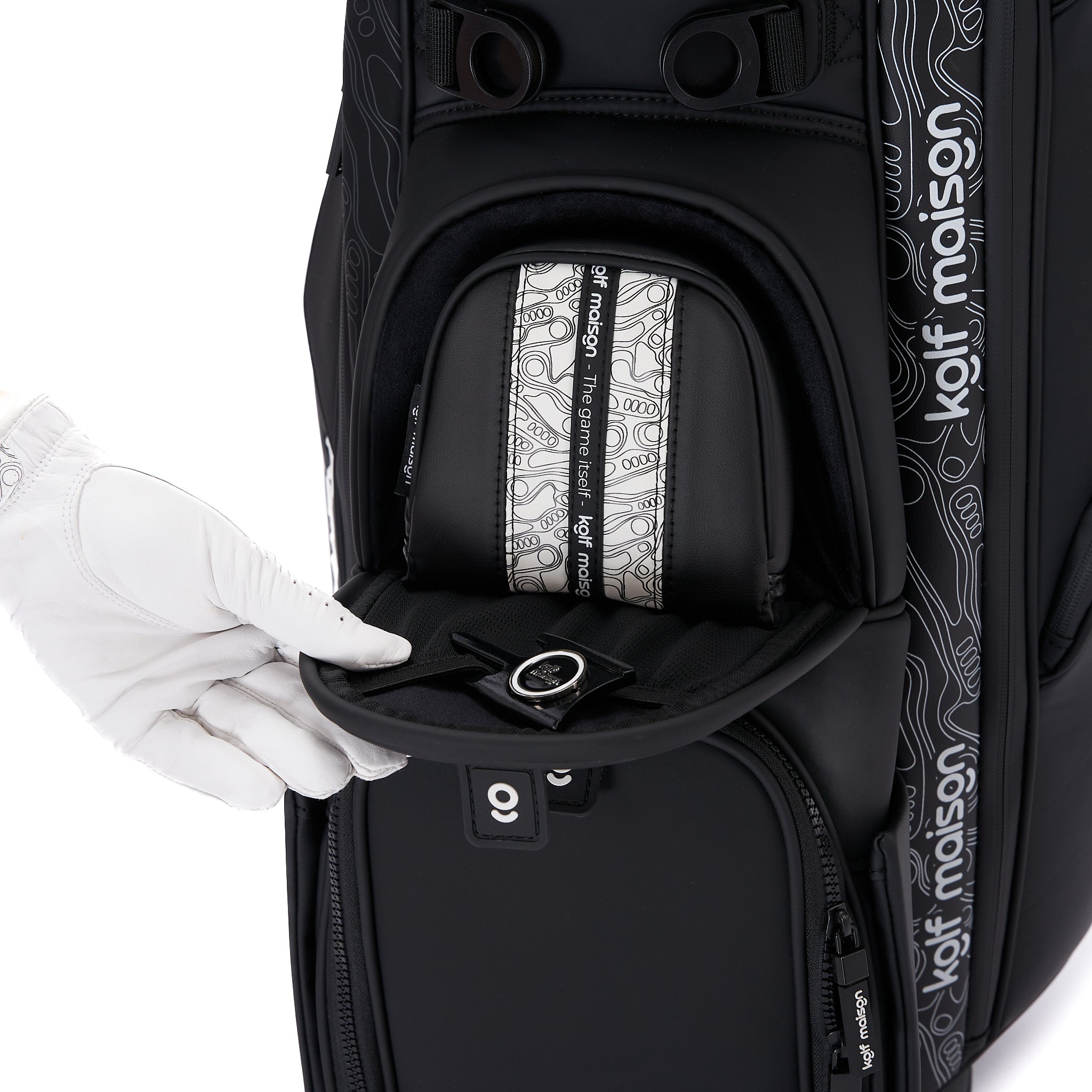
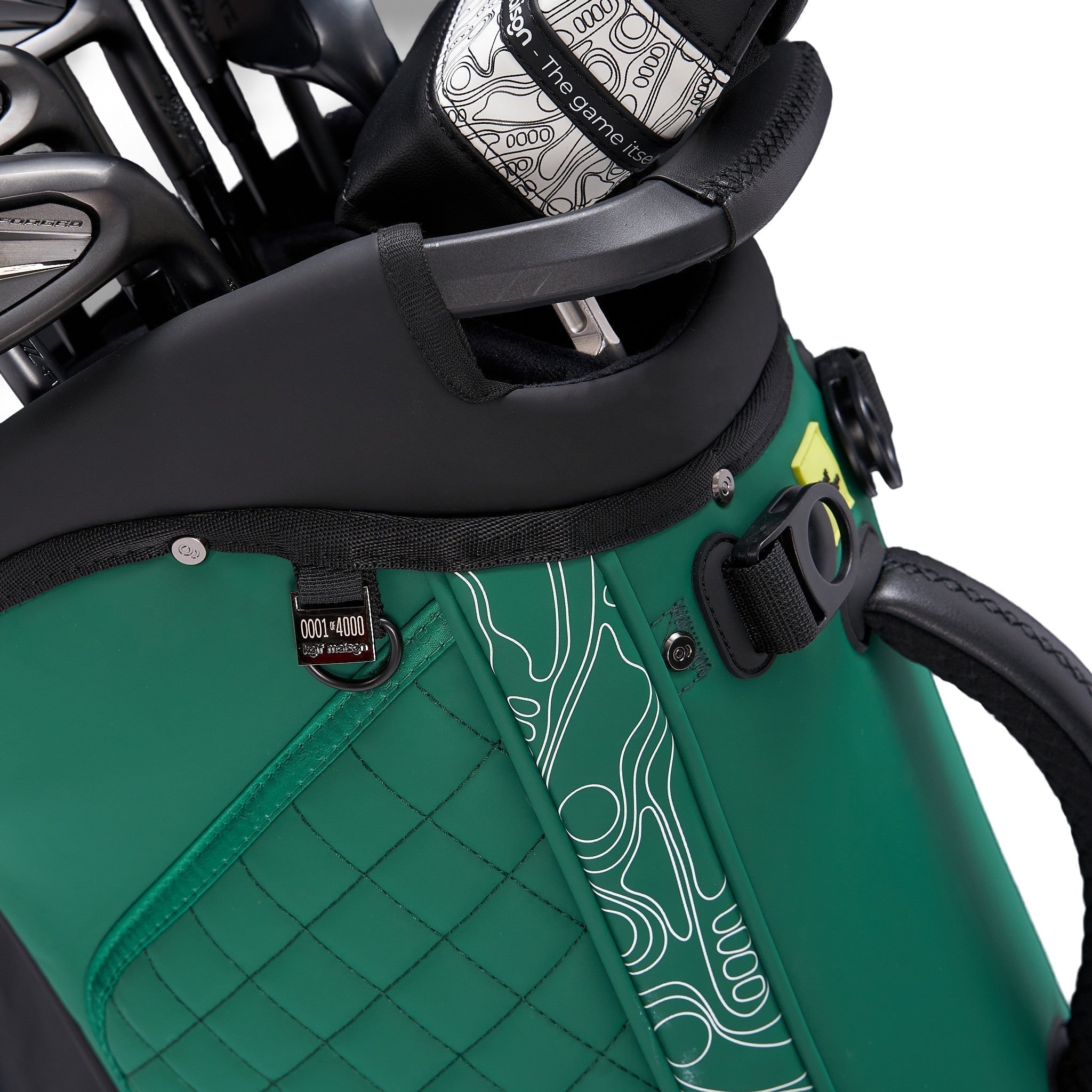
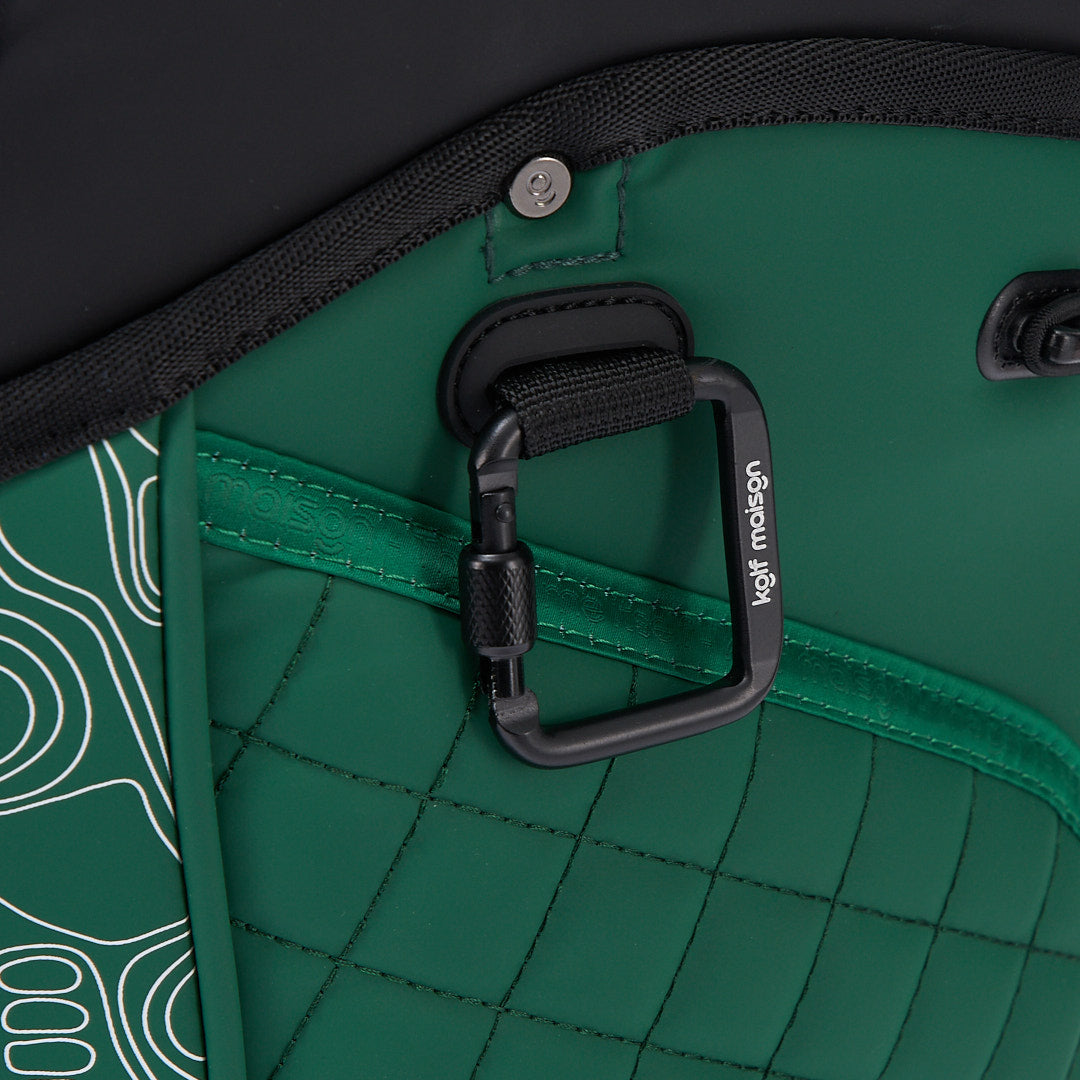
Kolf Maison golf bags utilize Matte Microfiber Composite Leather, a premium synthetic material engineered to resist abrasion, moisture, UV exposure, and everyday wear while maintaining a refined matte appearance. Compared to traditional leather, modern composite materials require less maintenance while offering excellent long term durability.
If you want to understand why material selection plays such an important role in longevity, read our article on Hydrolysis in Golf Bags.
The Three Levels of Golf Bag Cleaning
Level 1: Routine Cleaning
This should be performed every few rounds.
Required supplies:
- Microfiber cloth
- Warm water
- Mild dish soap
- Dry towel
Routine cleaning removes dust, fingerprints, grass residue, and light contamination before it becomes embedded in the material.
Level 2: Deep Cleaning
Performed every four to six weeks.
This includes:
- Exterior cleaning
- Pocket cleaning
- Divider cleaning
- Handle cleaning
- Strap cleaning
- Base cleaning
- Interior vacuuming
Golfers who travel frequently may also benefit from reading our guide on Golf Travel Bag Protection and Travel Safety.
Level 3: Stain Removal
Reserved for difficult contamination such as:
- Sunscreen stains
- Dye transfer
- Ink marks
- Golf cart grease
- Mold spots
- Food and beverage spills
Different stains require different treatments. The wrong cleaning product often causes more damage than the stain itself.
Daily Cleaning Procedure
The safest routine cleaning method remains remarkably simple.
- Remove loose dirt using a dry microfiber cloth.
- Mix warm water with a small amount of mild dish soap.
- Dampen a microfiber cloth.
- Wipe surfaces gently.
- Remove residue using a clean damp cloth.
- Dry immediately with a soft towel.
- Allow the bag to air dry completely before storage.
This method safely removes most daily contamination without affecting the finish.
Cleaning White Golf Bags
White golf bags are often viewed as difficult to maintain, yet many stains are easier to remove than golfers expect.
Common contaminants include:
- Grass transfer
- Sunscreen discoloration
- Shoe scuffs
- Cart path dust
- Fingerprints
- Dye transfer
The secret is not aggressive cleaning. The secret is fast cleaning.
Fresh stains are dramatically easier to remove than stains allowed to remain for weeks or months.
Golfers interested in white golf bag ownership should also read White Golf Bags: Can You Keep Them Clean for More Than a Season.
Removing Grass Stains
Grass stains are common on stand bags because they spend considerable time resting directly on turf.
For fresh stains:
- Warm water
- Mild soap
- Microfiber cloth
For stubborn stains, a diluted stain remover applied to a microfiber cloth may be effective. Avoid scrubbing aggressively.
Removing Mud and Sand
Always allow mud to dry before cleaning.
Attempting to wipe wet mud often spreads contamination and increases abrasion.
Once dry:
- Brush away loose debris
- Wipe with warm water
- Dry immediately
This approach minimizes scratching and surface wear.
Removing Sunscreen Stains
Sunscreen is one of the most common causes of discoloration on luxury golf bags.
Many formulations contain oils that attract dirt and create visible staining over time.
To remove sunscreen:
- Use warm water and mild dish soap.
- Wipe gently.
- Repeat if necessary.
For stubborn residue, many golfers have successfully used diluted OxiClean solutions or mild laundry stain removers applied to a microfiber cloth.
Always test first on a hidden area.
Never soak the material.
Never leave stain removers on the surface for extended periods.
Removing Sweat and Body Oils
Sweat and body oils accumulate primarily around handles, straps, carry points, and frequently accessed pockets.
These contaminants often attract additional dirt and cause gradual discoloration.
Routine cleaning with mild soap and warm water typically resolves the issue before it becomes visible.
Removing Dye Transfer
Dye transfer is particularly common with:
- Dark clothing
- Blue jeans
- Colored towels
- Golf cart seats
Light colored bags are most vulnerable.
Many golfers have achieved excellent results using diluted OxiClean solutions, Shout stain remover, Resolve stain remover, and Tide stain pens for localized treatment.
Apply products to a microfiber cloth rather than directly to the bag whenever possible.
Remove residue immediately and dry thoroughly.
One careful treatment is typically safer and more effective than repeated aggressive cleaning.
Removing Ink Stains From a Golf Bag
Ink is one of the few stains that requires immediate action.
The longer ink remains on a golf bag, the deeper it penetrates into the surface texture.
For fresh ink marks:
- Blot the area gently using a dry microfiber cloth.
- Do not rub aggressively.
- Apply a small amount of 70% isopropyl alcohol to a cotton swab.
- Test on a hidden area first.
- Work slowly from the outside of the stain inward.
- Wipe immediately using a damp microfiber cloth.
- Dry thoroughly.
Many ballpoint pen marks can be significantly reduced or completely removed when treated quickly.
Permanent marker stains are more difficult. While partial removal may be possible, complete removal cannot always be guaranteed.
Removing Golf Cart Grease and Rubber Marks
Golf cart grease is one of the most common stains found on premium golf bags.
It often appears around:
- Bag bases
- Lower side panels
- Cart strap areas
- Loading and unloading points
Begin with warm water and mild dish soap.
If grease remains visible:
- Use a diluted laundry stain remover
- Apply to a microfiber cloth
- Work gently
- Remove residue immediately
Do not use automotive degreasers, brake cleaners, or industrial solvents.
If maintaining structural integrity is important to you, our article on The Cart Strap Crush explains why protecting high wear areas matters.
Removing Food and Beverage Stains
Food and beverage spills should always be cleaned immediately.
Common examples include:
- Coffee
- Sports drinks
- Protein shakes
- Soda
- Beer
- Sauces
- Energy drinks
For most spills:
- Blot excess liquid immediately.
- Clean using warm water and mild soap.
- Dry thoroughly.
Sugary drinks are particularly problematic because they leave residue that attracts dirt and insects.
Never allow beverage spills to remain inside pockets.
How to Remove Mold From a Golf Bag
Mold is one of the few golf bag problems that becomes increasingly difficult to solve over time.
Mold typically develops when:
- A wet towel is stored inside a pocket
- The bag is stored in a humid garage
- The bag remains damp after rain
- Airflow is restricted
Small mold spots can often be removed successfully if addressed early.
Recommended process:
- Move the bag outdoors.
- Vacuum loose spores carefully.
- Use mild soap and warm water.
- Wipe affected areas gently.
- Dry completely.
- Allow the bag to air out for several hours.
Severe mold infestations may require professional cleaning.
The best solution is prevention.
Eliminating Odors Inside a Golf Bag
Even clean golf bags can develop odors over time.
Common causes include:
- Wet gloves
- Damp towels
- Rain exposure
- Sweat residue
- Stored food items
To remove odors:
- Empty all pockets
- Vacuum interior compartments
- Allow the bag to air dry fully
- Place activated charcoal inside overnight
- Use baking soda inside pockets temporarily
Avoid masking odors with strong sprays.
Removing the source is more effective than covering it.
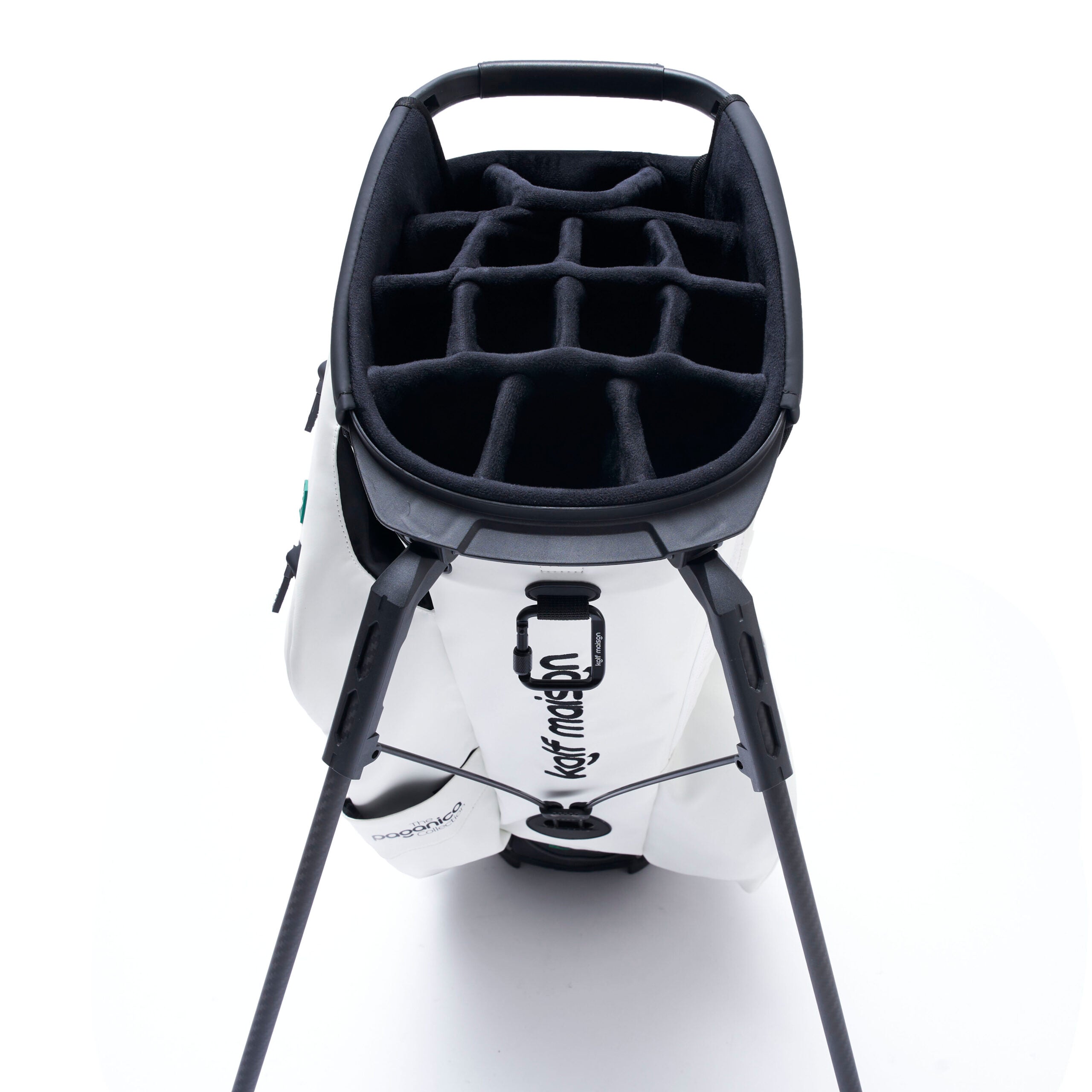
Cleaning Golf Bag Dividers
Dividers accumulate dirt more quickly than many golfers realize.
Club grips constantly transfer:
- Sweat
- Dirt
- Grass residue
- Sunscreen
To clean dividers:
- Remove all clubs.
- Vacuum loose debris.
- Use a damp microfiber cloth.
- Clean each divider individually.
- Allow complete drying before replacing clubs.
Golfers interested in club protection should also read The Club Clatter Fix.
Cleaning Interior Pockets
Interior pockets are often ignored during routine maintenance.
Yet they frequently contain:
- Food crumbs
- Tee debris
- Sand
- Scorecards
- Moisture
Monthly cleaning should include:
- Emptying all compartments
- Vacuuming debris
- Wiping surfaces
- Allowing complete airflow
Golfers looking for efficient storage systems may enjoy our guide on Golf Bag Organization.
How to Store a Golf Bag Properly
Storage habits influence longevity just as much as cleaning habits.
Avoid storing golf bags:
- In direct sunlight
- Inside hot vehicles
- In damp garages
- Near heaters
- In poorly ventilated spaces
Ideal storage conditions:
- Dry environment
- Moderate temperature
- Good airflow
- Clubs removed occasionally
If you travel frequently, our article on Golf Travel Bag Protection provides additional guidance.
Approved Golf Bag Cleaning Products
| Product | Recommended Use |
|---|---|
| Warm Water | Routine cleaning |
| Mild Dish Soap | Daily cleaning |
| Microfiber Cloth | All cleaning procedures |
| OxiClean Diluted | Stubborn stains |
| Shout Stain Remover | Dye transfer |
| Resolve Stain Remover | Localized contamination |
| Tide Pen | Fresh small stains |
| Activated Charcoal | Odor removal |
Products You Should Never Use
| Avoid | Reason |
|---|---|
| Bleach | Discoloration and material damage |
| Acetone | Finish destruction |
| Paint Thinner | Permanent damage |
| Lacquer Thinner | Material degradation |
| Brake Cleaner | Chemical damage |
| Wire Brushes | Abrasion |
| Pressure Washers | Water intrusion |
| Steam Cleaners | Excessive heat exposure |
Frequently Asked Questions
How do I clean a golf bag?
Use warm water, mild dish soap, and a microfiber cloth. Dry thoroughly after cleaning.
Can I use OxiClean on a golf bag?
Yes, when diluted and used carefully for stubborn stains.
Can I use laundry stain remover?
Many mild stain removers can be effective when spot tested first.
How do I clean a white golf bag?
Address stains quickly using warm water, mild soap, and microfiber cloths.
How do I remove grass stains?
Warm water and mild soap usually resolve fresh stains.
Can sunscreen stain a golf bag?
Yes. Sunscreen residue is one of the most common causes of discoloration.
How do I remove ink?
Use a small amount of isopropyl alcohol on a cotton swab after testing.
How do I remove mold?
Clean immediately using mild soap and allow complete drying.
Can golf bags be pressure washed?
No. Pressure washing can force moisture into materials and stitching.
Can golf bags fade?
Extended UV exposure can affect any material over time.
How often should a golf bag be cleaned?
Light cleaning every few rounds and deep cleaning every month is ideal.
How should I store my golf bag?
Store in a cool, dry environment with proper airflow.
Can I clean velvet dividers?
Yes. Vacuum first, then wipe gently using a damp microfiber cloth.
Can food stains damage golf bags?
Yes, especially sugary beverages and acidic spills.
What causes golf bags to peel?
Heat, humidity, material quality, and age all contribute. Learn more in our guide on Hydrolysis in Golf Bags.
Final Thoughts
A luxury golf bag is designed to accompany years of rounds, travel, and memorable moments on the course. Proper maintenance does not require complicated products or expensive treatments. Consistent cleaning, smart storage, and immediate attention to stains will preserve appearance and performance far more effectively than aggressive restoration efforts later.
To learn more about premium golf bag materials, durability, and long term ownership, explore our guides on Luxury Golf Bags, Golf Bag Durability, Premium Golf Bag Comparison, and Material Integrity in Premium Golf Bags.


Share:
Magnetic vs Zipper Golf Bag Pockets | Which Lasts Longer