



The Golf Brand That Refuses Sameness

There is a moment that most serious golfers recognise, usually somewhere around the second or third season with a bag they paid good money for. The base has started to give. The zippers bind in cold weather. The strap balance has shifted as the internal structure settled. The bag still functions, technically. But it no longer feels like what they bought.
That moment is not an accident. It is the intended lifespan of a product built to a cost, at a volume, by an industry that has quietly agreed the golf bag is a consumable. Kolf Maison was built to refuse that agreement — and to refuse it completely, not just in the marketing language.
The Standard the Market Set
The average golfer replaces their bag every three years. Not because they want to. Because it fails them.
The base collapses under repeated ground contact. The zippers bind after a season of moisture and friction. The fabric peels at the seams where stress concentrates. The straps lose their balance as the internal structure shifts. The golfer who bought in good faith finds themselves carrying a bag that is slowly becoming something else — something compromised, something that requires accommodation rather than performing correctly.
This failure has become so consistent that the market has normalised it. Bags are priced assuming replacement. Marketing material does not discuss longevity because longevity is not what the product is built for. Materials are selected for cost efficiency at volume, not for performance across seasons. The result is an industry that has quietly agreed: a golf bag is a consumable. You use it, it fails, you buy again.
That agreement is what Kolf Maison refuses.
Three Forms of Sameness
When a brand says it refuses sameness, the claim is easy to make and difficult to honour. Sameness in golf equipment operates at three levels. Addressing one while ignoring the others produces a different version of the same problem.
Visual Sameness
Walk the tee boxes at any serious course. Count the bags. The same silhouettes, the same colour treatments, the same logo placement from the same handful of brands. Some of them are expensive. Some are positioned as premium. Most are carried by golfers who never gave the bag a second thought beyond whether the colour matched their shoes.
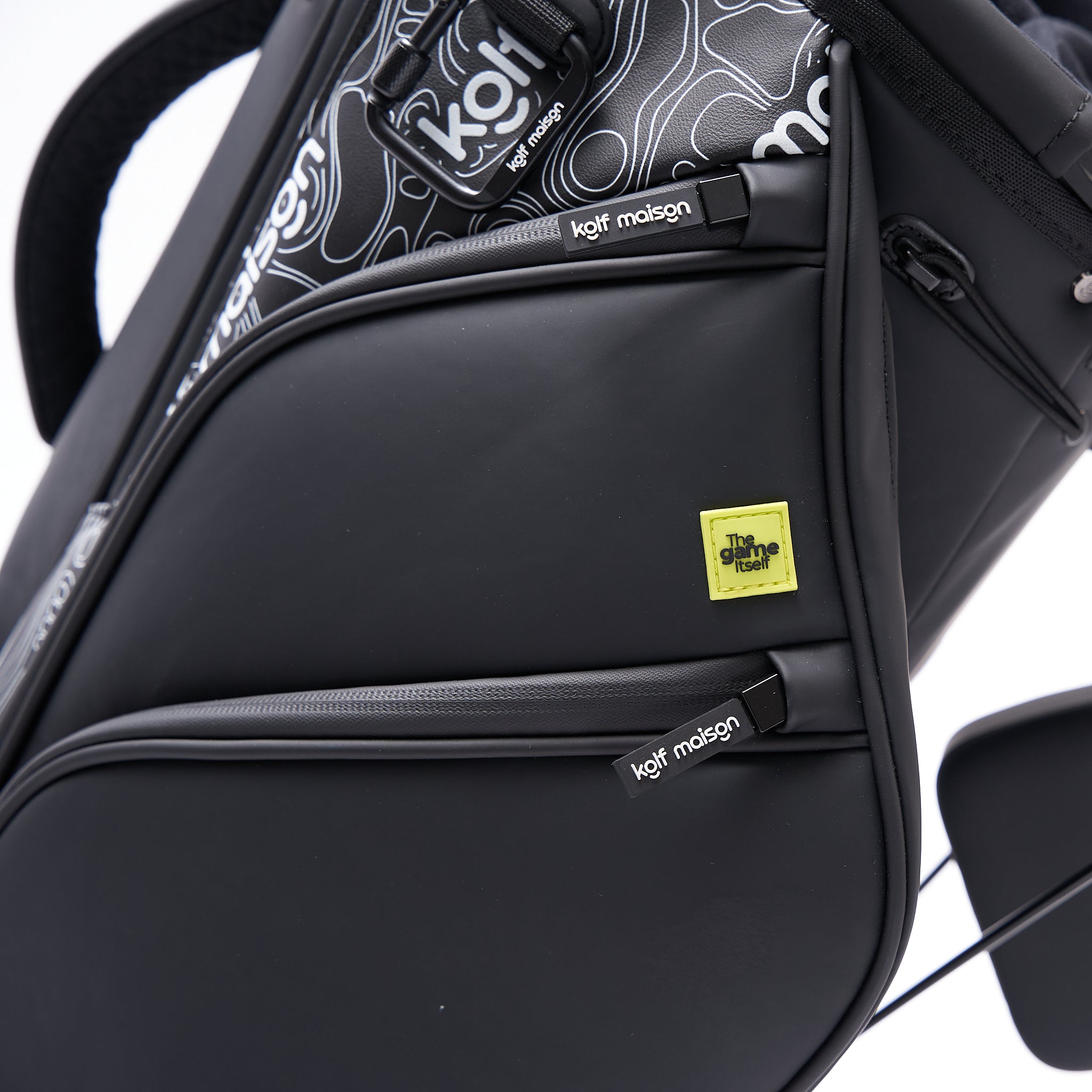
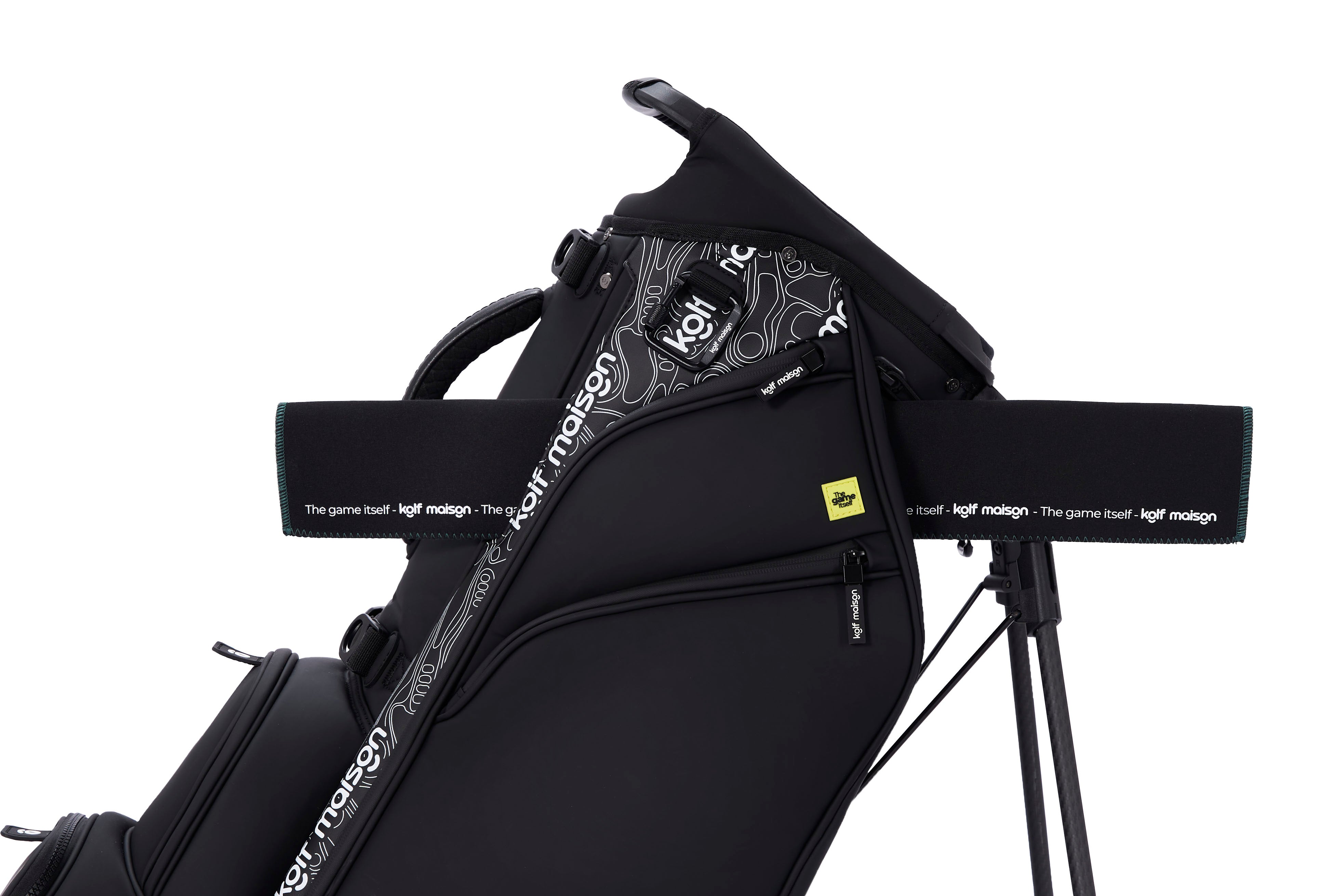
Visual sameness is not solved by different colourways or a revised logo. It is solved by restraint — by designing a bag whose presence is felt through proportion and material quality rather than announced through branding. Kolf Maison branding is deliberately minimal. The bag says nothing loudly. What it communicates, it communicates through structure and finish, to the people who know what they are looking at.
Quality Sameness
Mass production is not a flaw in the golf bag market. It is its foundation. At scale, manufacturers make consistent decisions: materials selected for cost efficiency, production lines optimised for throughput, quality thresholds calibrated to what the average buyer will accept rather than what the material is actually capable of. The result is a category where meaningful quality differences between brands at similar price points are marginal, because the constraints that produce those brands are identical.
Kolf Maison operates under different constraints. Producing 4,000 bags per model per year is not a positioning decision. It is the condition under which the construction standards the Maison demands can actually be maintained. Above that volume, without adopting the shortcuts that define mass production, the quality level cannot be guaranteed. The limit exists because the quality requires it.
Status Sameness
The golf equipment market has produced a version of luxury that is widely available, frequently discounted, and carried by enough people that its signal has become noise. When every golfer at a private club carries the same "premium" bag from the same brand, the premium has collapsed into the average. Status sameness is the most damaging form, because it persuades buyers to pay for distinction they are not actually receiving.
Real luxury is personal, selective, and never commonly carried. It does not require explanation. It does not need visibility to validate itself. The golfer who carries Kolf Maison is not communicating with the tee box. They are carrying what they chose, for reasons that have nothing to do with what is available in the pro shop next door.
| The three forms of sameness | How the market addresses it | How Kolf Maison addresses it |
| Visual | New colourways, updated logos, seasonal releases | Restrained design — presence through material and proportion, not branding |
| Quality | Premium price point on mass-production infrastructure | 4,000-unit annual limit — the only volume at which the construction standard holds |
| Status | Widely distributed "premium" — available everywhere, discounted seasonally | Structural rarity — one bag for every several thousand golfers, never discounted |
The Discipline Behind the Design
Kolf Maison was founded by Silvio Duque — scratch golfer and trained architect. That combination is not incidental. It is the design philosophy.
Architecture is a discipline of functional problem-solving before aesthetics. An architect does not begin with what a building should look like. They begin with what it must do: load-bearing requirements, circulation patterns, material behaviour under stress, the relationship between structural decisions and the experience of the people inside. Beauty, when it appears, is a consequence of those decisions being made correctly. It is not the starting point.
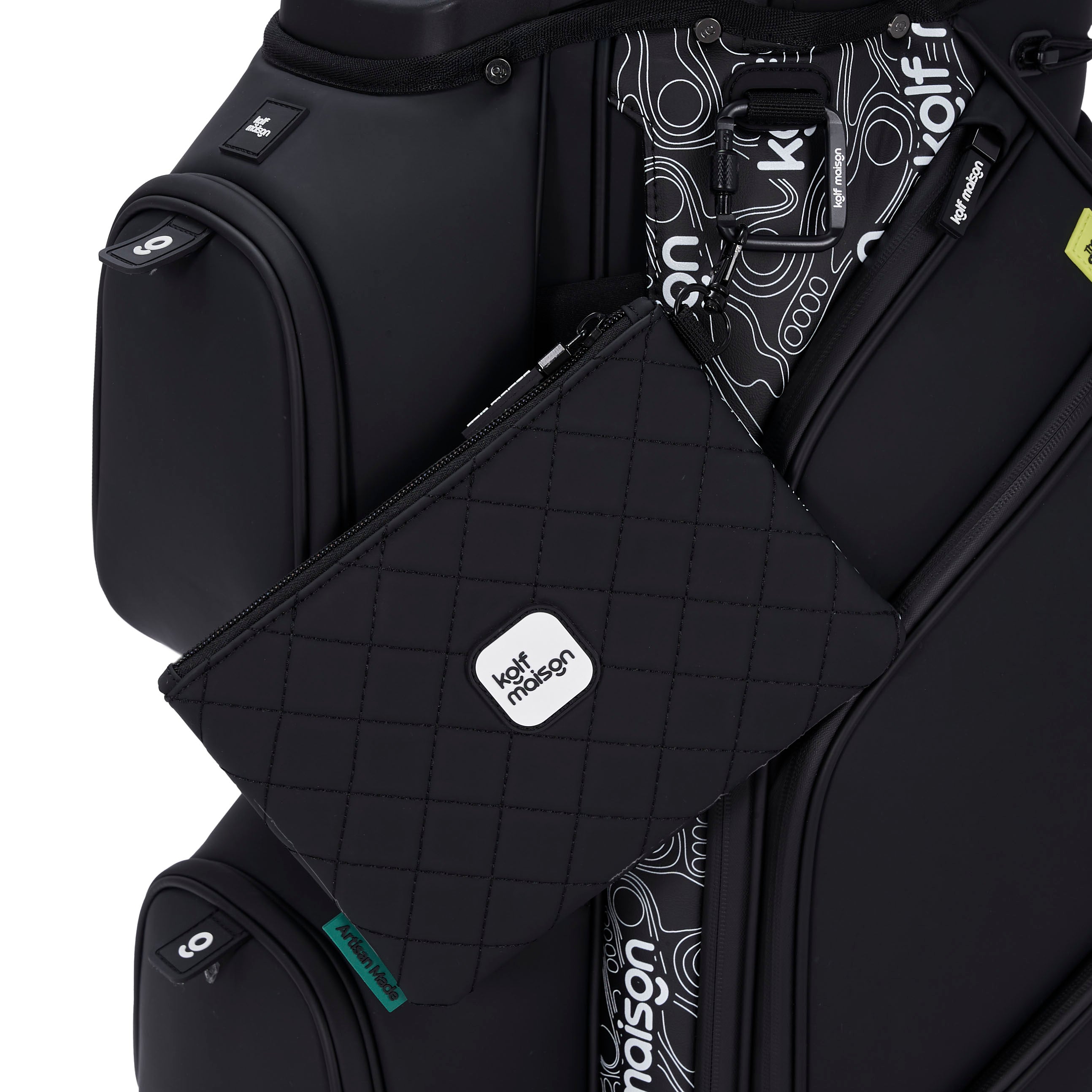
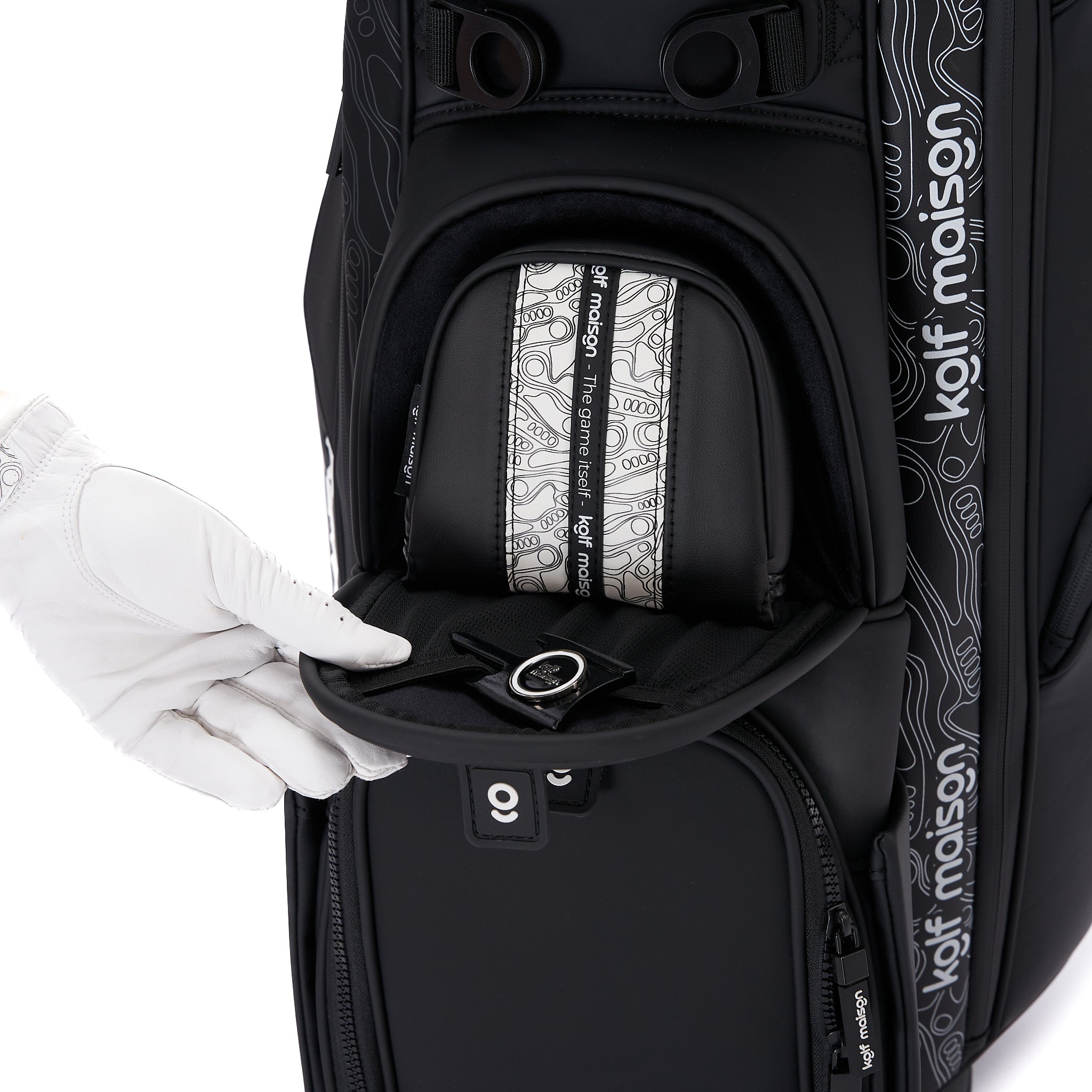
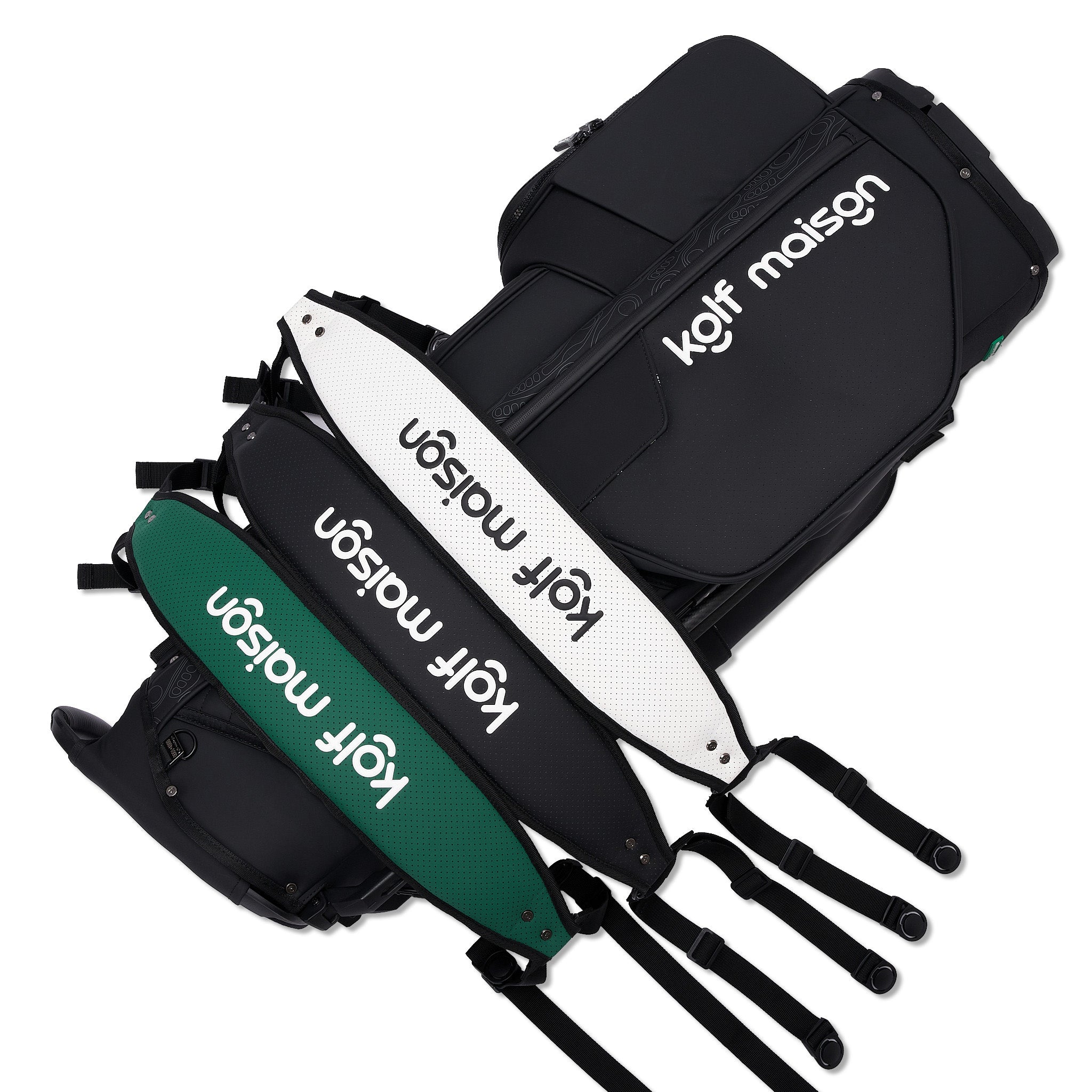
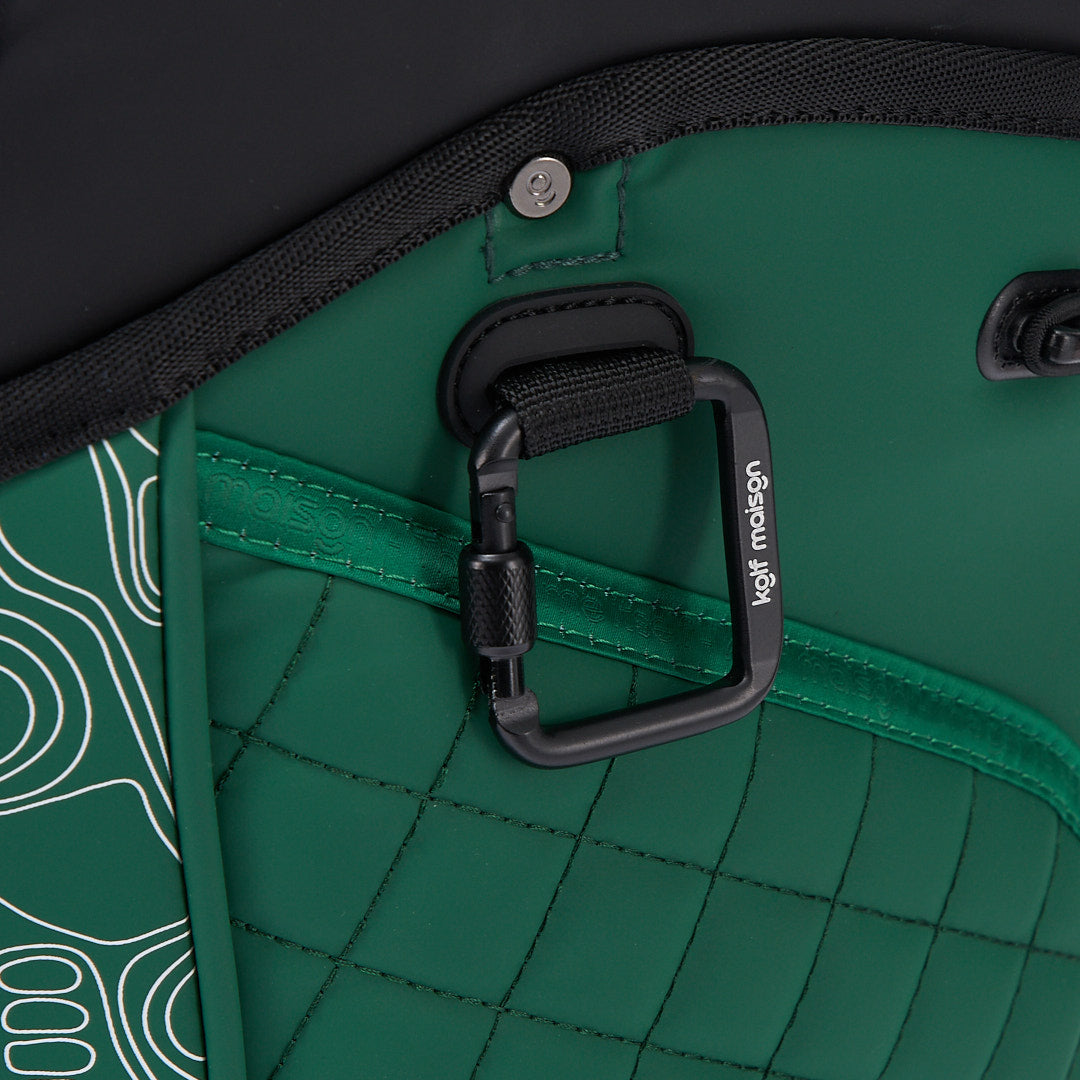
The same logic governs every design decision in a Kolf Maison bag. Strap systems are engineered for balance across both shoulders — not designed to look symmetrical. Storage is positioned for access whether the golfer is walking or riding — not arranged for visual appeal in a product photograph. Magnetic closures are integrated because they are silent, reliable, and precise. Reinforced base construction prevents the structural collapse that ends most bags before their time, because structural integrity was the first question, not an afterthought.
Nothing is placed for appearance. Everything is placed for performance. The appearance is what remains when those decisions are made well.
The Architect's Principle
Beauty is a consequence of discipline. Not its purpose. Every design decision in a Kolf Maison bag is functional first. The aesthetic is what remains when those decisions are made correctly — and it holds its form across seasons for exactly that reason.
What Built Different Actually Means
Most bags describe their materials in the language of marketing. Kolf Maison describes them in the language of engineering, because engineering is how they were selected.
The exterior of every Paganica bag is constructed from Premium Matte Microfiber Composite Leather — a performance-engineered composite validated against international standards: adhesion and peel strength exceeding 27 newtons per 24 millimetres under ASTM D751, flex endurance beyond 7,000 cycles under ISO 5402 without visible cracking, abrasion resistance exceeding 4,000 cycles under ASTM D3884, and UV stability verified under ISO 105 B02. Colour fastness achieves 4.4 out of 5 under ISO 11640 and AATCC 8.
These are not numbers selected to impress. They are the minimum thresholds for a material that performs correctly across seasons — that does not soften in summer heat, does not craze in winter cold, does not absorb moisture during a wet round, and looks and performs the same way after three hundred rounds as it did when it arrived.
| Material property | Standard tested against | What it means on the course |
| Adhesion & peel strength | ASTM D751 — 27N per 24mm | Exterior does not peel or delaminate at stress points |
| Flex endurance | ISO 5402 — 7,000+ cycles | No visible cracking through years of carry and movement |
| Abrasion resistance | ASTM D3884 — 4,000+ cycles | Surface holds its finish against repeated contact and friction |
| UV stability | ISO 105 B02 | Colour and surface integrity maintained across seasons of sun exposure |
| Colour fastness | ISO 11640 / AATCC 8 — 4.4/5 | Colour does not transfer or fade under moisture or friction |
Interior Construction
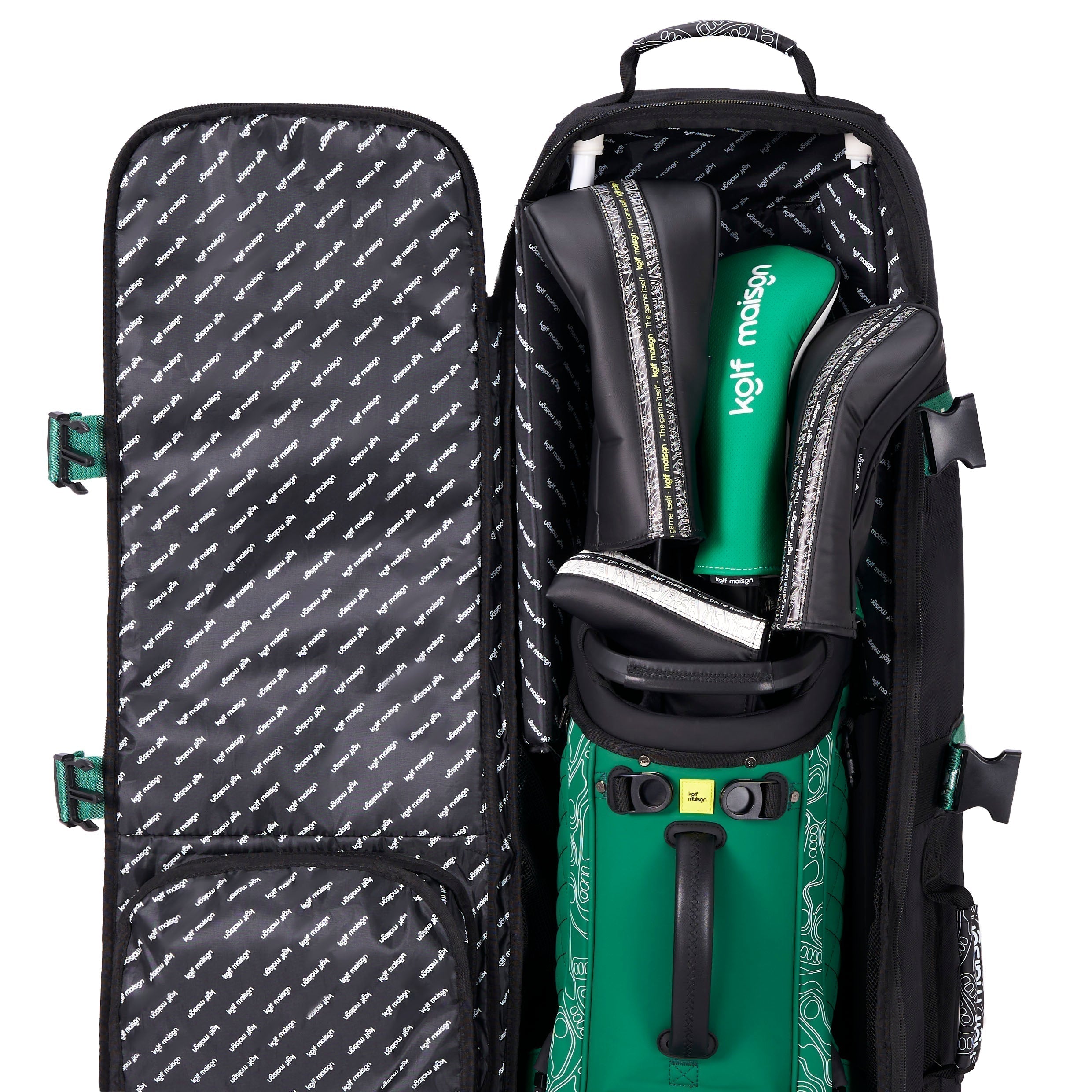
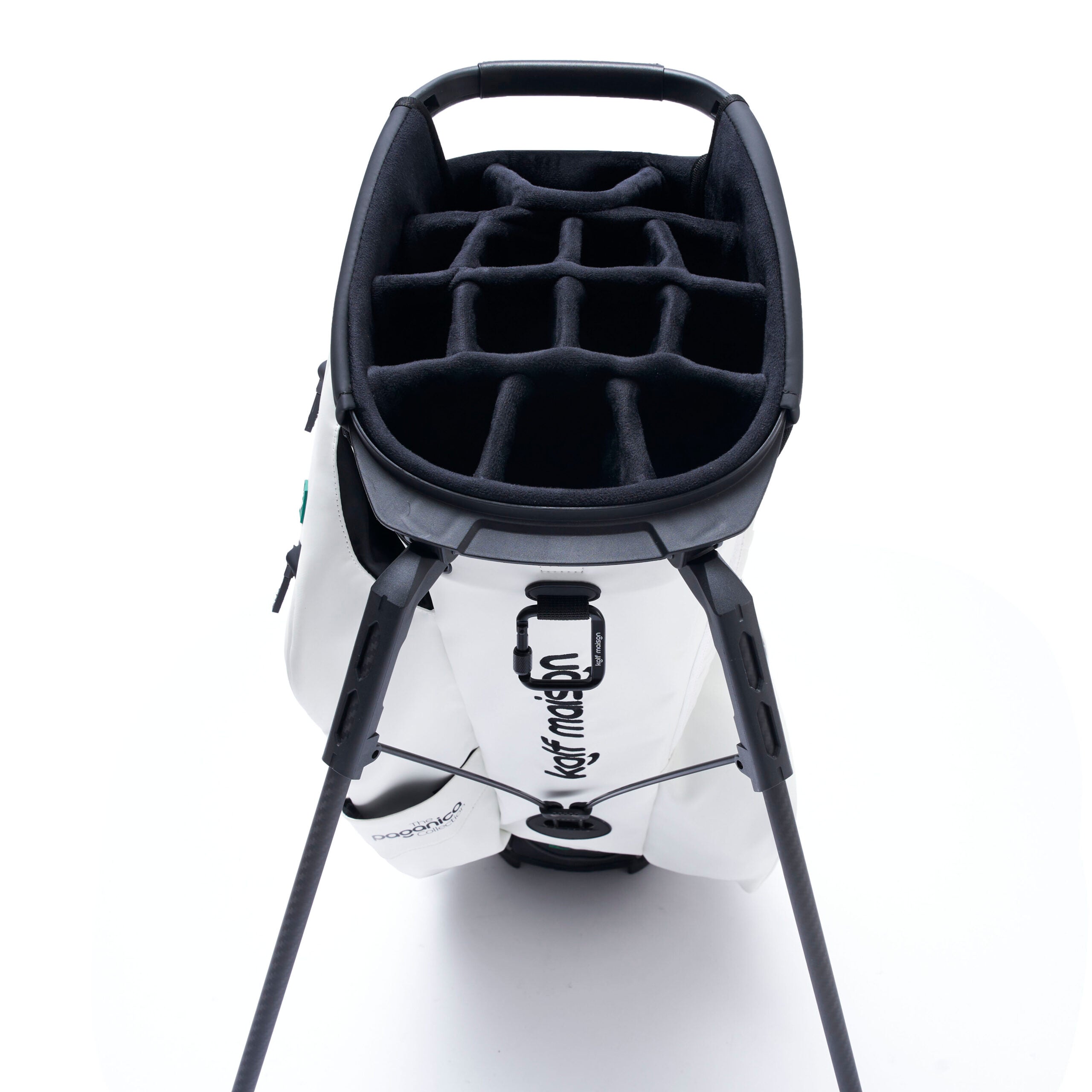
Where most bags use standard fabric linings, Kolf Maison lines dividers and personal pockets with velour. This eliminates club chatter during carry and on the cart. It protects grips, shaft finishes, and valuables from abrasion during movement. Antimicrobial interior treatments manage moisture and odour across years of consecutive use. Genuine leather handles replace synthetic alternatives at primary lift points — the points where material faces the most repeated stress over the life of the bag.
These decisions do not appear in a product photograph. They are experienced every round, and they accumulate into the difference between a bag that performs the same at round three hundred as it did at round one, and a bag that has quietly become something else.
The Stand Mechanism and Structural Base
The base of a golf bag is where most bags begin to fail. Repeated ground contact, moisture, weight distribution from a full set — over time, standard base construction collapses inward. The bag loses its geometry. The stand mechanism, which depends on a stable base to deploy correctly, begins to behave inconsistently. The bag that stood cleanly in year one needs to be propped by year three.
Kolf Maison base construction is reinforced specifically because base failure is the most common structural failure in the category. The stand mechanism deploys with the single foot-trigger actuation that serious golfers expect from equipment that performs without thought. Not on good days. Consistently, across every round, in every condition.
The 4,000 Limit: Operational Restraint, Not Theatre
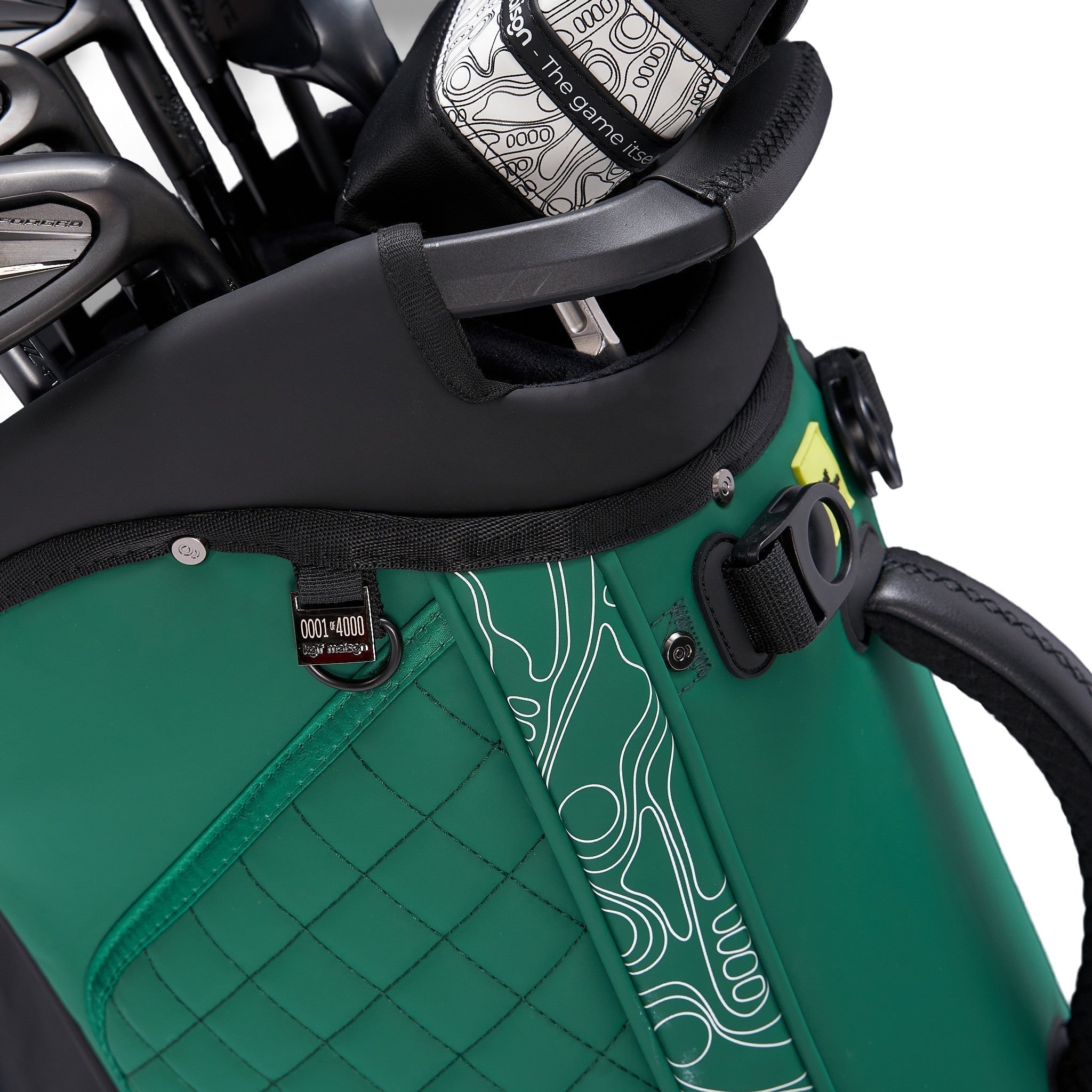
Kolf Maison produces 4,000 bags per model per year. Every single one is numbered. When the count reaches 4,000, production closes.
This is not a marketing strategy. It is not engineered scarcity designed to create urgency. It is the production ceiling above which the quality standards the Maison demands cannot be maintained without accepting the compromises that define mass production. At scale, inspection becomes sampling. At scale, materials are selected with cost efficiency as a primary constraint. At scale, the human attention that goes into each unit becomes a resource to be minimised rather than a standard to be upheld.
4,000 bags per model per year is the number at which every unit can be individually assembled, inspected, serial numbered, and released only when it meets the standard. That discipline is operational. It exists because there is no other way to build what Kolf Maison builds.
What the Serial Number Actually Means
The serial number on a Kolf Maison bag is a factual statement about its production. The golfer holding unit 732 or unit 3,891 is holding one of a finite, inspected set — not one of a statistical sample drawn from a production line optimised for throughput.
Consider the math: roughly 40 million golfers play regularly in the United States alone. 4,000 bags per model per year means approximately one Kolf Maison bag for every several thousand golfers. That figure is not maintained through waitlists or allocation windows. It is maintained because above 4,000, the production cannot be what it is.
Rarity Here Is Structural, Not Theatrical
Roughly one Kolf Maison bag for every several thousand golfers. Every unit individually assembled, inspected, and serial numbered. Production closes at 4,000 — not as a marketing tactic, but as the only condition under which the construction standard holds. It is maintained, not performed.
Who Carries Kolf Maison
Kolf Maison is not a bag for every golfer. It was never designed to be.
The golfer who carries Kolf Maison has typically carried other bags first. They know what failure looks like — they have lived through the base collapse, the zipper that binds after a wet season, the strap that loses its balance. They are not buying premium for the first time. They are choosing to be done accepting the substitutes.
They play frequently. Material quality becomes noticeable through use, not through inspection at purchase. A golfer who plays ten rounds a year may not feel the difference between standard and engineered construction for several seasons. A golfer who plays a hundred rounds will feel it within months — and will understand, with clarity, what they were carrying before.
They value restraint over recognition. The Kolf Maison bag does not carry a name that generates reactions on the first tee. What it generates, among those who know what to look for, is something quieter and more durable: respect.
They are done replacing. The calculation of a bag at $479 that holds its standard for a decade is different from a bag at $250 replaced every three years. The Kolf Maison buyer has done that calculation and understands that considered ownership and cost efficiency are not in opposition.
| This bag is for you if… | This bag is not for you if… |
| You play regularly and have felt quality differences through use, not just at purchase | You want a bag that is recognised and generates reactions on the first tee |
| You have carried the standard options and are done accepting what they become | You want seasonal releases and new colourways to refresh your setup each year |
| You view the bag as a long-term object rather than a seasonal purchase | You are price-sensitive at entry and want the lowest acquisition cost |
| Restraint and permanence matter more than visibility and trend alignment | You want a bag that is available everywhere, at any time, at a discounted price |
What the Golf Press Found
Kolf Maison has received coverage from the publications that serious golfers read for serious equipment assessment: MyGolfSpy, GolfWRX, Plugged In Golf, and Independent Golf Reviews.
These are not placements purchased through advertising relationships. These are publications that cover the premium end of golf equipment because their readers demand honest assessment of what the category actually contains. When they cover Kolf Maison, they are responding to what the product is — the design decisions, the material choices, the production philosophy — not to a PR budget.
"A Piece Of Art That Belongs On The Course." — MyGolfSpy
This category of validation cannot be manufactured. A golfer who has read MyGolfSpy for years knows the publication does not offer favourable coverage to equipment that does not earn it. That is what third-party press coverage from independent golf media actually means — and it is a signal the market's marketing budget cannot replicate.
The Paganica Collection
The Paganica is where Kolf Maison's design philosophy meets the specific demands of real course conditions. Two configurations. Same material standard. Same production limit. Same serial-numbered commitment.
Paganica Stand Bag
The Paganica Stand Bag is built for the golfer who walks — who wants weight distributed correctly across both shoulders, who needs the stand to deploy and hold on every terrain, and who expects organisation positioned for access in motion, not arranged for a product photograph.
The dual-strap harness is engineered for shoulder balance, not symmetry. The 14-way full-length divider system with putter well prevents shaft contact and protects grips through the full round. The magnetic range finder pocket closes silently and opens in a single motion. The velour-lined valuables pocket protects what matters when the bag is in motion.
Available in Obsidian Edge and Blanc Prestige — both produced to the same material and construction standard, both numbered within the 4,000-unit annual limit per model and colour.
Paganica Cart Bag
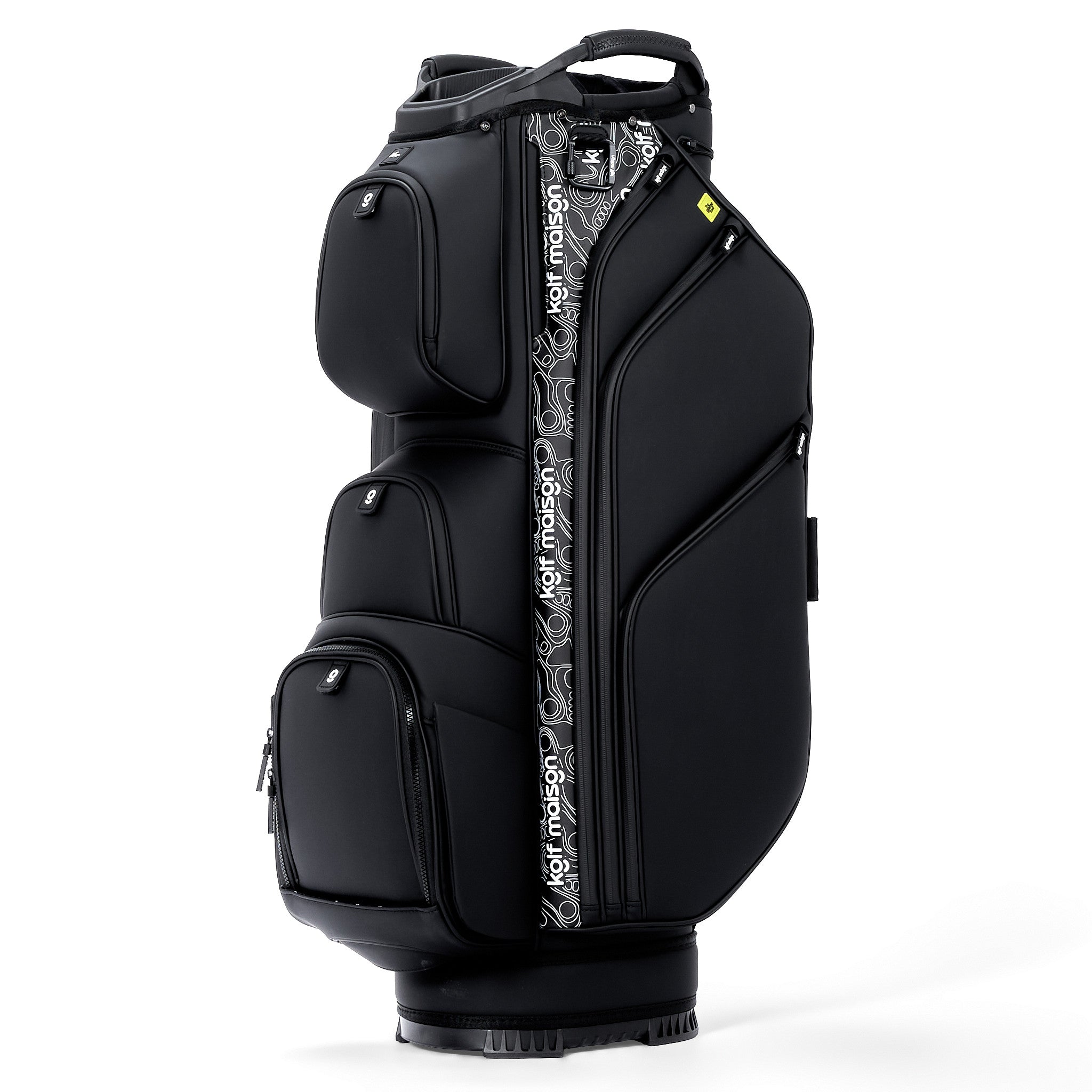
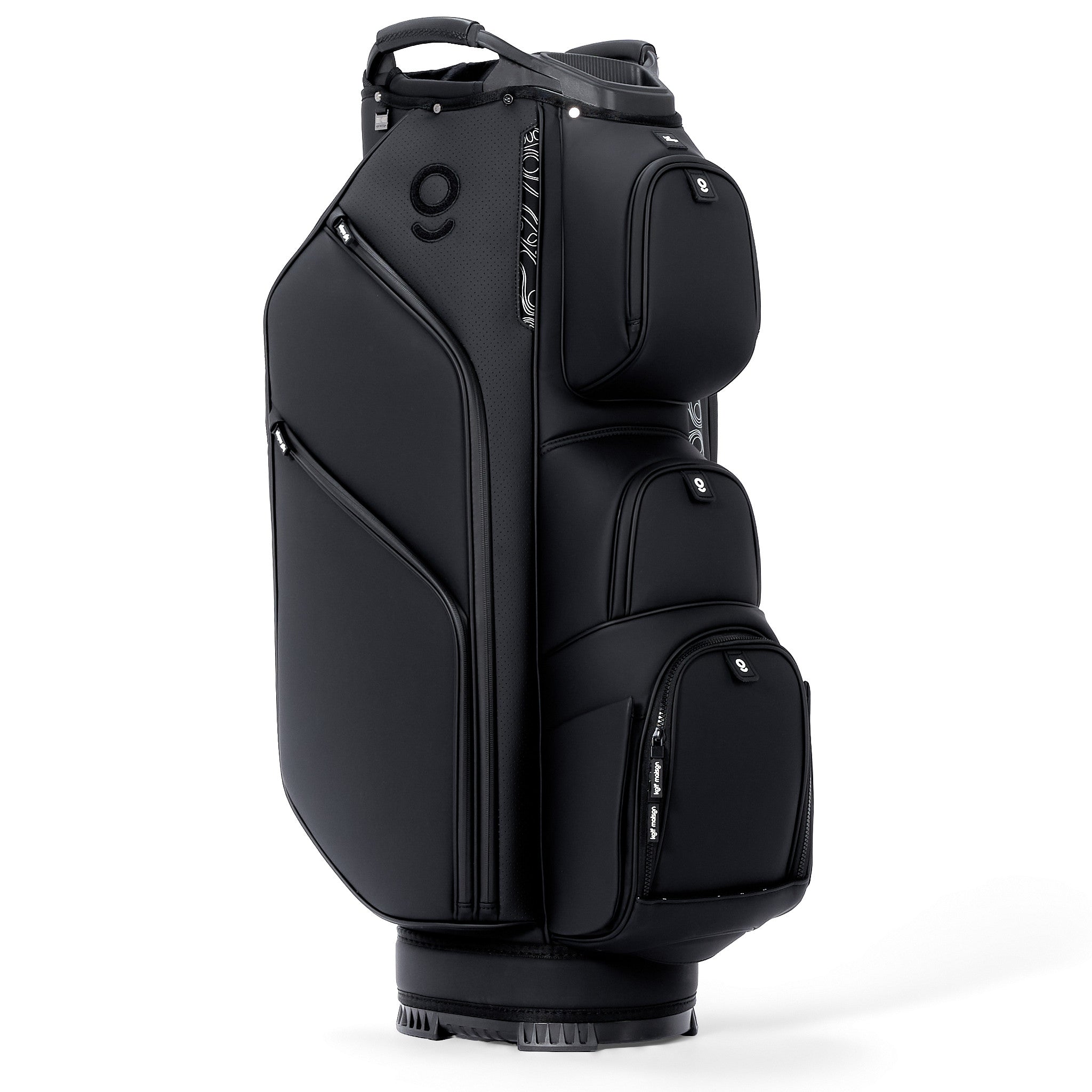
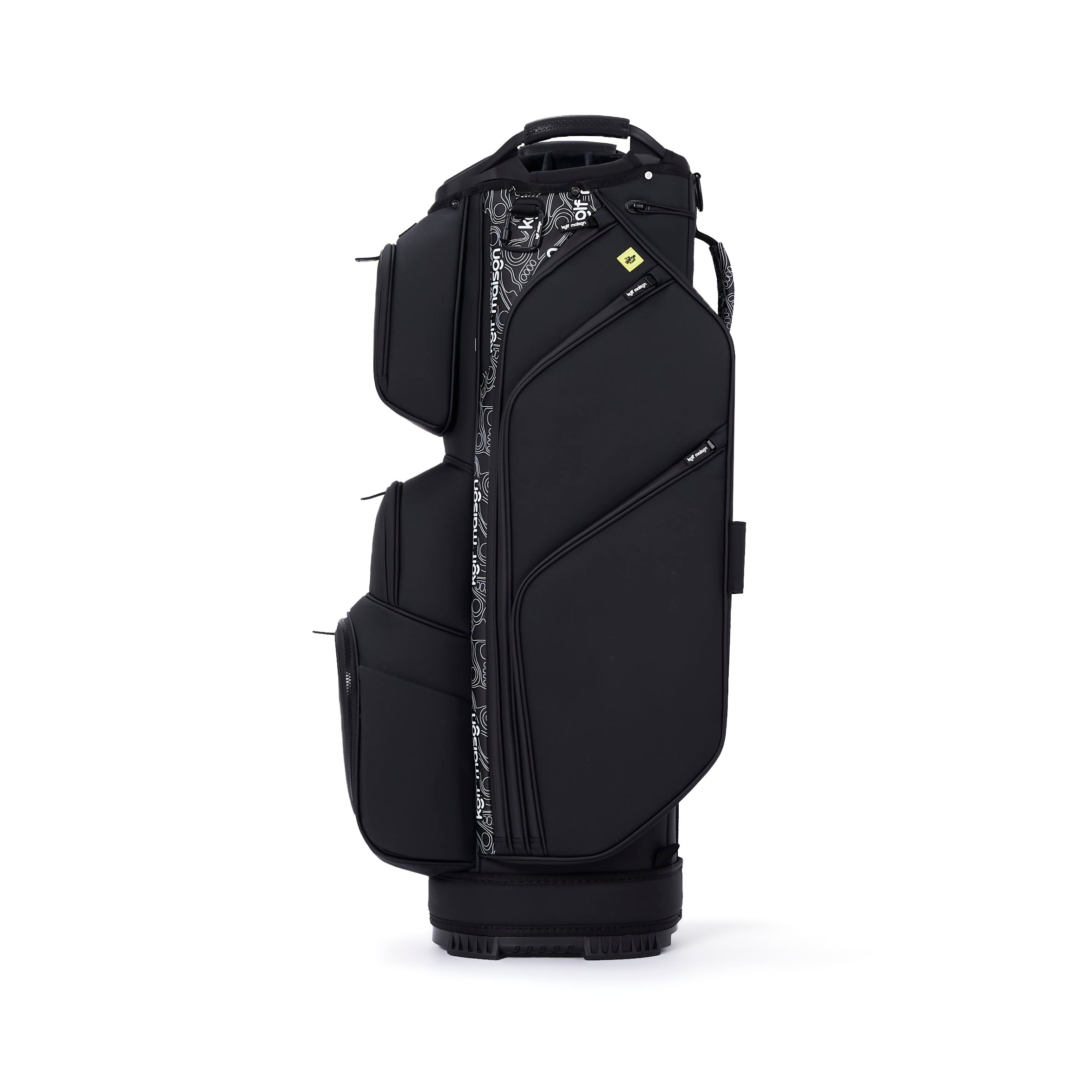
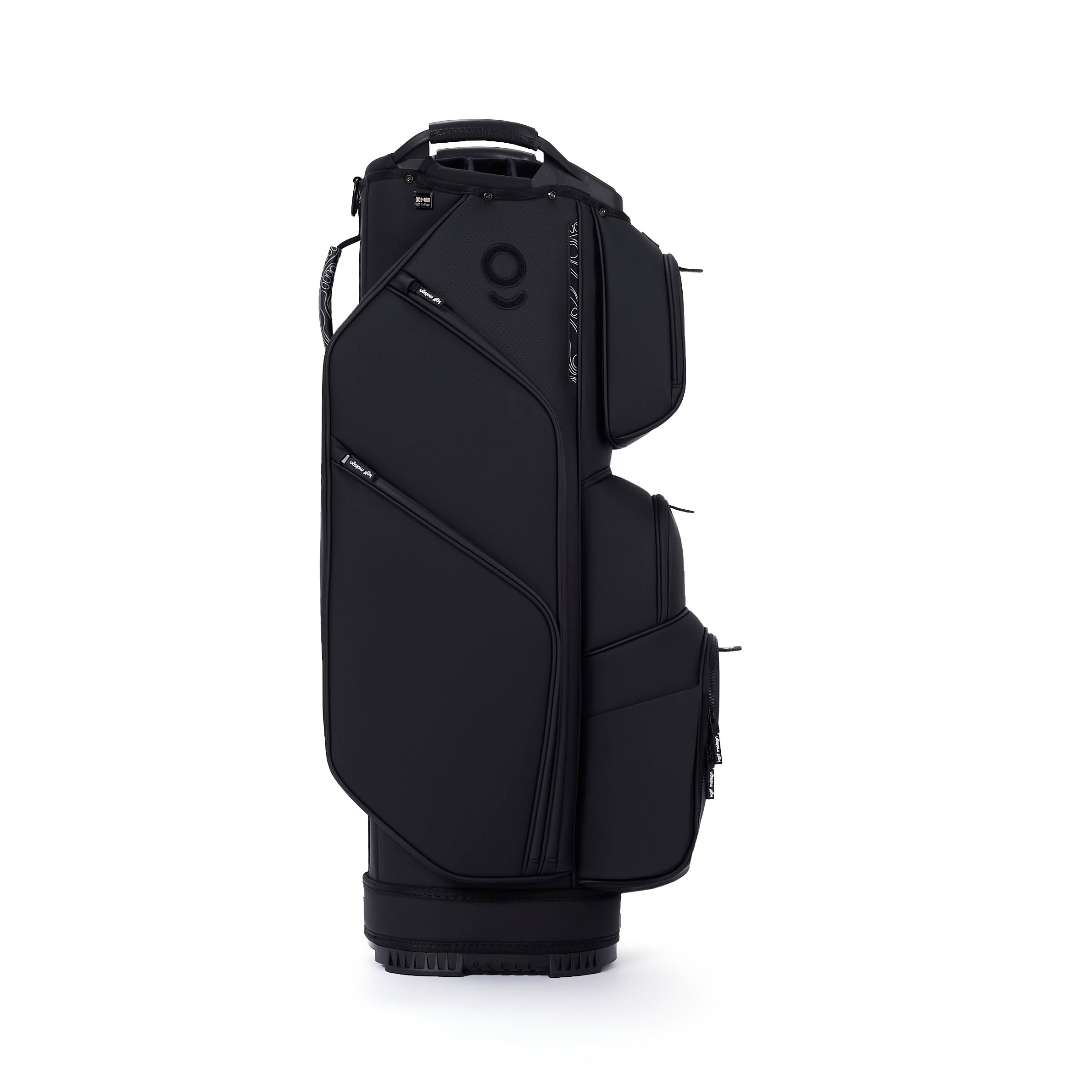
The Paganica Cart Bag applies the same material and construction standards to the golfer who rides. Cart compatibility is engineered, not assumed — base dimensions, strap-pass positions, and weight distribution are designed around cart mounting rather than adapted from a carry bag design.
Priced at $479, equal to the Stand Bag, because the construction standard does not change between the two. Available in Obsidian Edge and Blanc Prestige.
The Complete System
Kolf Maison extends beyond the bag, because the bag sets the standard — and what surrounds it should meet the same one.
| Product | Price | What it does |
| Paganica Stand Bag | $479 | 14-way divider, ergonomic dual-strap harness, full accessories bundle included |
| Paganica Cart Bag | $479 | Cart-engineered base and strap positioning, same material standard as Stand Bag |
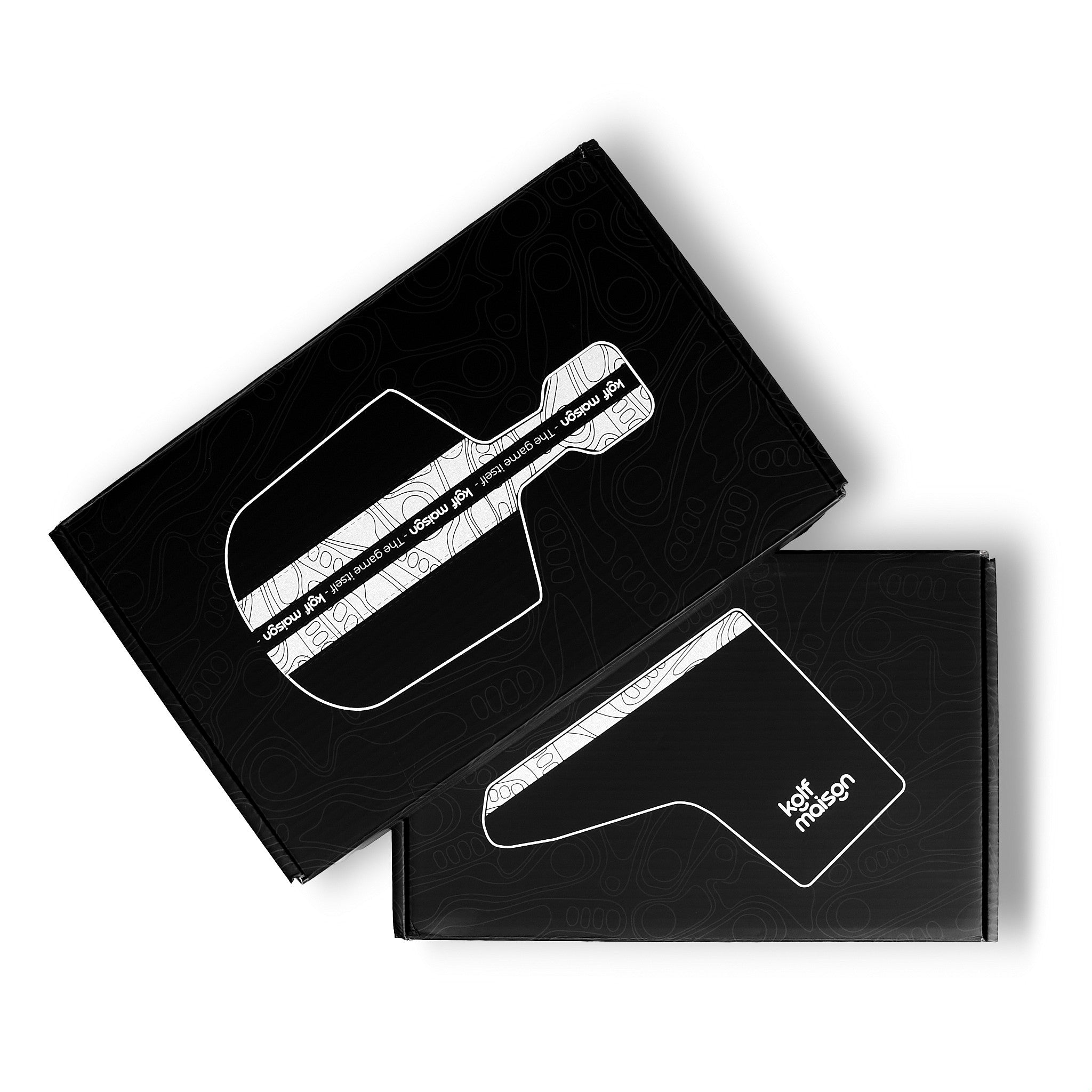
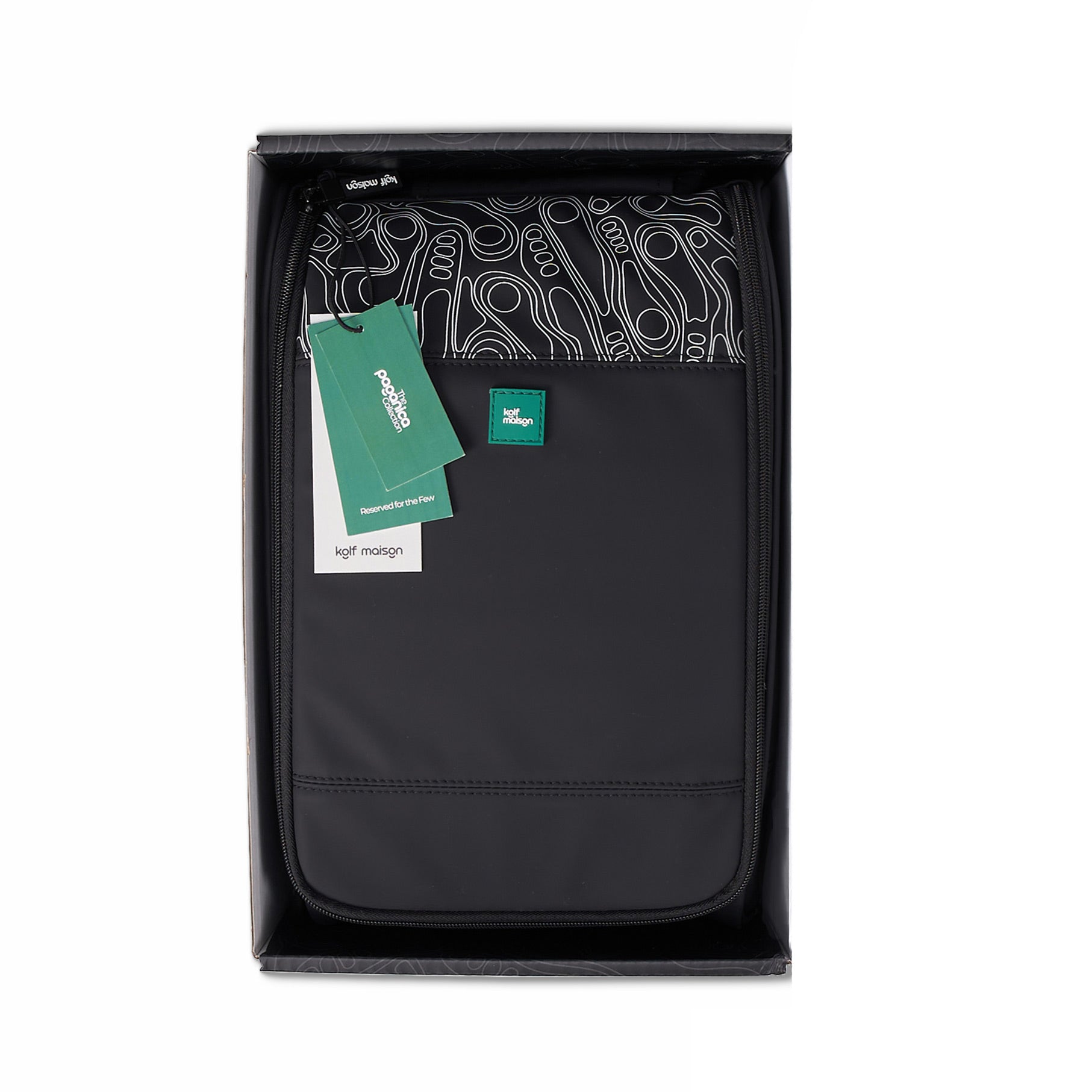
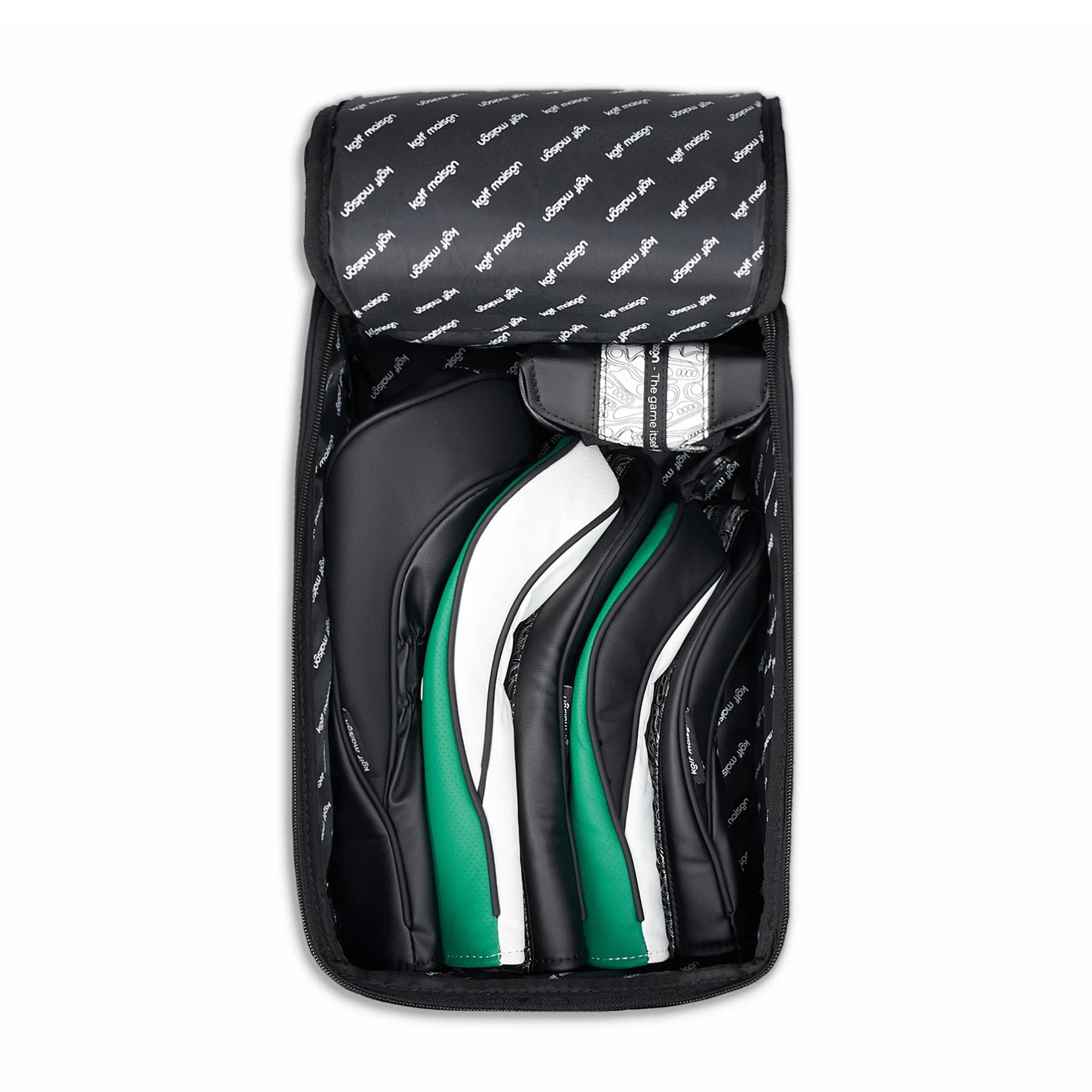
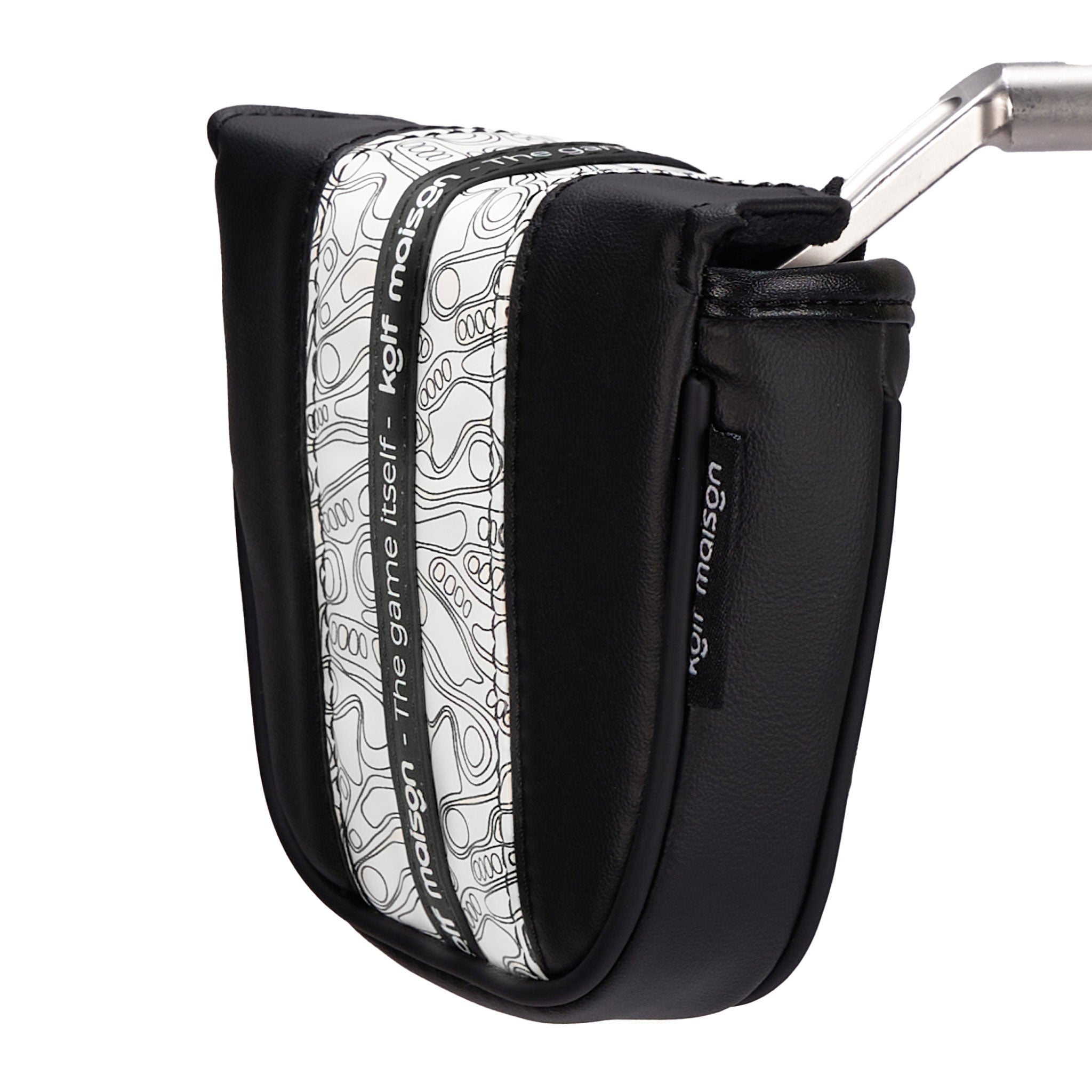
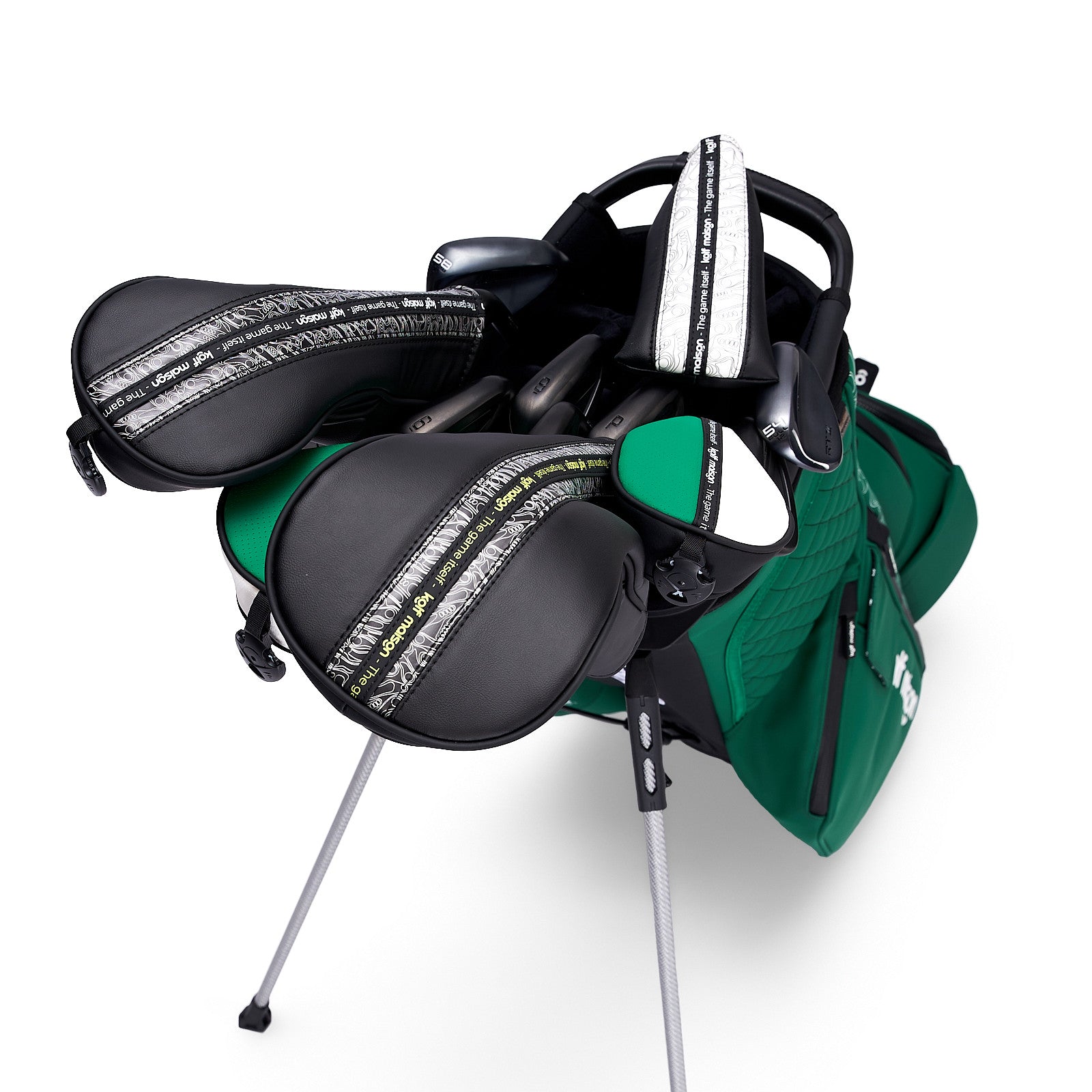
| Paganica Head Cover Set | $199 | Same exterior material as the bag. Blade and mallet configurations. Velour-lined interior. |
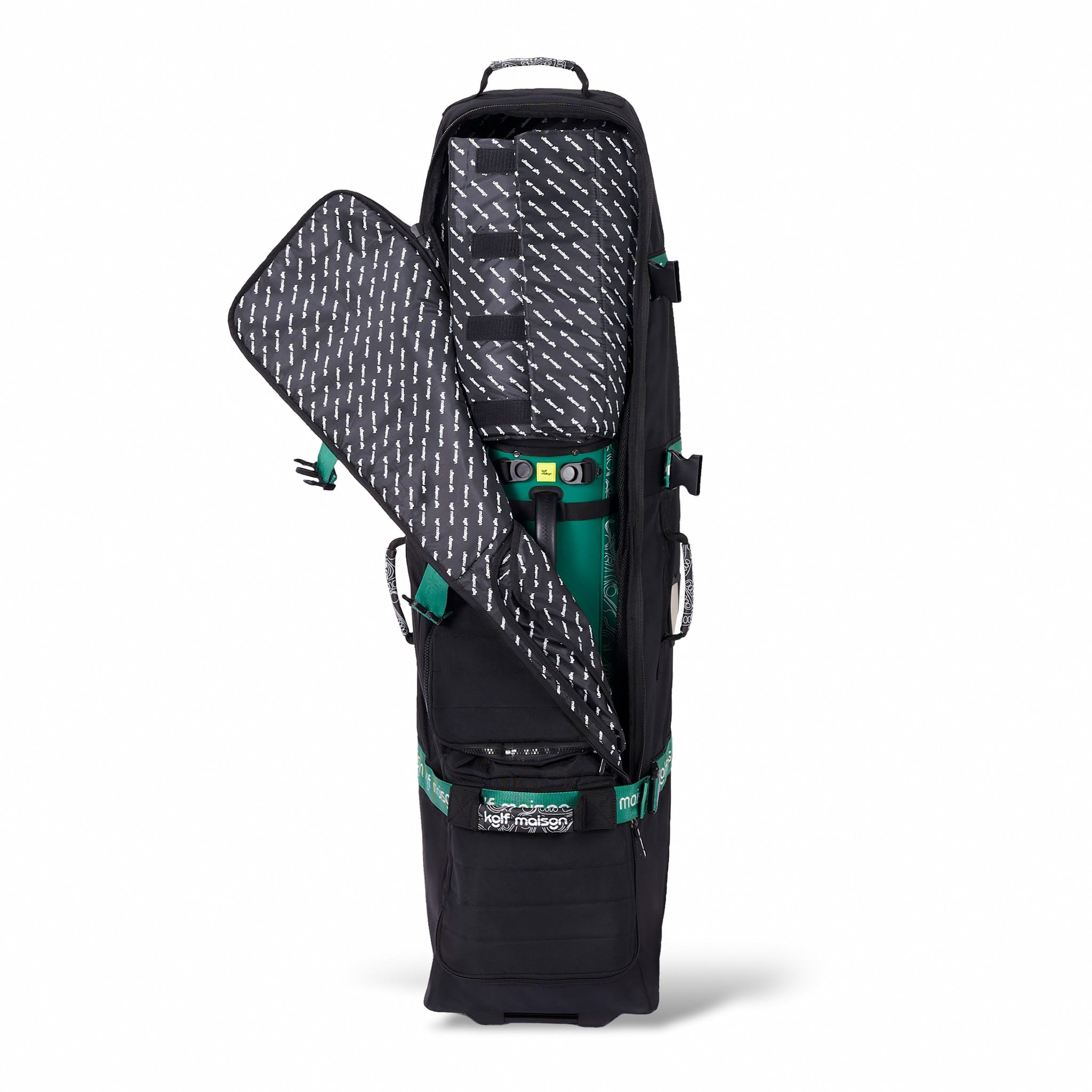
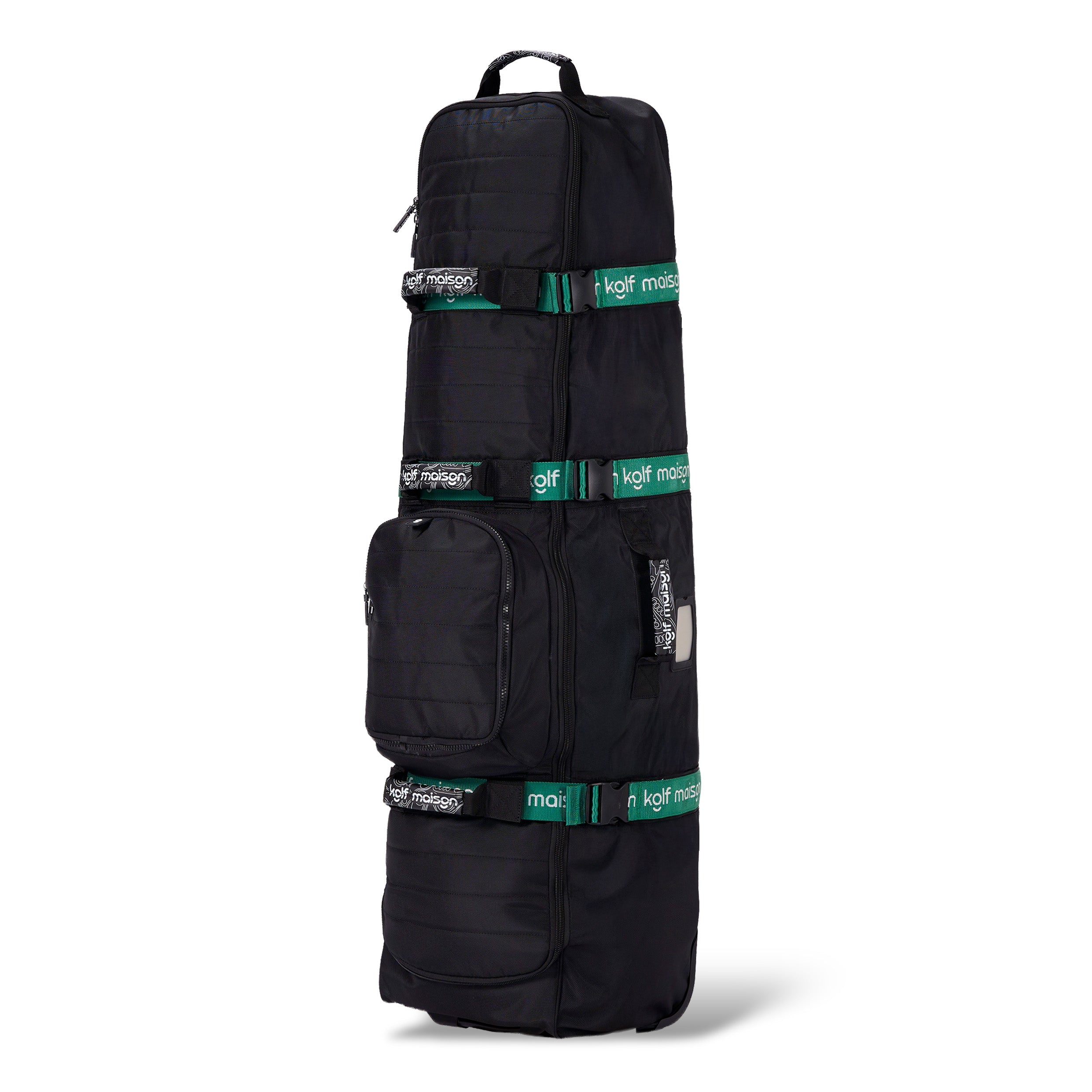
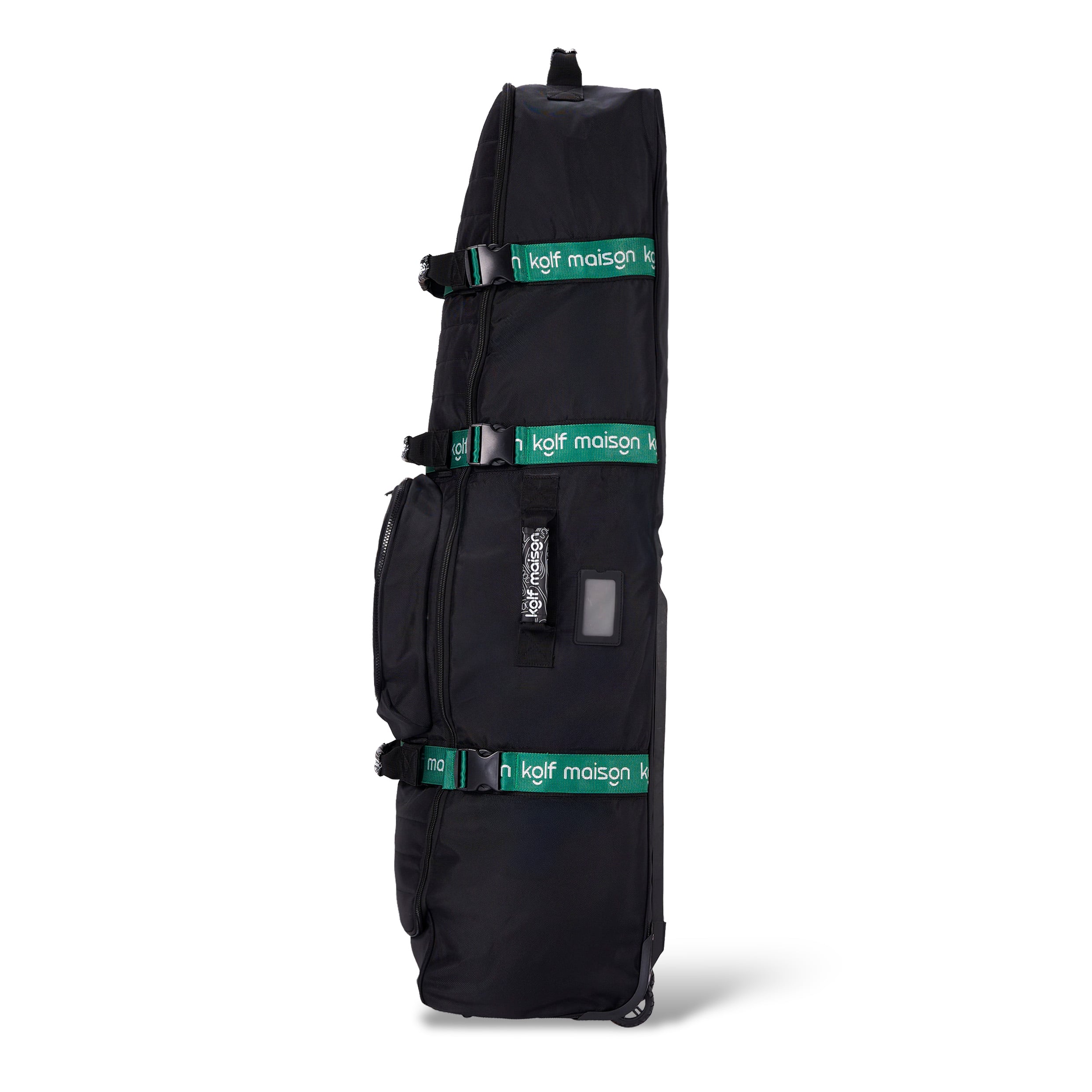
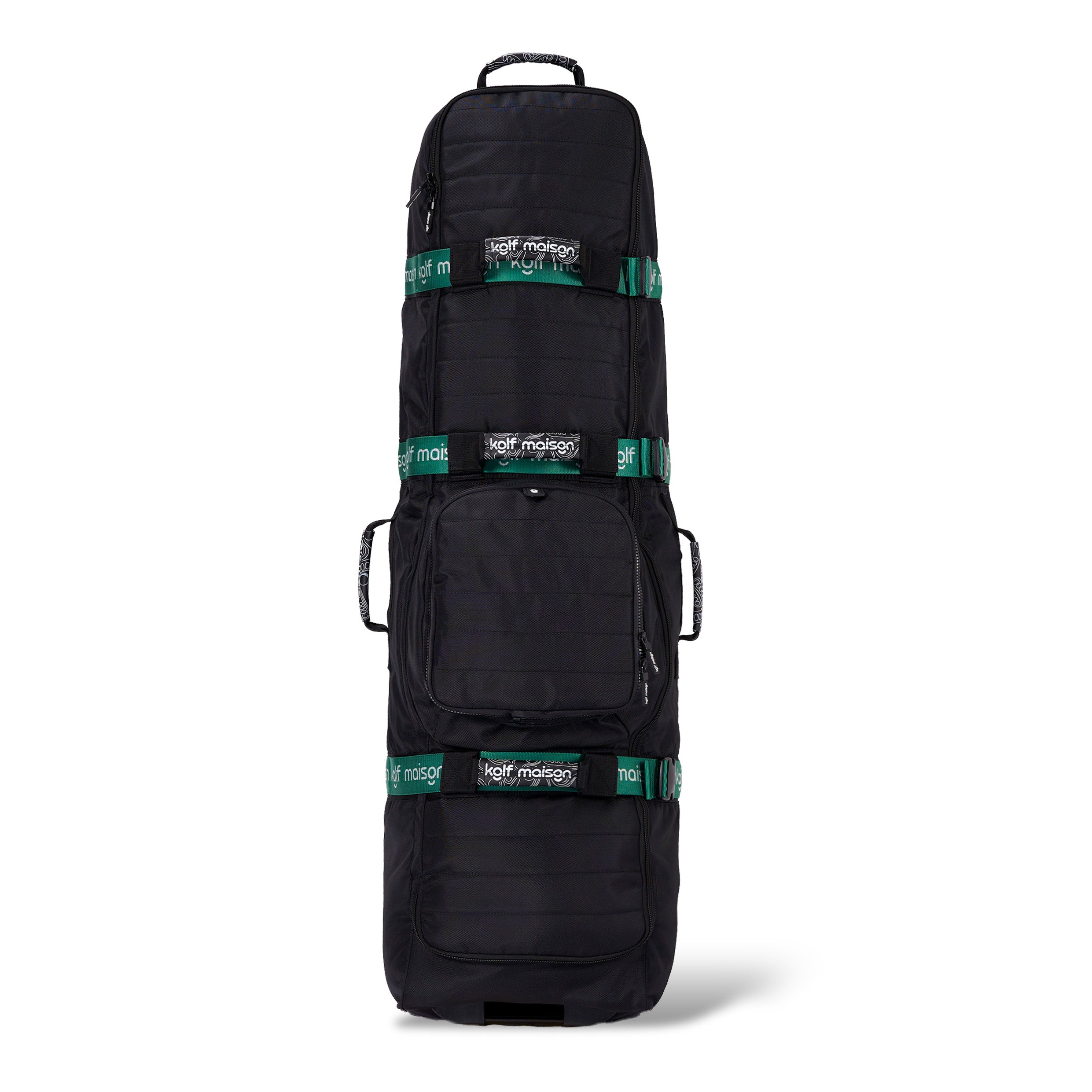
| Aura Travel Bag | $199 | Reinforced travel protection — preserves finish and structural geometry through cargo handling |
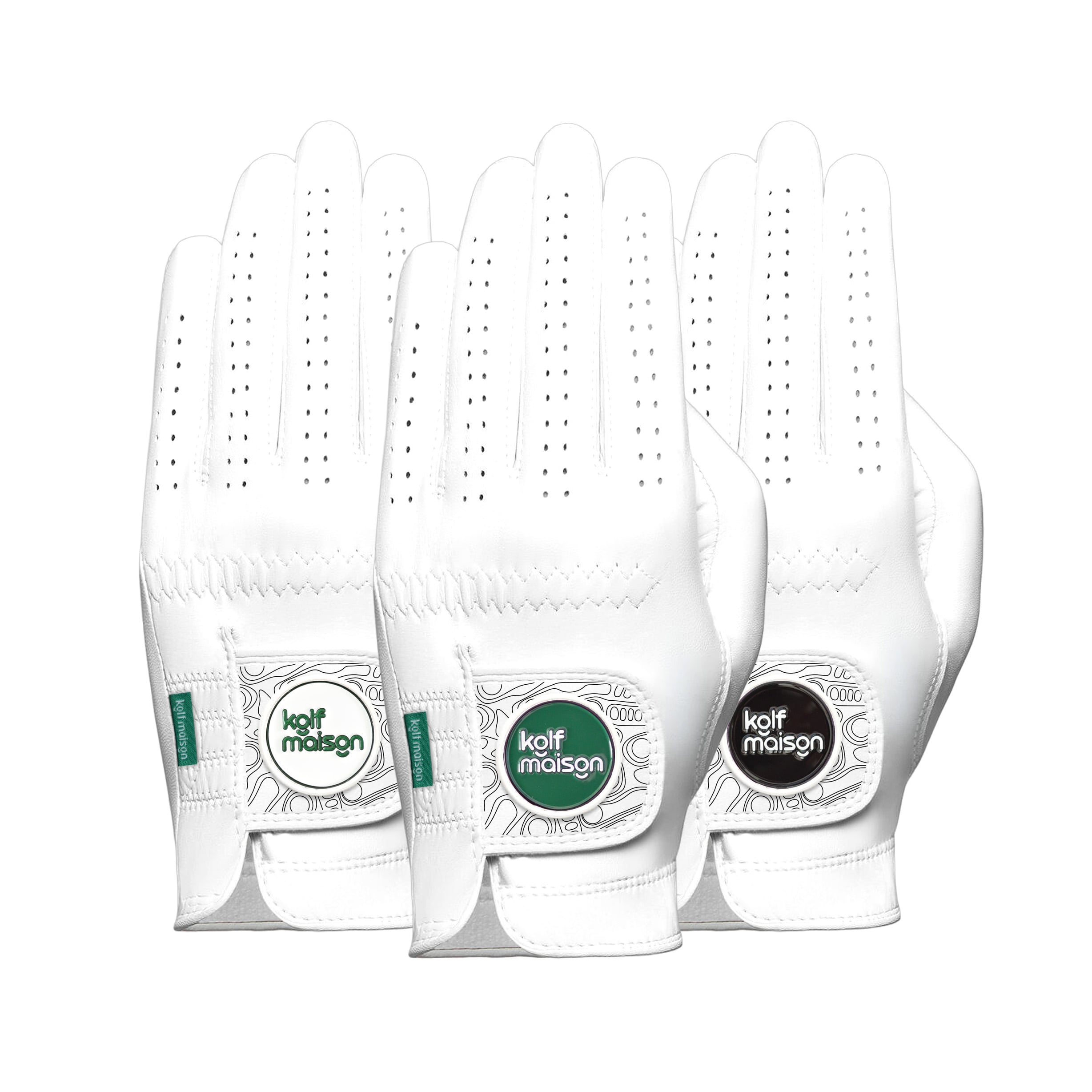
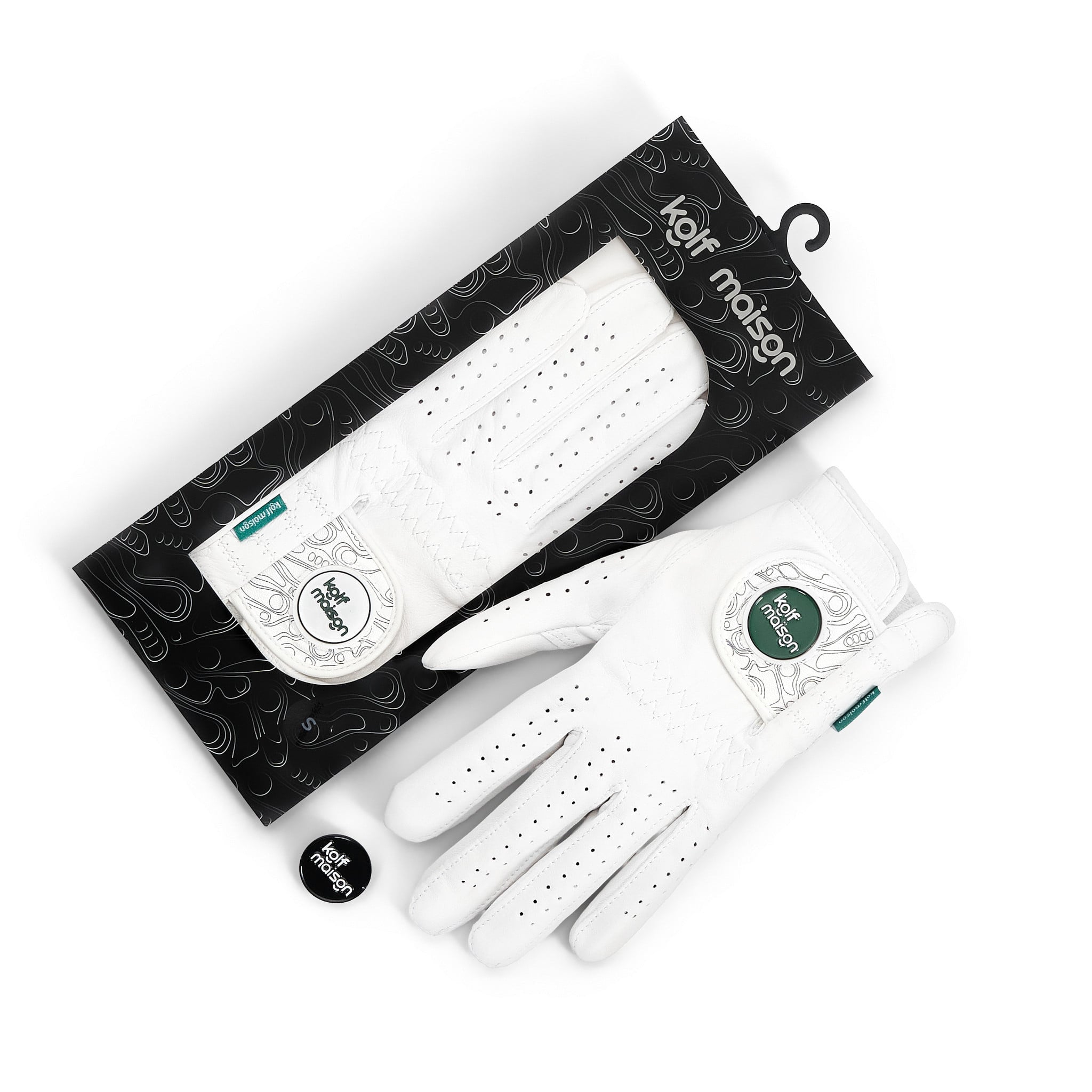
| The Majesta Golf Glove | $25 | Cabretta leather — tour-grade feel, grip, and durability. The entry point to the system. |
Why This Moment in the Market Matters
The premium golf equipment market has expanded. More brands are positioning at the higher end of the price range. More products are using the language of luxury — "premium," "limited," "refined" — to reach buyers willing to pay more for something genuinely different.
Most of them are not genuinely different. They have changed the language, updated the colour palette, and raised the price. The construction decisions underneath remain the same, because the production infrastructure that produces them is the same. The golfer who buys on positioning and discovers this on the course — who carries the "premium" bag through a full season and watches it behave like what it actually is — understands the distinction in a way that marketing cannot teach.
The serious golfer is more informed than they have ever been. Publications like MyGolfSpy run independent testing that strips away marketing claims and surfaces what materials actually do under real conditions. Golfers who follow that coverage arrive at purchasing decisions with a different question than their predecessors: not "what is the premium option?" but "what was this built to do, and does it actually do it?"
Kolf Maison was built to answer that question directly. The materials are tested. The standards are documented. The production limit is not adjustable based on demand. The price does not move based on the calendar. These are the conditions under which the bag is what it claims to be — and they are conditions the brand will not change to become more accessible.
What You Carry Says Something
The bag a golfer carries has always communicated something. In the mass-market era, it communicated brand alignment — which names you trusted, which aesthetics you preferred. In the current era, where premium is a marketing category rather than a construction standard, what you carry communicates something more specific: whether you did the work to understand what you were buying, or whether you trusted the label.
Kolf Maison does not create for mass visibility. It creates for those who understand that true luxury is personal, selective, and never commonly carried. That position is not for every golfer. It is, by definition, for fewer.
The golfer who carries Kolf Maison is carrying equipment that meets the standard they hold for everything else in their game — precise, considered, built to last. On a course where most bags look the same and are replaced on the same schedule, that distinction is visible to anyone who knows what to look for. And to everyone else, the bag is simply excellent — without explanation, without announcement, without needing to be anything other than what it is.
That is what refusing sameness produces, when it is followed completely.
The Paganica Collection
Serial numbered. Limited to 4,000 per model per year. Recognised by MyGolfSpy, GolfWRX, and Plugged In Golf. Built to hold its standard across seasons, not seasons until replacement.
Stand Bag → Cart Bag →Kolf Maison. The Game Itself.
Frequently Asked Questions
How many bags does Kolf Maison produce per year?
Kolf Maison produces 4,000 bags per model per year. Each bag is individually assembled, inspected, and serial numbered. When the count reaches 4,000, production closes. This limit is not a marketing strategy — it is the condition under which the construction standards the brand demands can be maintained without adopting the compromises of mass production.
Is Kolf Maison a luxury golf brand?
Kolf Maison is a limited-production premium golf equipment brand. The positioning is not luxury in the marketing sense — it is luxury in the functional sense: materials validated against international engineering standards, construction decisions made for performance and longevity, and production controlled so that every unit meets the standard. The Paganica Stand Bag and Cart Bag are priced at $479. The brand does not discount.
Who founded Kolf Maison?
Kolf Maison was founded by Silvio Duque — a scratch golfer and trained architect. The architectural background directly informs the design philosophy: every construction decision is functional first, and the aesthetic is a consequence of those decisions being made correctly, not a starting point.
What makes Kolf Maison different from Vessel Golf?
Both brands occupy the premium segment of the golf bag market. Vessel Golf is widely distributed through retail channels. Kolf Maison operates on a controlled-allocation model with a hard production limit of 4,000 bags per model per year and sells exclusively through kolfmaison.com. The serial numbering, material engineering standards, and production philosophy of Kolf Maison position it in a different category — one defined by operational restraint rather than premium retail distribution.
Where can I buy a Kolf Maison bag?
Kolf Maison bags are available exclusively through kolfmaison.com. The brand does not sell through third-party retailers, pro shops, or online marketplaces. Availability is controlled per the annual production limit of 4,000 units per model per colour. When a model's allocation is reached, it closes until the following production cycle.


Share:
Corporate Golf Gift Ideas: Premium Bags and Accessories for Client Entertainment
Kolf Maison vs. Vessel Golf: Which Premium Stand Bag Is Actually Worth It in 2026?