

How to Organize a Golf Bag: The Pro Method for Every Bag Type
Why Bag Organization Matters More Than Most Golfers Realize
Golf is a game of routine. Pre-shot routines, consistent grip pressure, the same ball position for the same club — repetition reduces variables and improves performance. Bag organization is part of that routine. When every club is in the same position every round, retrieval becomes automatic. You reach without looking, without adjusting, without breaking your thought between shots. When clubs are placed randomly, you introduce a small but real cognitive interruption every time you go to the bag.
Beyond mental performance, organization directly affects equipment condition. Clubs placed randomly in shared divider slots make contact with adjacent shafts during cart movement and walking. Graphite shafts, iron faces, and wedge grooves can all be scratched, nicked, or dulled by unnecessary contact over a season. The article on 5 signs your golf bag is ruining your clubs covers what unmanaged club contact looks like after repeated rounds — organization is the first line of defense against it.
Finally, organization affects carry balance. A stand bag loaded with heavy items in one pocket, wedges at the back, and driver at the front will carry unevenly and fatigue the carrying shoulder faster than a properly loaded bag. Weight distribution is part of organization, not separate from it.
The Universal Principle: Longest to Back, Shortest to Front
The foundational rule of golf bag organization is consistent across every bag type: place the longest clubs — driver, fairway woods, hybrids — at the back of the bag top (the side closest to the carrying straps when worn on the back), and work progressively shorter toward the front, finishing with the shortest irons and wedges at the bottom front slots.
This arrangement works for two reasons. First, the longest clubs are heaviest in total length and their grips sit highest above the bag opening — positioning them at the back keeps the center of gravity closer to the body during a walking carry, which reduces shoulder strain and prevents the bag from swinging away from the back. Second, shorter clubs at the front are naturally closer to hand during retrieval from the front of the bag, where most players approach it from the strap side while walking.
The putter is the exception. It gets its own dedicated space — the putter well — rather than joining the divider sequence. If your bag does not have a dedicated putter well, the article on what a putter well is and why serious golfers require one explains what that missing feature costs your equipment over time.
The Pro Method for a 14-Way Divider Stand Bag
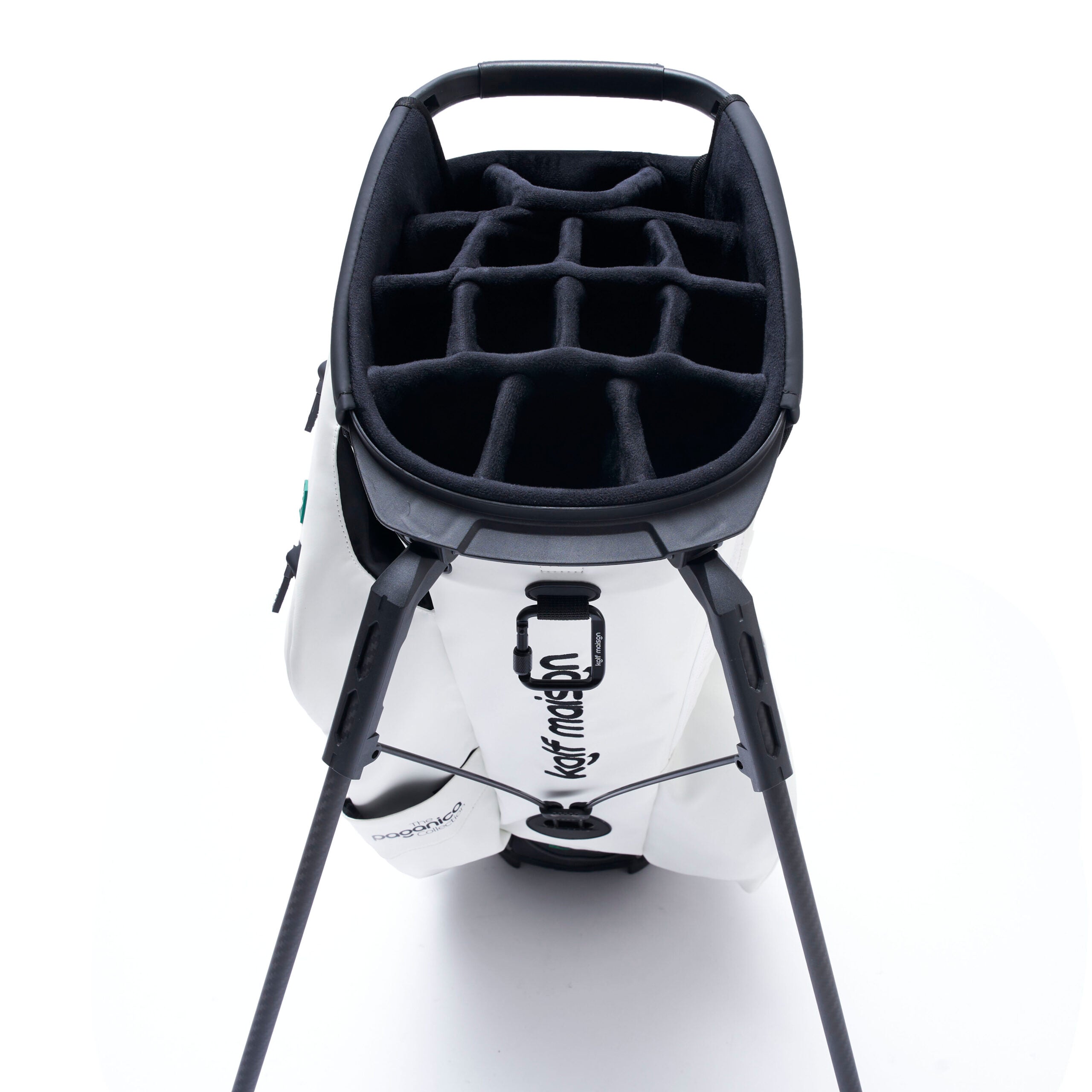
A 14-way divided top gives every club its own slot, which eliminates contact between shafts entirely when used correctly. The arrangement below is the method used by the majority of touring professionals and serious amateur players carrying a full 14-club set.
| Position in Bag Top | Club(s) | Why Here |
| Back row (strap side) | Driver, 3-wood, 5-wood | Longest clubs closest to strap — best carry balance, grip handles sit high and visible |
| Second row | Hybrids, 3-iron, 4-iron | Transitional clubs between woods and irons, grouped by approximate length |
| Third row | 5-iron, 6-iron, 7-iron | Mid-irons in the middle of the bag for balanced weight distribution |
| Fourth row | 8-iron, 9-iron, pitching wedge | Short irons toward the front — most frequently used for approach shots, closest to retrieval side |
| Front row (face side) | Gap wedge, sand wedge, lob wedge | Shortest clubs at front; wide-sole wedges benefit from isolation to protect sharp leading edges |
| Putter well | Putter | Isolated, velour-lined, oversized — never shares space with any other club |
The Pro Method for a 7-Way Divider Stand Bag
A 7-way top groups clubs rather than isolating each one. The organization principle is the same — longest to back, shortest to front — but applied to shared slots. Grouping clubs by type minimizes shaft contact within each slot and maintains retrieval consistency.
| Slot | Club Group | Notes |
| Slot 1 (back) | Driver alone if possible; 3-wood if not | Driver isolated prevents head cover contact with adjacent shafts |
| Slot 2 | 3-wood, 5-wood, hybrid(s) | Woods and hybrids grouped — similar shaft length, head covers protect from contact |
| Slot 3 | 3-iron through 5-iron | Long irons grouped together — similar shaft lengths reduce shaft crossing |
| Slot 4 | 6-iron, 7-iron, 8-iron | Mid-irons in the middle of the bag |
| Slot 5 | 9-iron, pitching wedge | Short irons together — separate from wedges to protect loft gapping |
| Slot 6 (front) | Gap, sand, lob wedge | Wedges at the front; isolating them reduces face-to-face groove contact |
| Slot 7 / putter well | Putter | Dedicated well always; never share with any other club |
Cart Bag Organization: The Key Difference
Cart bags are accessed from the side rather than from above while walking. This changes the organization priority. The clubs most frequently used during a round — mid-irons, wedges, and the putter — should be positioned on the cart-side-facing portion of the bag top, where they are easiest to reach without leaning over the cart or reaching across the bag body.
Driver and woods can sit at the rear of the bag top without retrieval penalty because they are used less frequently — typically once per hole — and the player can take an extra step to reach them. Pocket organization on a cart bag should prioritize the cart-facing side for frequently accessed items: ball pocket, tee pocket, and rangefinder pocket should all face outward for one-motion access without dismounting.
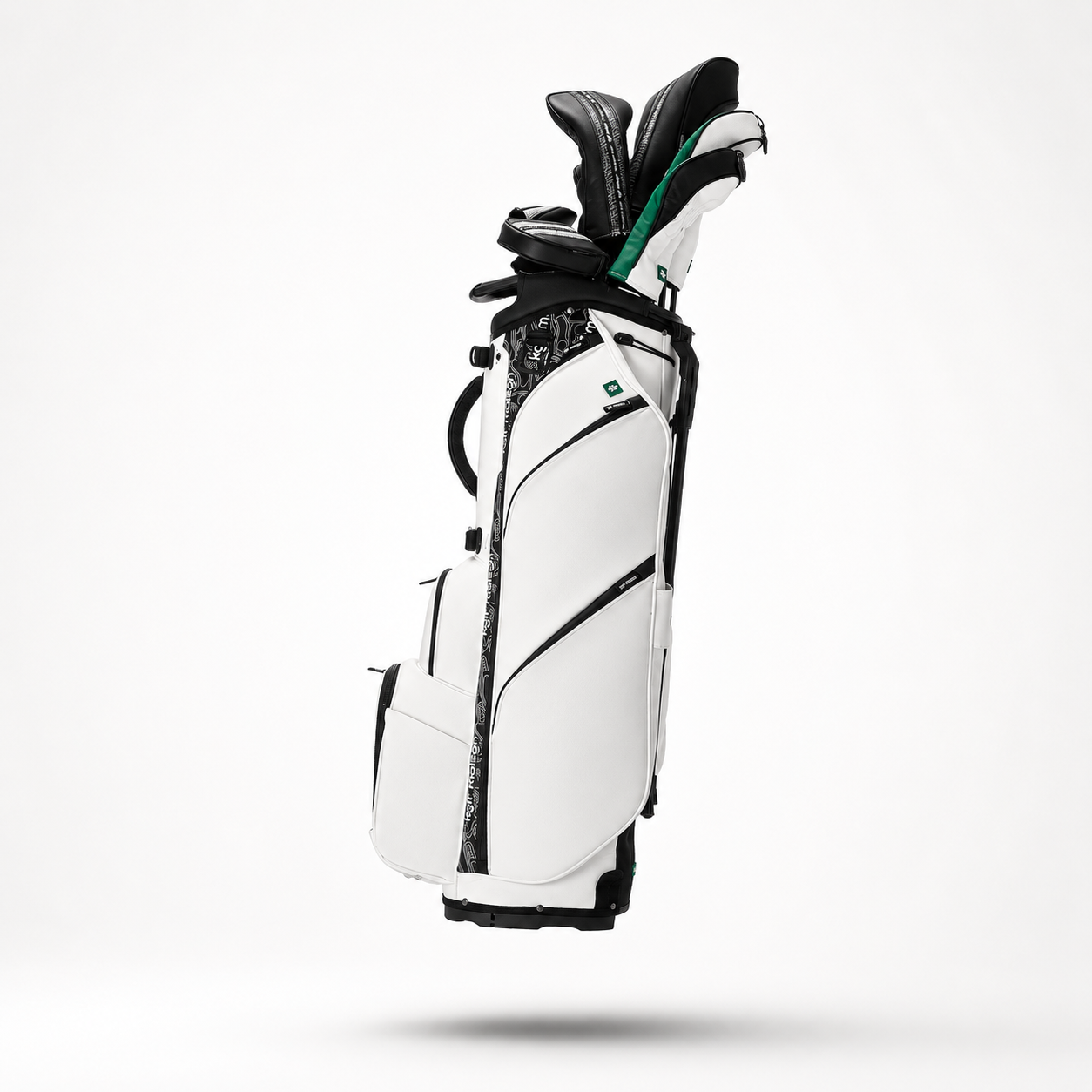
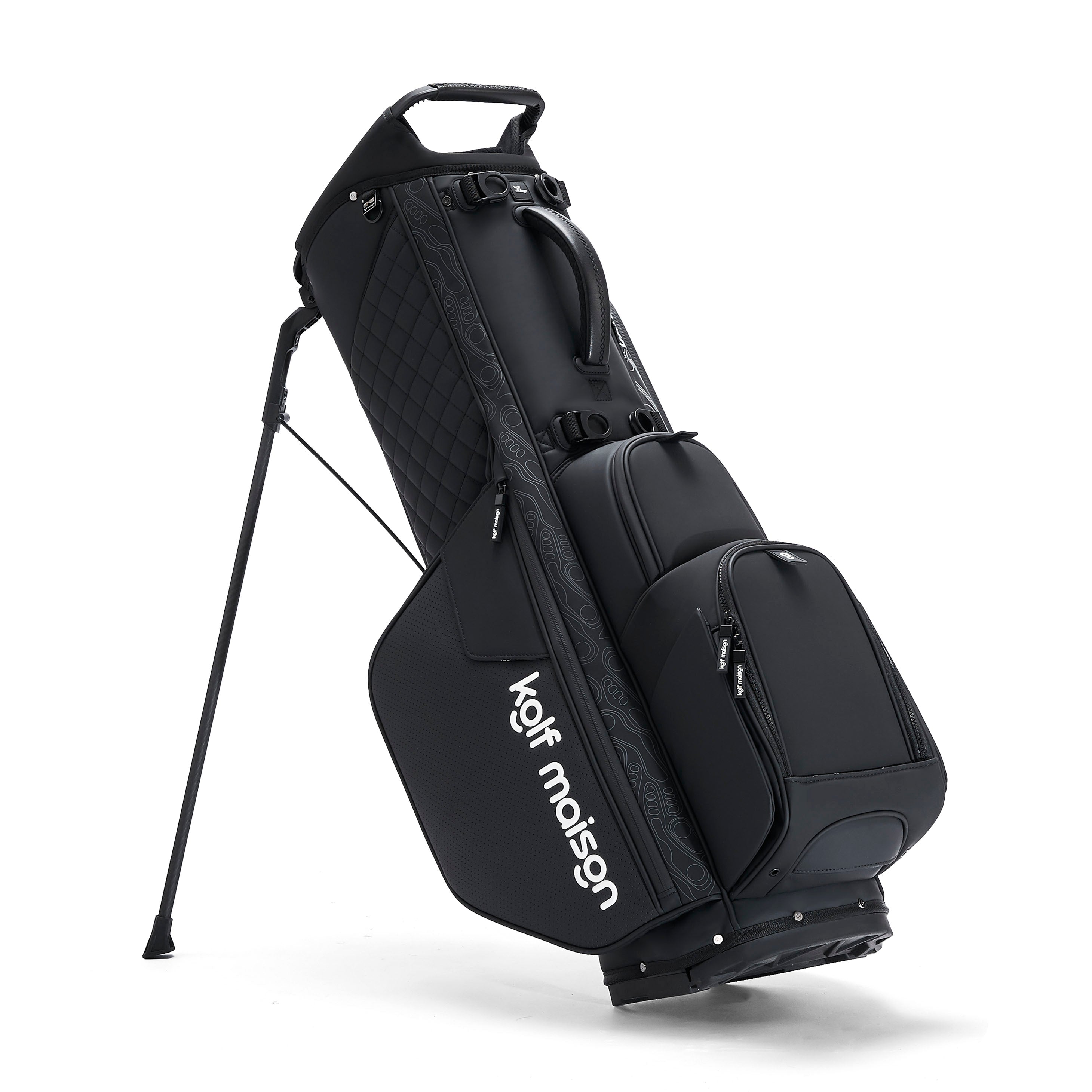
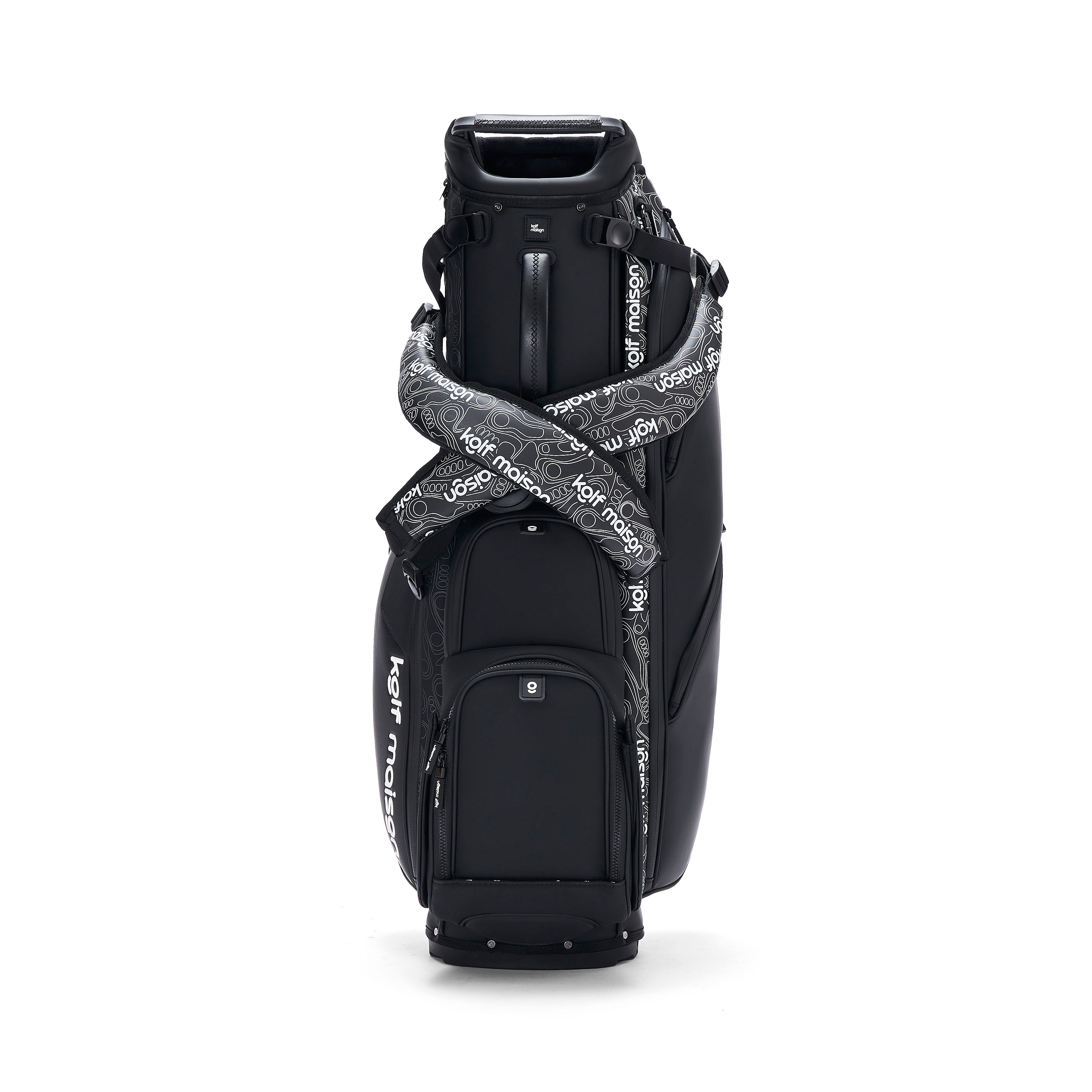
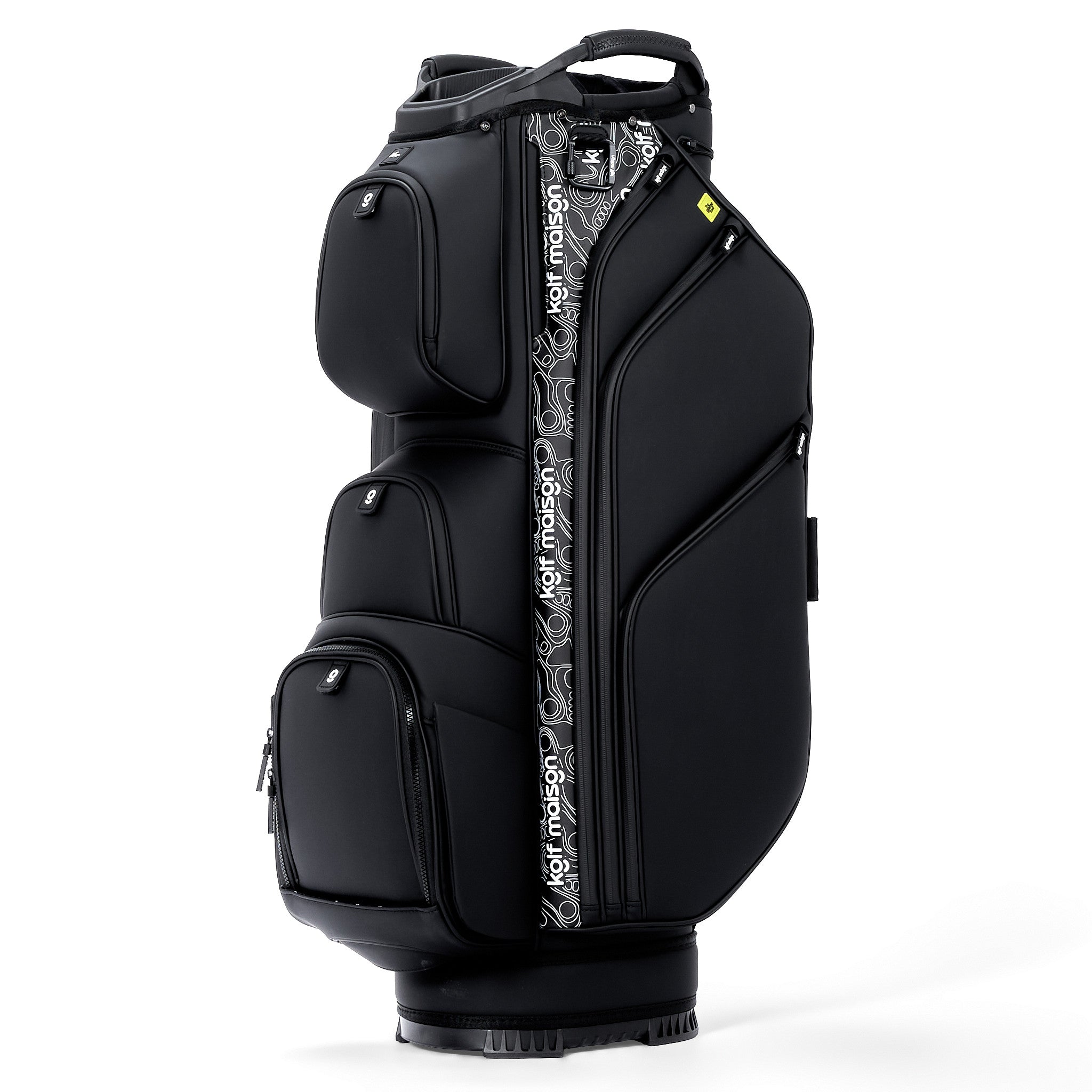
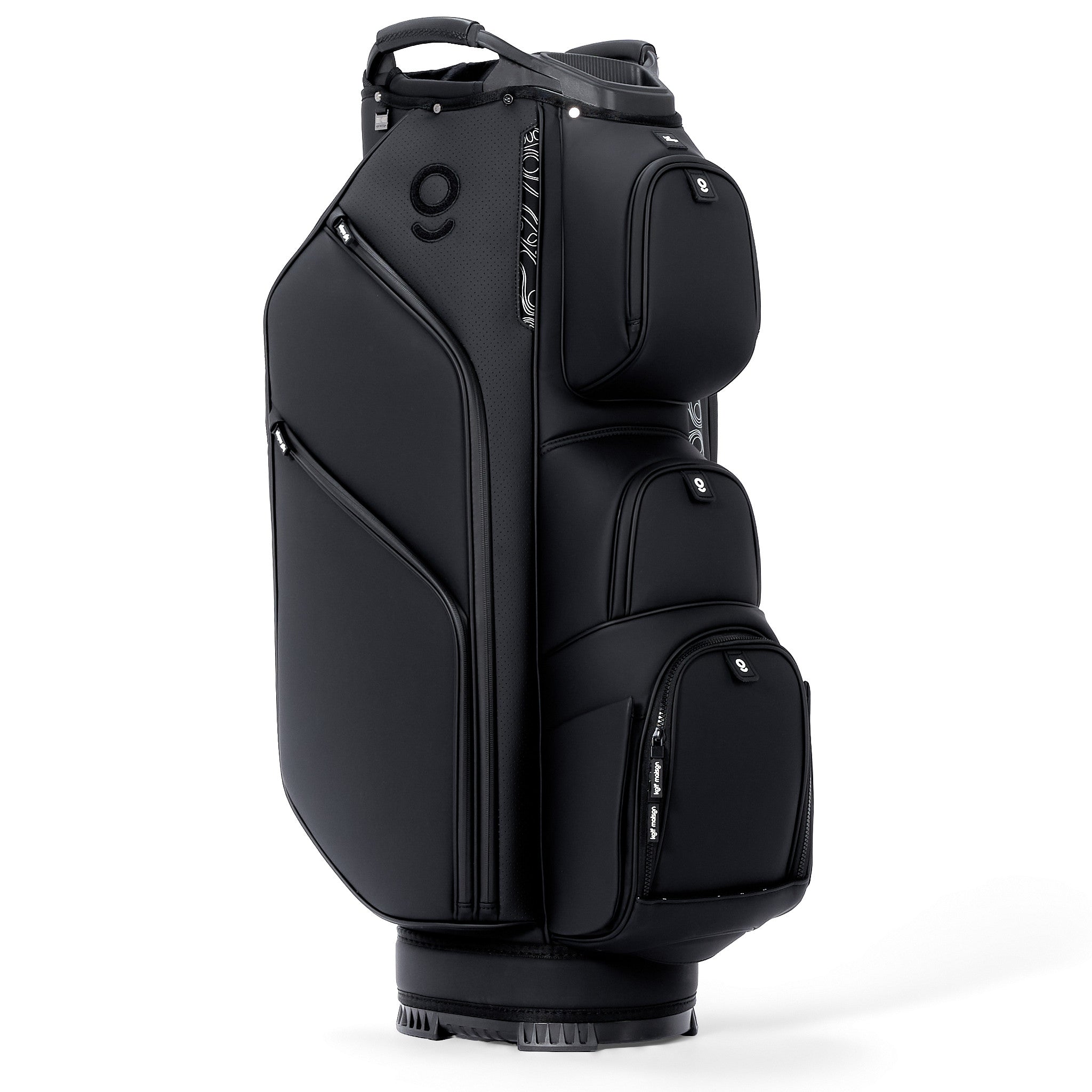
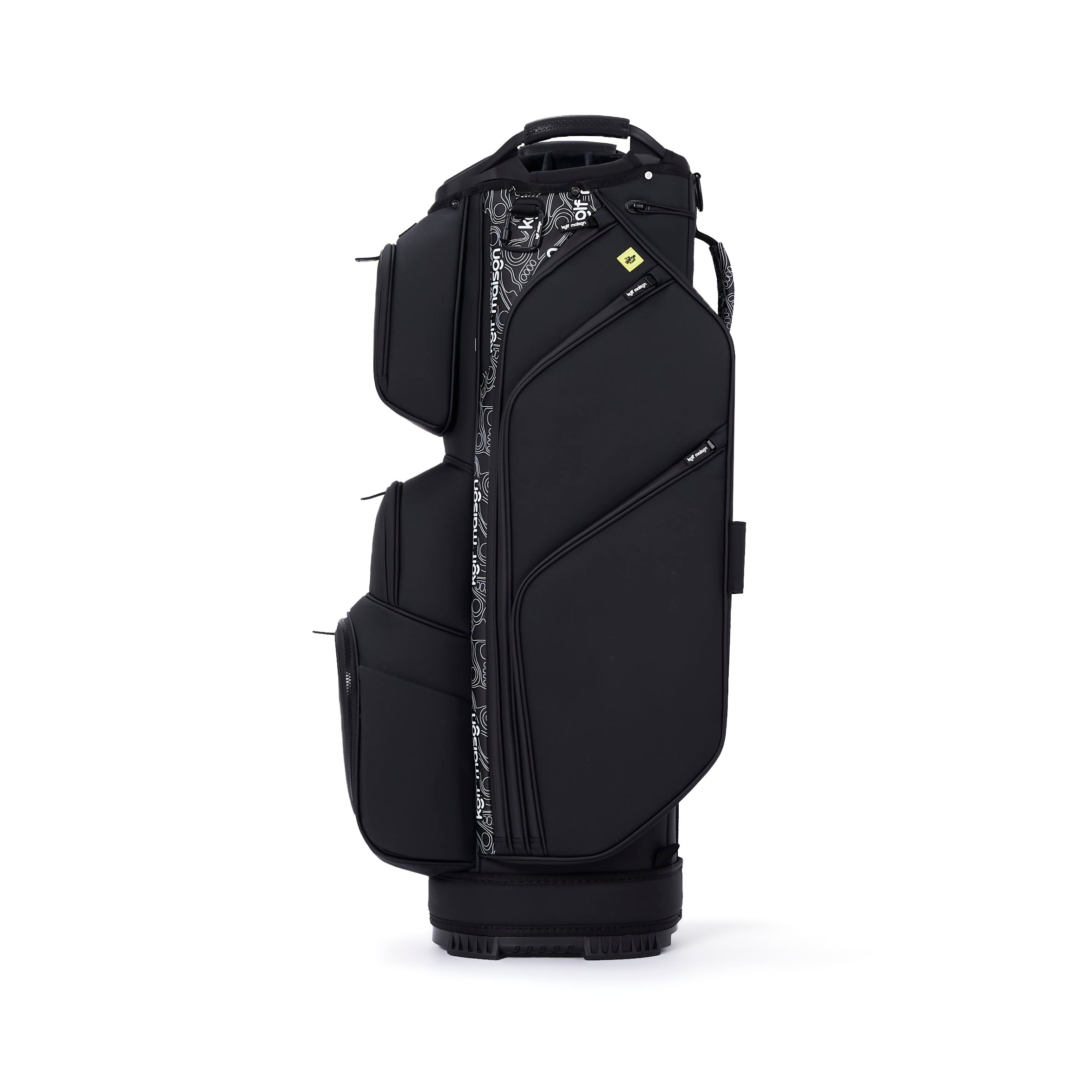
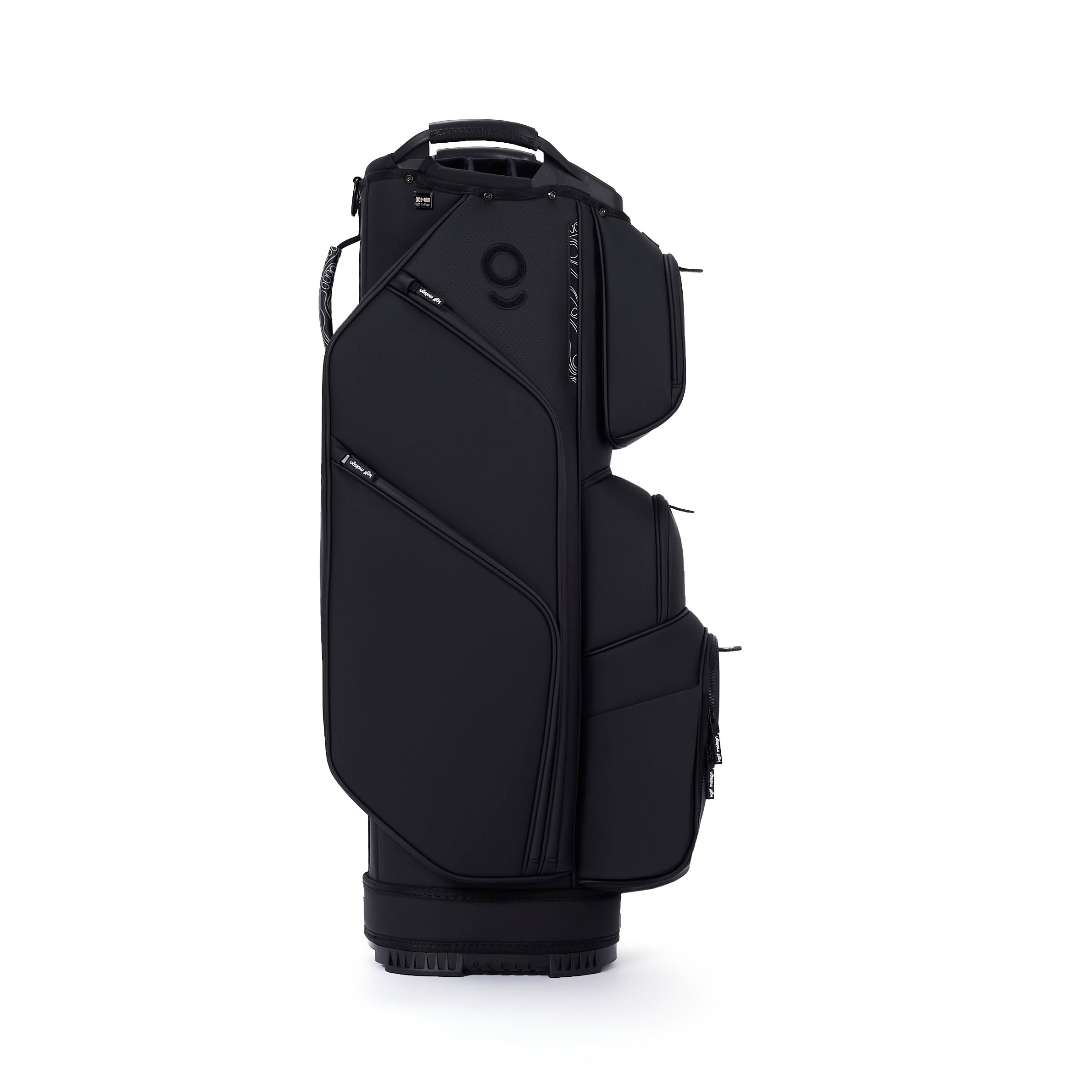
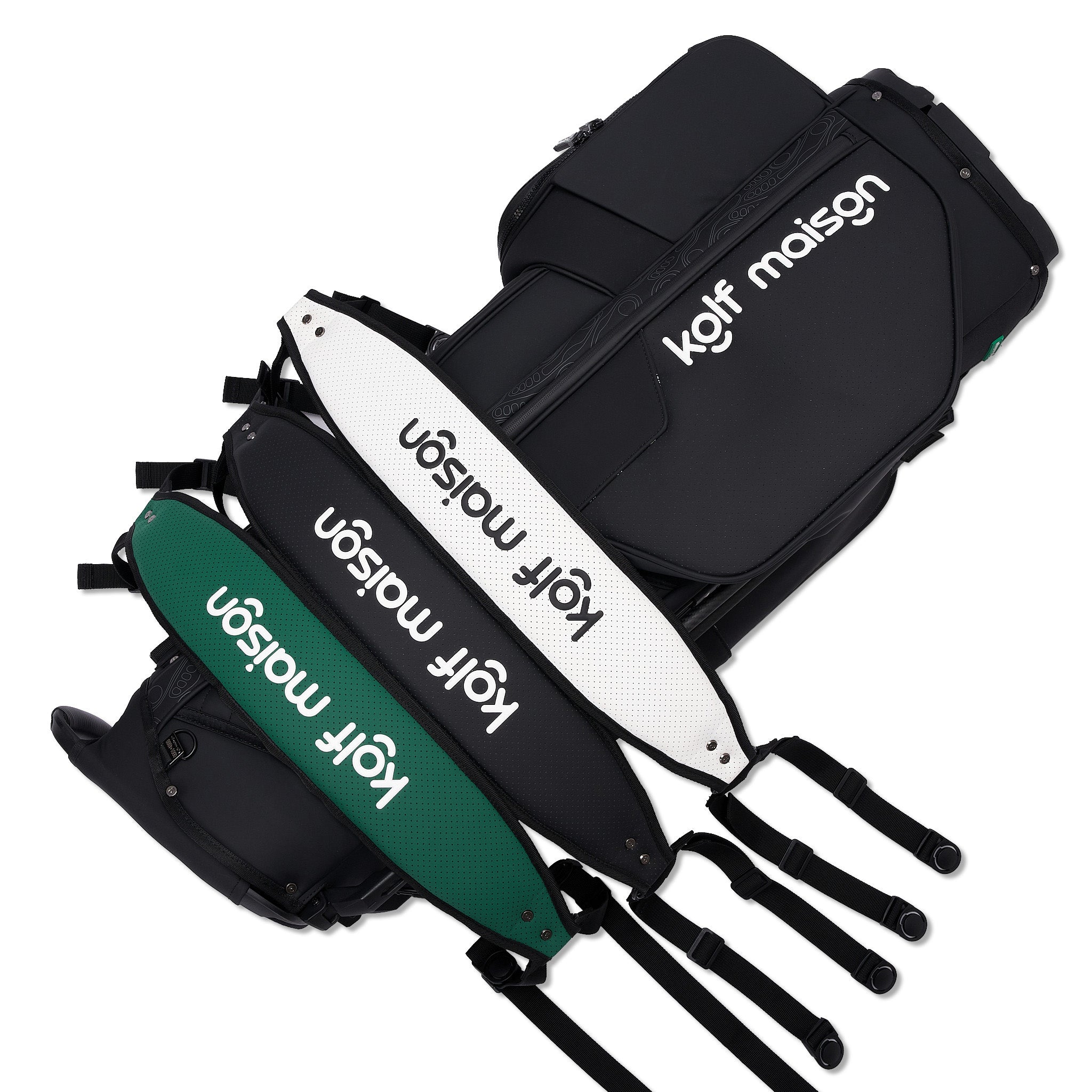
The Paganica Cart Bag is purpose-built for cart play with a 14-way top and pocket architecture designed for the access patterns of a rider rather than a walker — a meaningful design distinction that affects every round. For golfers who split their time between walking and riding, the Paganica Stand Bag performs well on both carts and walking rounds through its cart strap pass-through and protective sleeve system.
Pocket Organization: What Goes Where
Club organization gets most of the attention, but pocket organization is where most rounds are actually slowed down. Searching for a tee in the wrong pocket, fishing a ball marker out of the apparel pocket, or realizing the rangefinder is buried under a rain jacket on the 9th hole — these are the moments where poor pocket discipline costs time and rhythm.
| Pocket Type | What Belongs Here | What Never Goes Here |
| Valuables / lined pocket | Phone, wallet, keys, watch, sunglasses | Golf balls, tees, anything that scratches |
| Rangefinder pocket | Rangefinder only — always the same pocket | Anything that competes for the same reach |
| Ball pocket (large) | Golf balls, spare glove | Valuables, tees mixed loose without organizer |
| Accessory / tee pocket | Tees, ball markers, divot tool, pencil, scorecard | Loose change, receipts, non-golf items |
| Apparel / large side pocket | Rain jacket, extra layer, headwear | Shoes, heavy items that unbalance the bag |
| Bottle holders | Water bottles, energy drinks | Umbrellas, anything that overloads the holder weight |
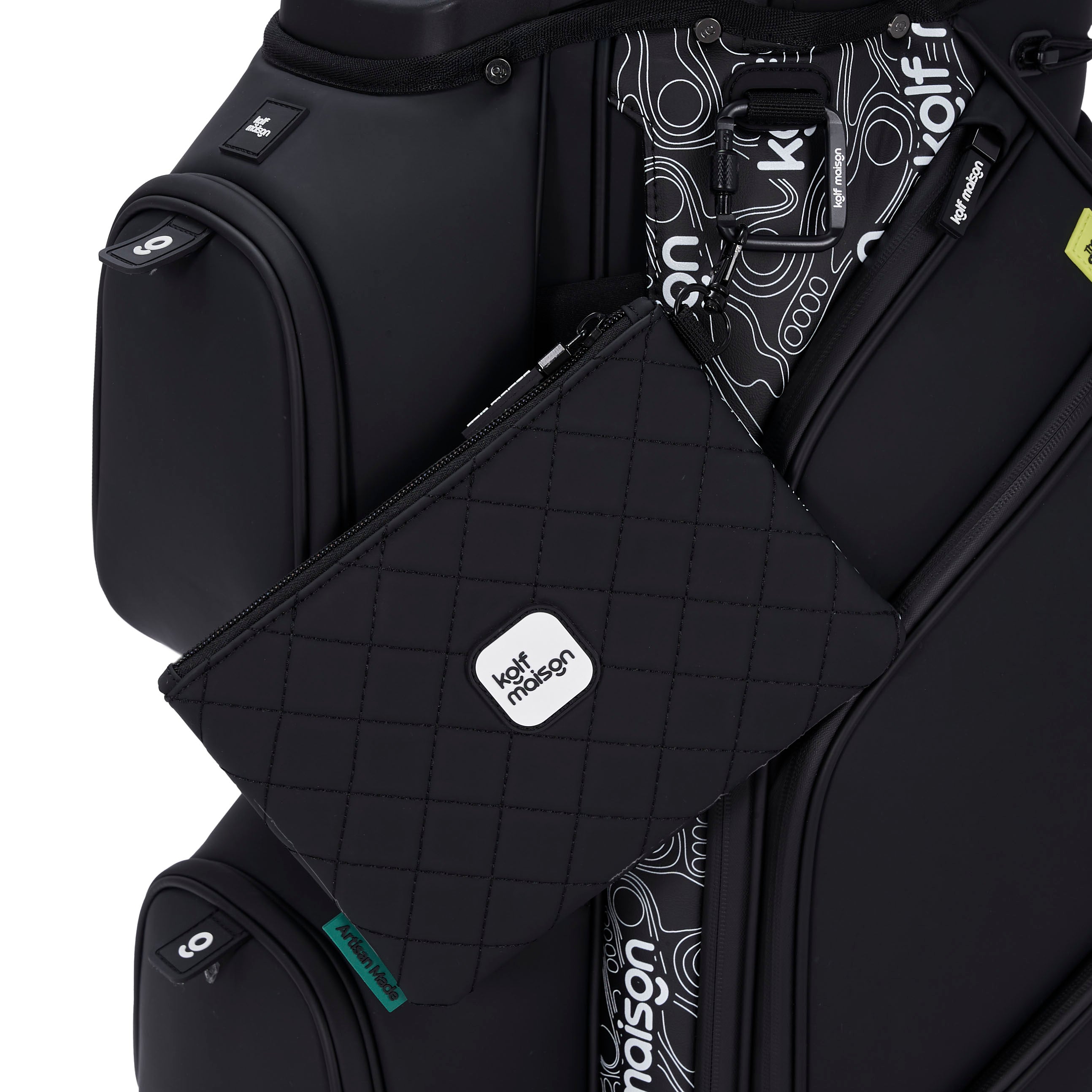
The most important pocket rule is the one most frequently broken: the valuables pocket is for valuables only. Once a phone, watch, or wallet shares space with loose balls, tees, or coins, the lining degrades, the items scratch each other, and the retrieval becomes a search rather than a reach. A bag with a dedicated soft-lined valuables pocket — like the Paganica's velvet-lined valuables zone — maintains this discipline by design.
The Five Most Common Organization Mistakes
Most golfers make at least two or three of these consistently without connecting them to the equipment wear and on-course frustration they cause.
1. Putting the Putter in a Standard Divider Slot
The putter grip, head, and shaft all require dedicated protection. Sharing a slot with irons causes grip wear, shaft contact marks, and hosel stress. If your bag has a putter well, use it exclusively. If it does not, the case for upgrading to one is made in full detail in the article on putter wells and why serious golfers require them.
2. Placing Wedges Next to Mid-Irons
High-bounce wedges with sharp leading edges make contact with adjacent iron faces and grooves during bag movement. Over a season, this creates the fine scratches across iron faces that golfers attribute to range mats or course conditions. The solution is to always group wedges together at the front of the bag and keep them physically separated from the iron set.
3. Inconsistent Club Placement Round to Round
If the 7-iron is in a different slot every round, retrieval is never automatic. The cognitive cost is small per instance but accumulates across 18 holes. Consistency is the entire point of an organization system — set it once, reinforce it every round, and reaching becomes reflexive rather than deliberate.
4. Loading Heavy Items Asymmetrically
A full water bottle in one side pocket and nothing in the other creates a lateral imbalance that becomes noticeable over a walking round. Distribute heavier items — water, spare balls, wet weather gear — as evenly as possible across both sides of the bag. For carts, this matters less during the round but affects how the bag sits and how stress is distributed across the cart strap contact zone.
5. Using the Valuables Pocket as a Catch-All
Once the valuables pocket accumulates tees, receipts, loose change, and old scorecards alongside a phone and a watch, it has stopped being a protection zone and become a drawer. Every item that should not be in that pocket is abrading or pressing against every item that should. Reserve it strictly and empty it after every round.
The One-Rule Summary
Everything has a home. Nothing moves. Set it once. Reach without thinking. That is professional bag organization reduced to its simplest form. The system is only as effective as the bag's pocket architecture allows — which is why what a bag is designed to hold matters as much as how you load it.
How Bag Design Determines How Well You Can Organize
The best organization system is limited by the bag it runs on. A bag with no dedicated valuables pocket forces valuables to share space with accessories. A bag with only one large side pocket offers no separation between apparel and ball storage. A bag without a rangefinder pocket creates a choice between the ball pocket and the valuables pocket — neither of which is right.
The luxury golf stand bag buying guide identifies intentional pocket architecture as one of the seven criteria that separates a bag designed for real use from one designed to look complete. Counting pockets tells you nothing. Understanding what each pocket is designed to hold, how it accesses, and whether it separates what should be separated — that is the relevant question.
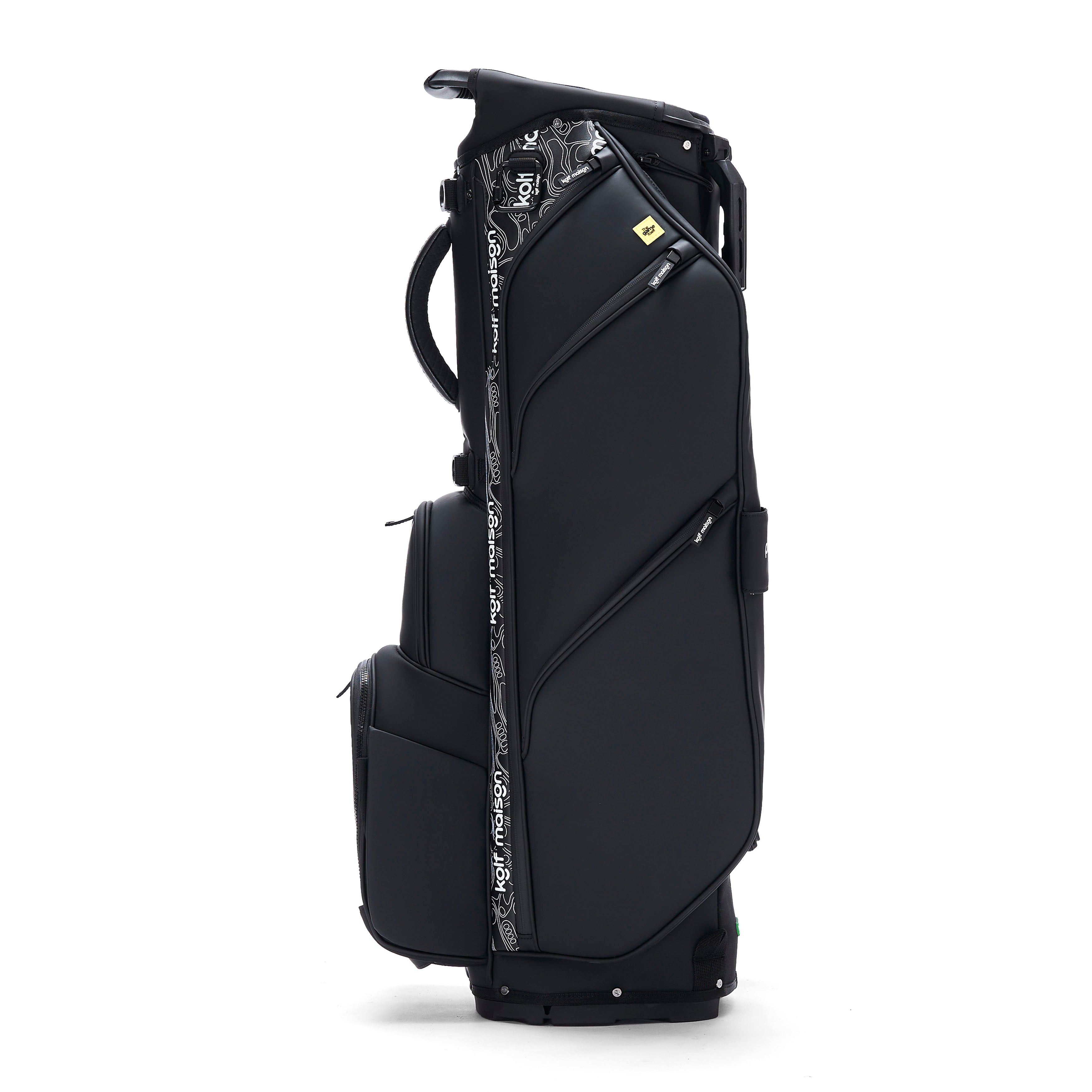
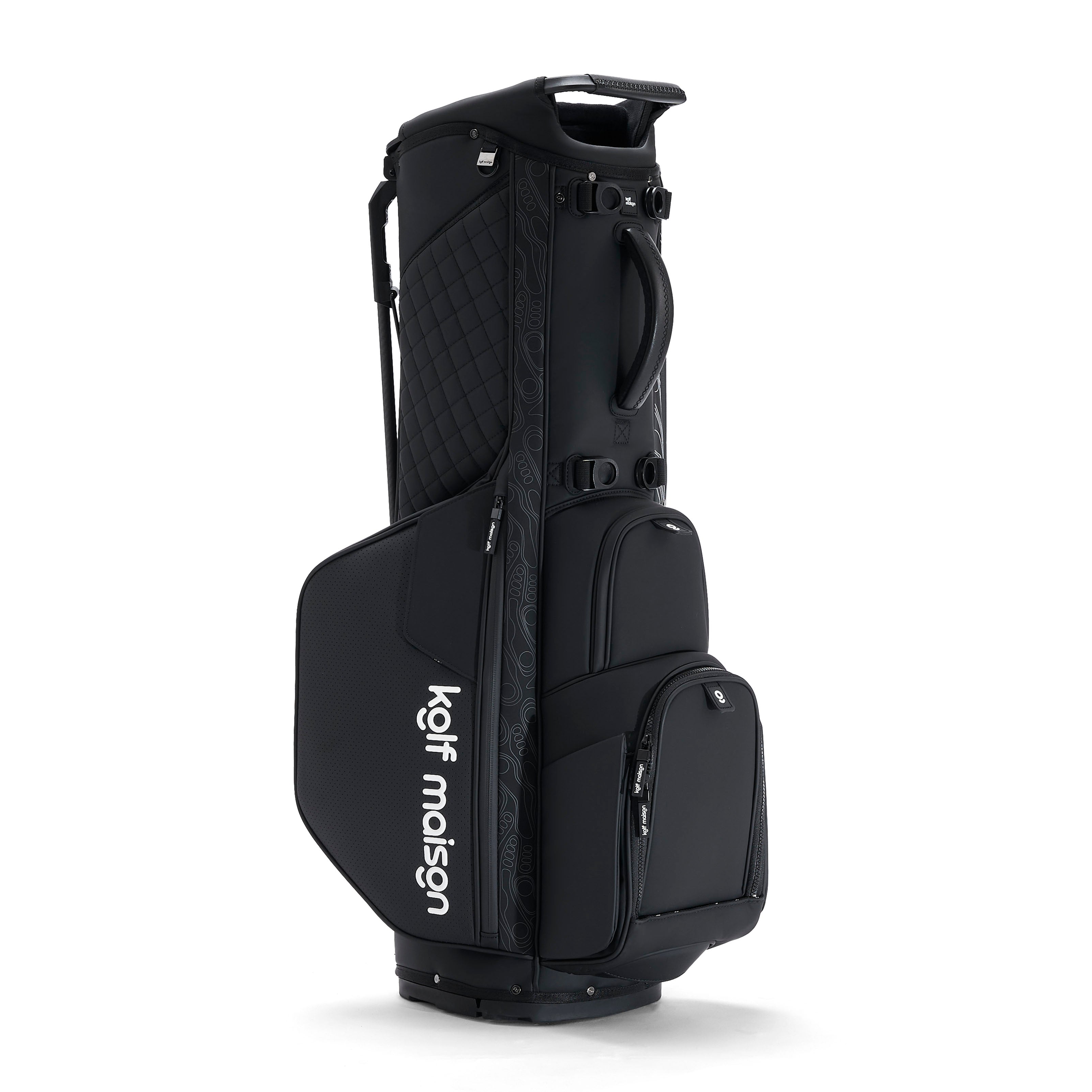
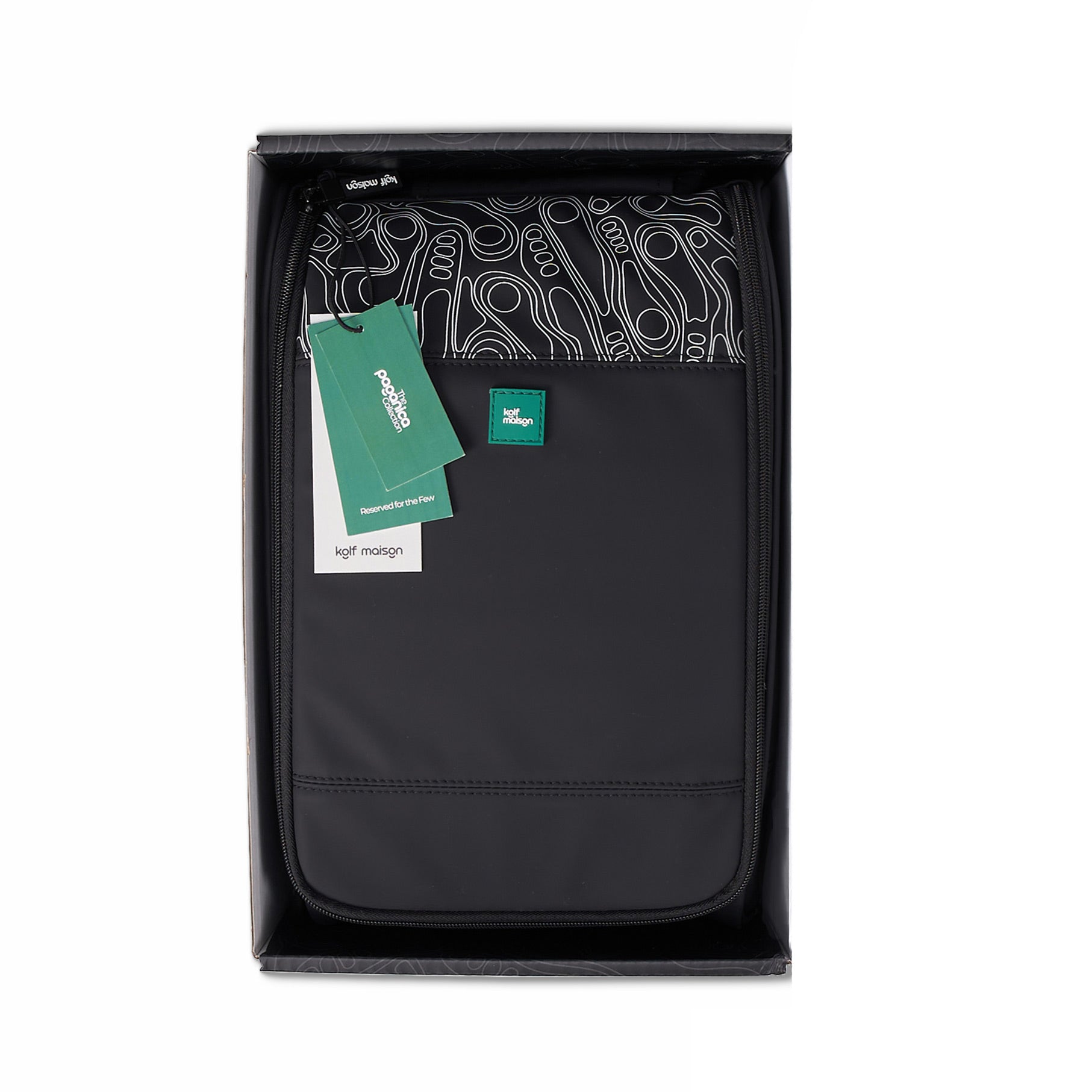
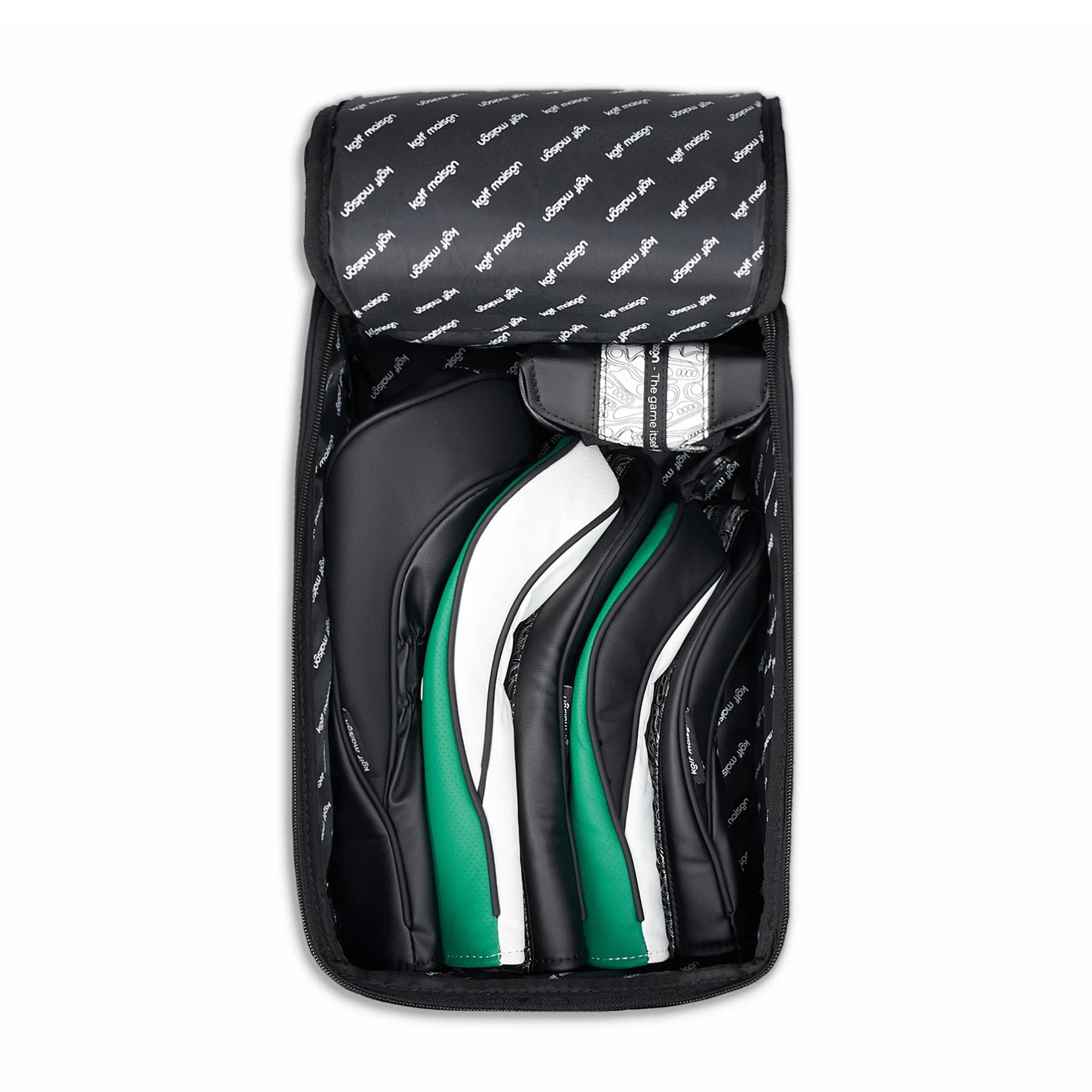
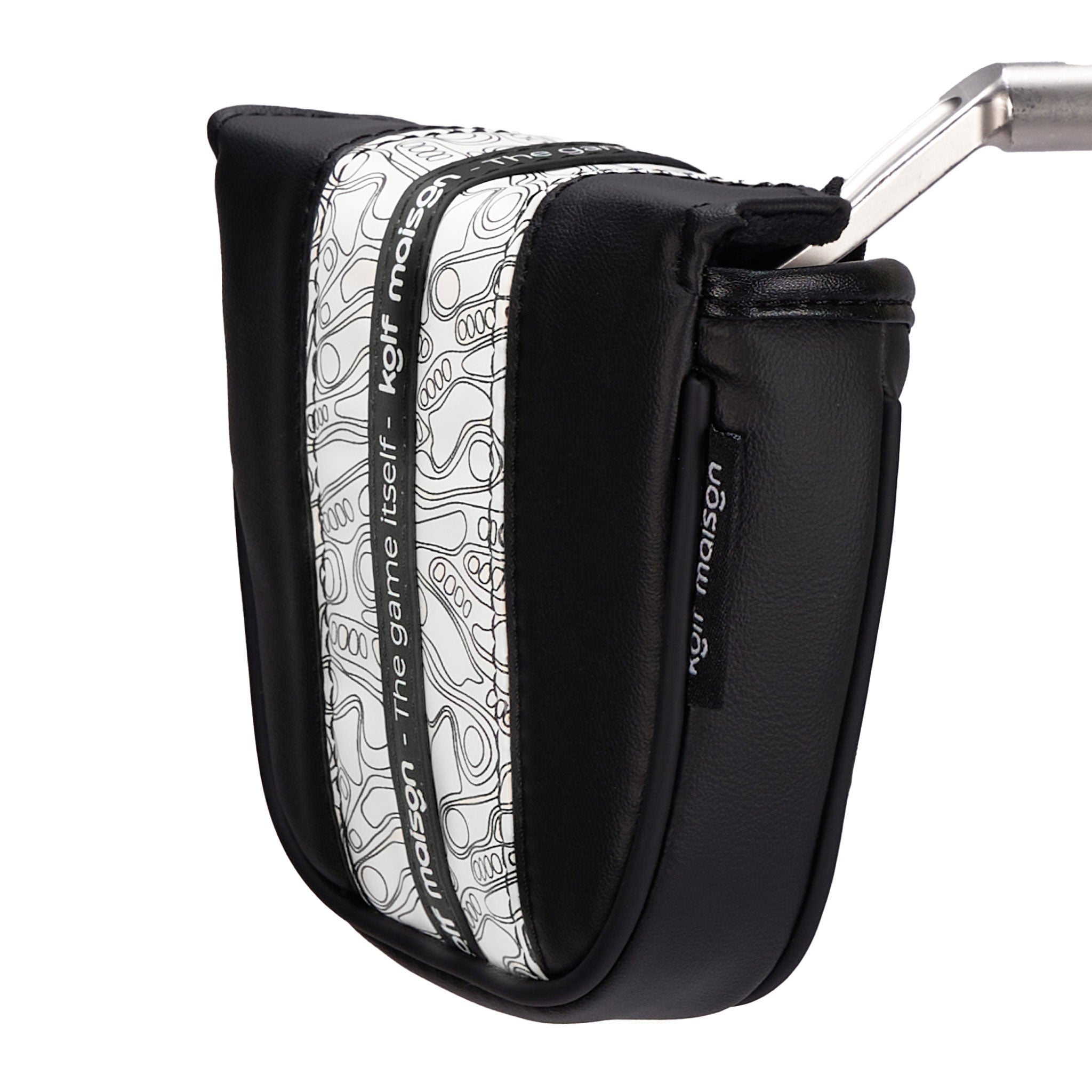
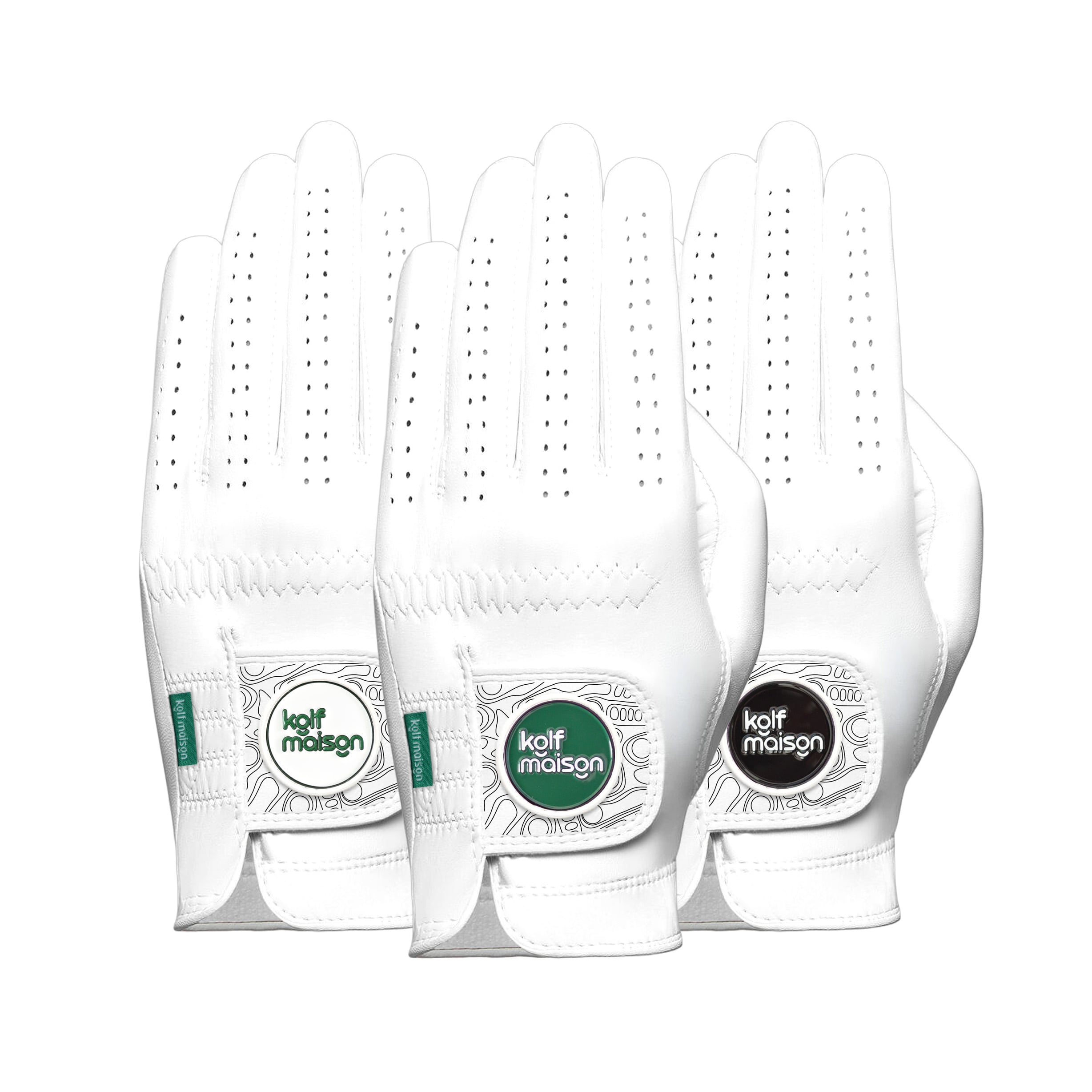
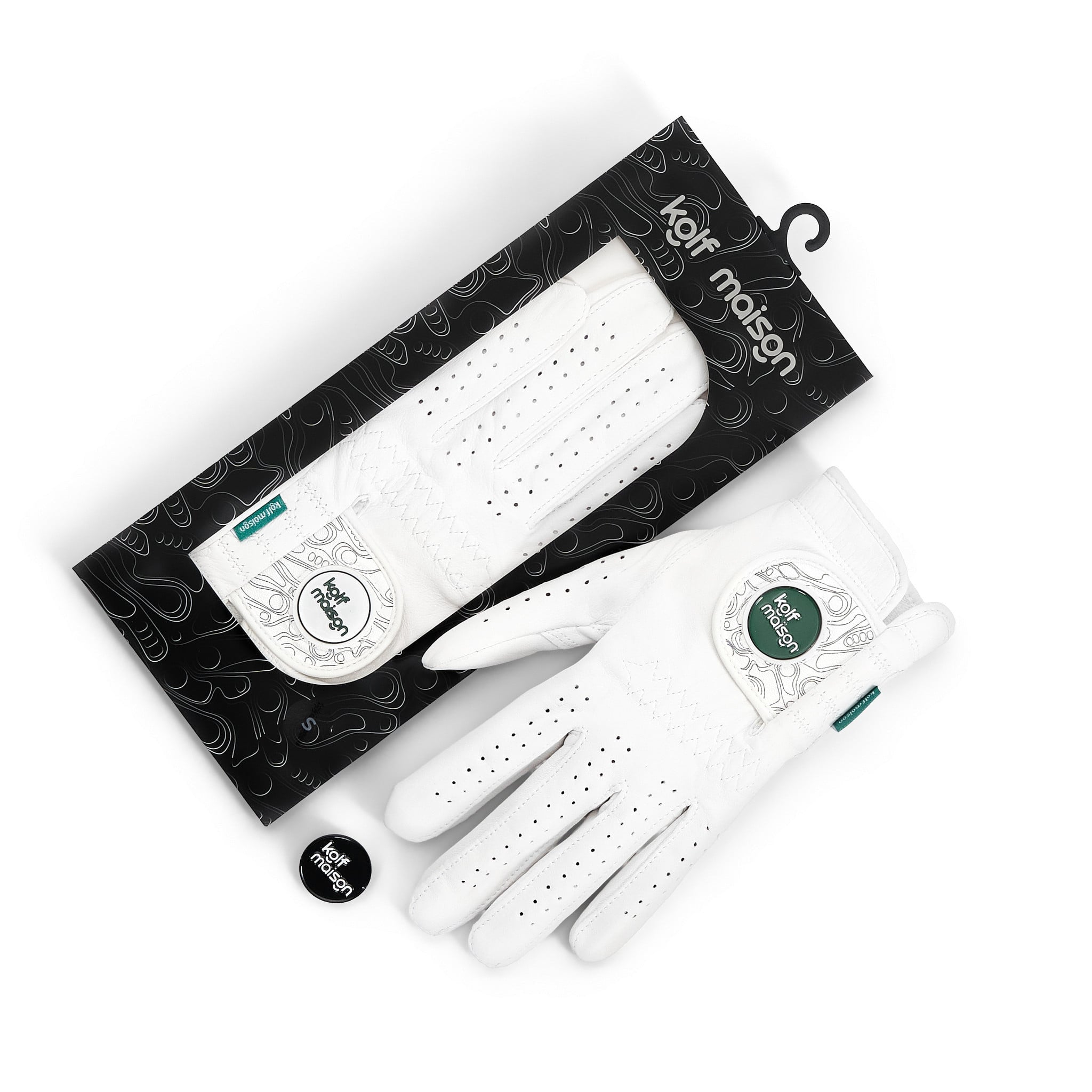
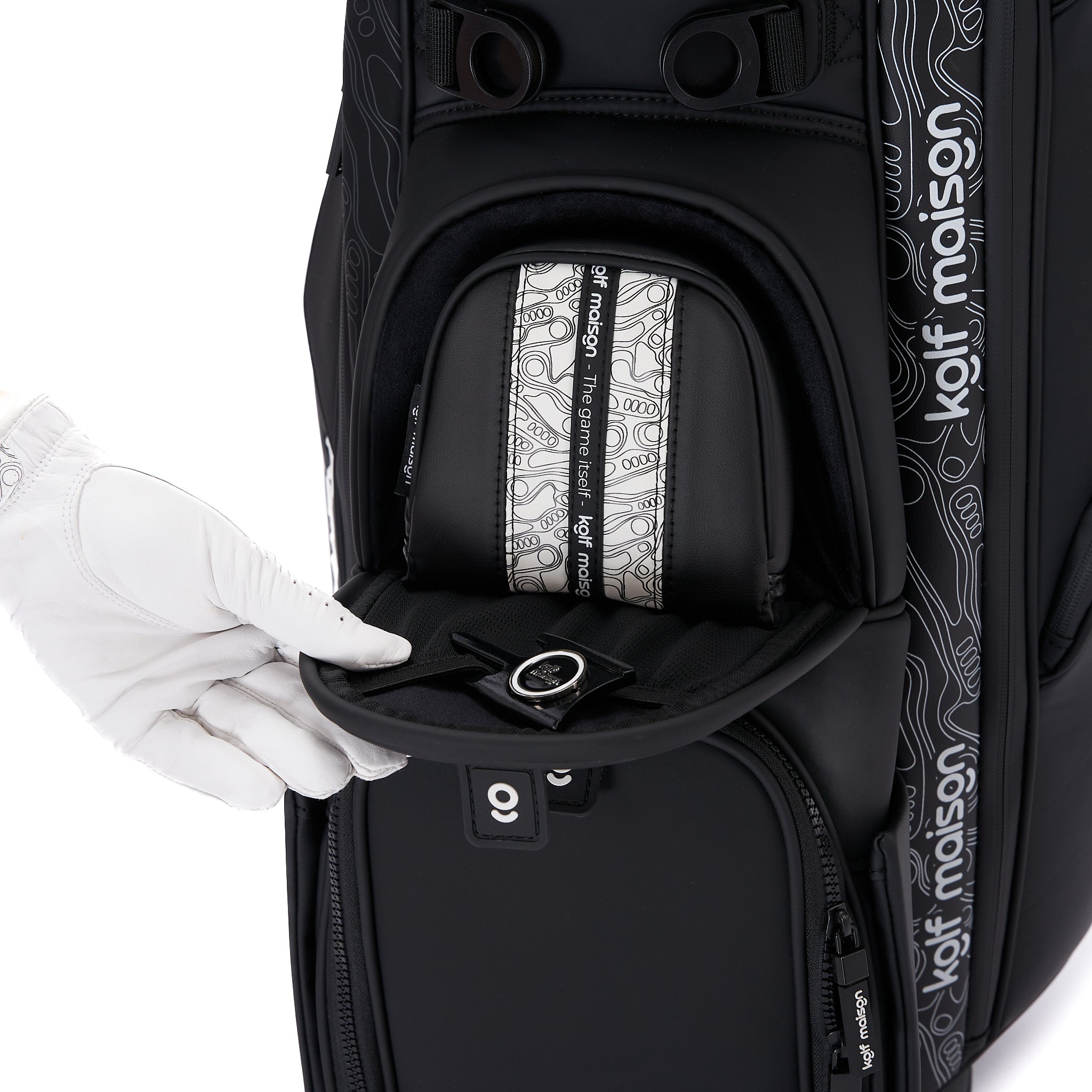
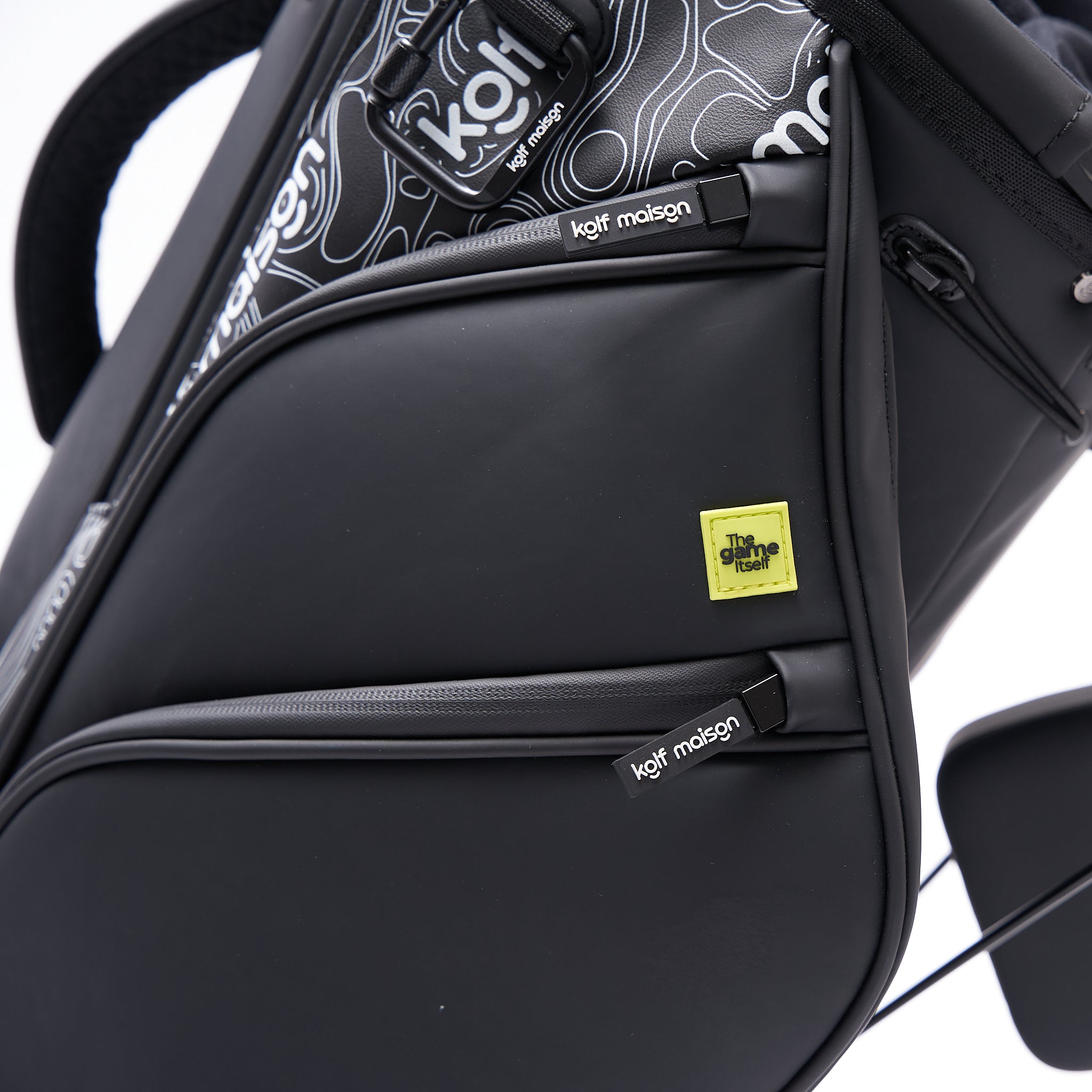
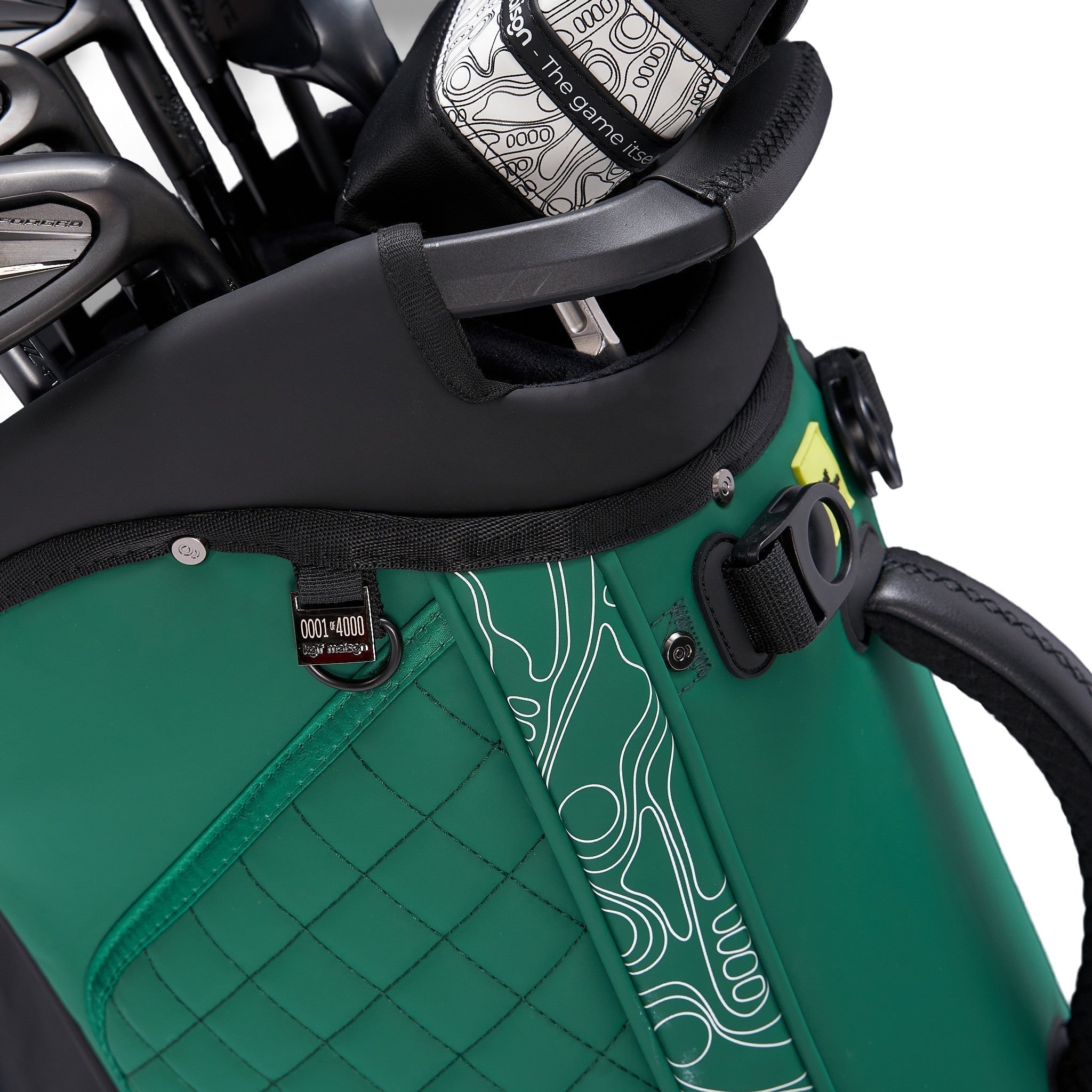
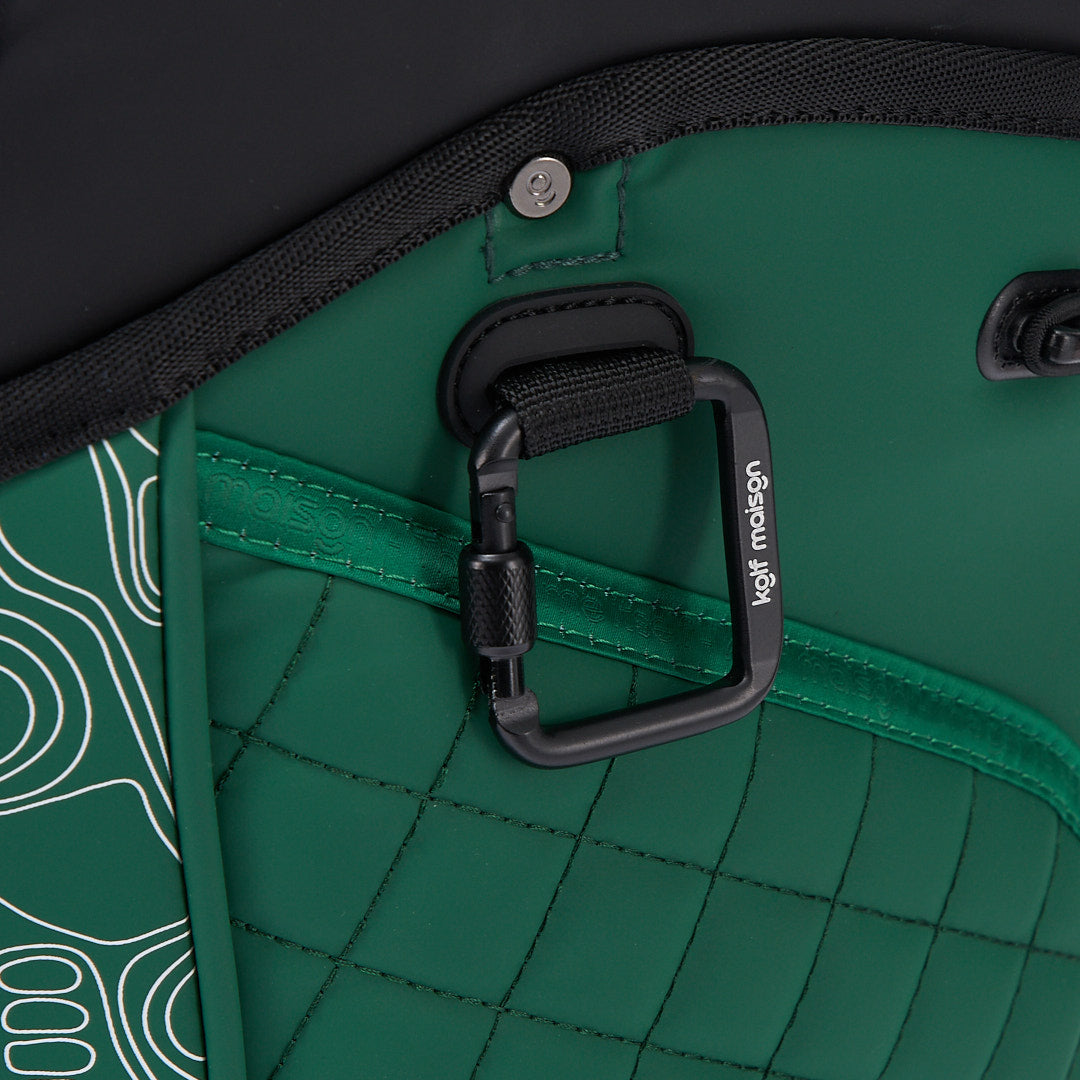
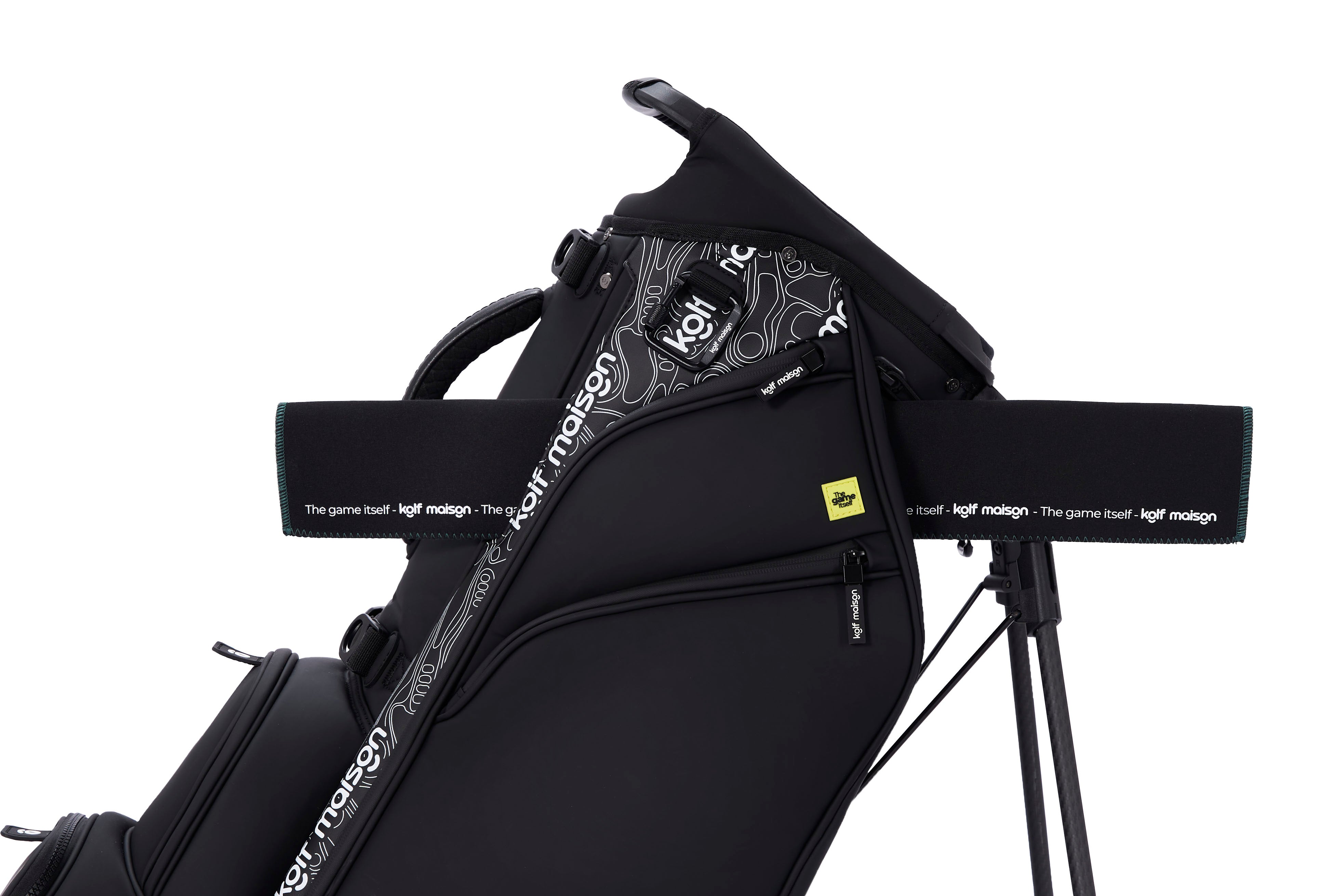
The Paganica Stand Bag includes dedicated magnetic access pockets for frequently reached items, a velvet-lined valuables zone for phones, watches, and keys, dual bottle holders, an oversized velour-lined putter well, and sufficient apparel storage to carry full wet weather gear without compressing the bag's silhouette. The Paganica Head Cover Set completes the organization system at the club level, and the Majesta Golf Glove with its magnetic ball markers ensures that two frequently accessed items — glove and markers — are always on your hand rather than searched for in the bag.
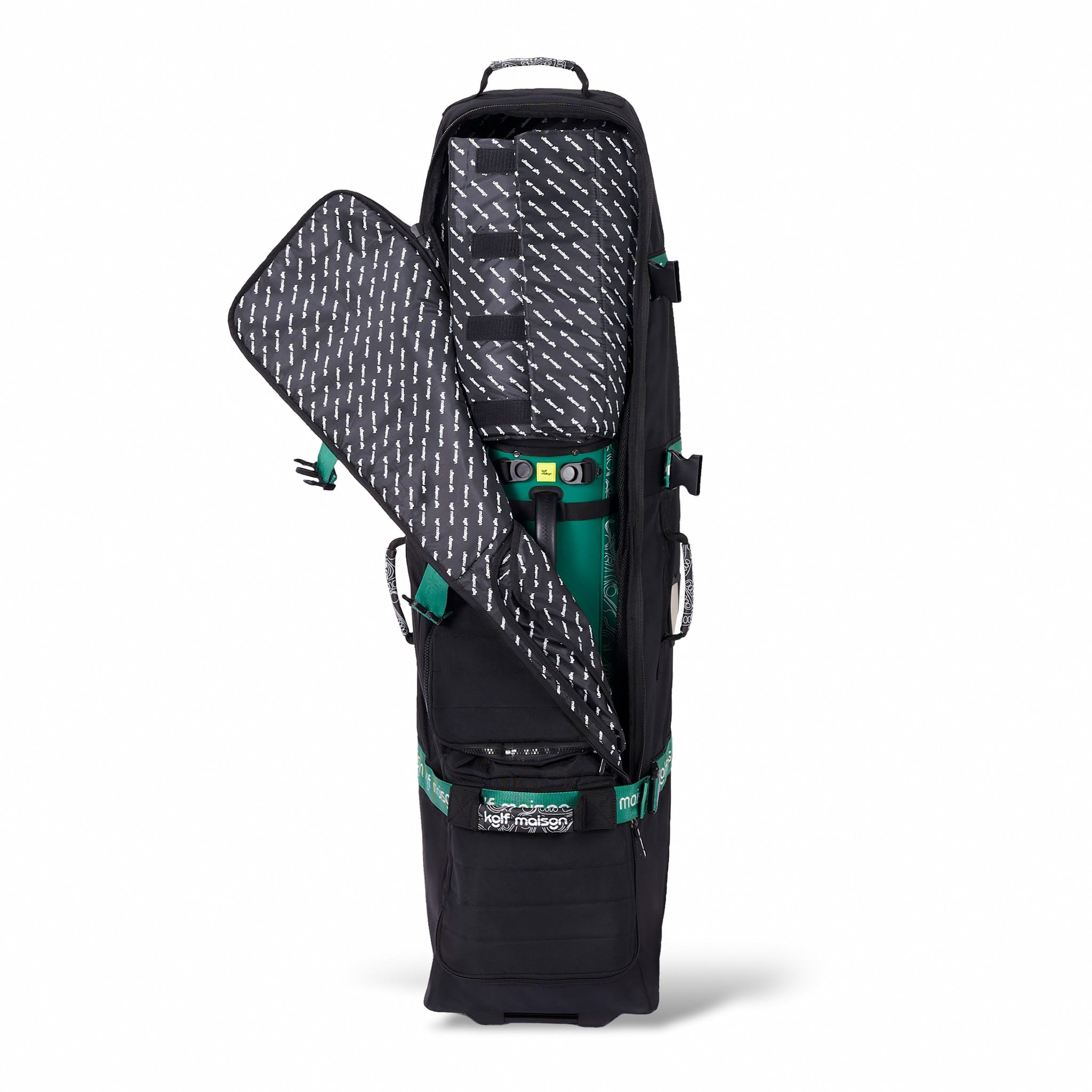
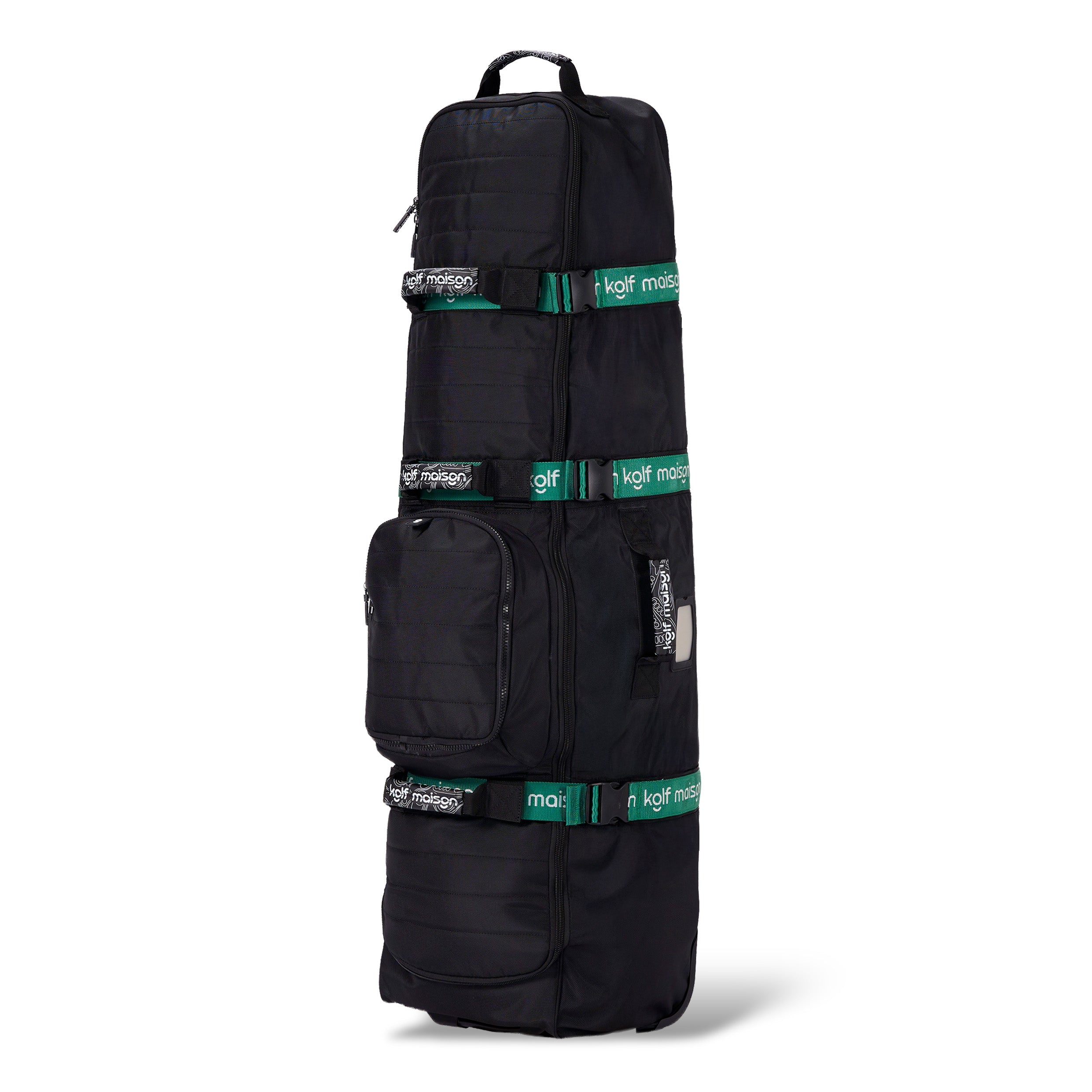
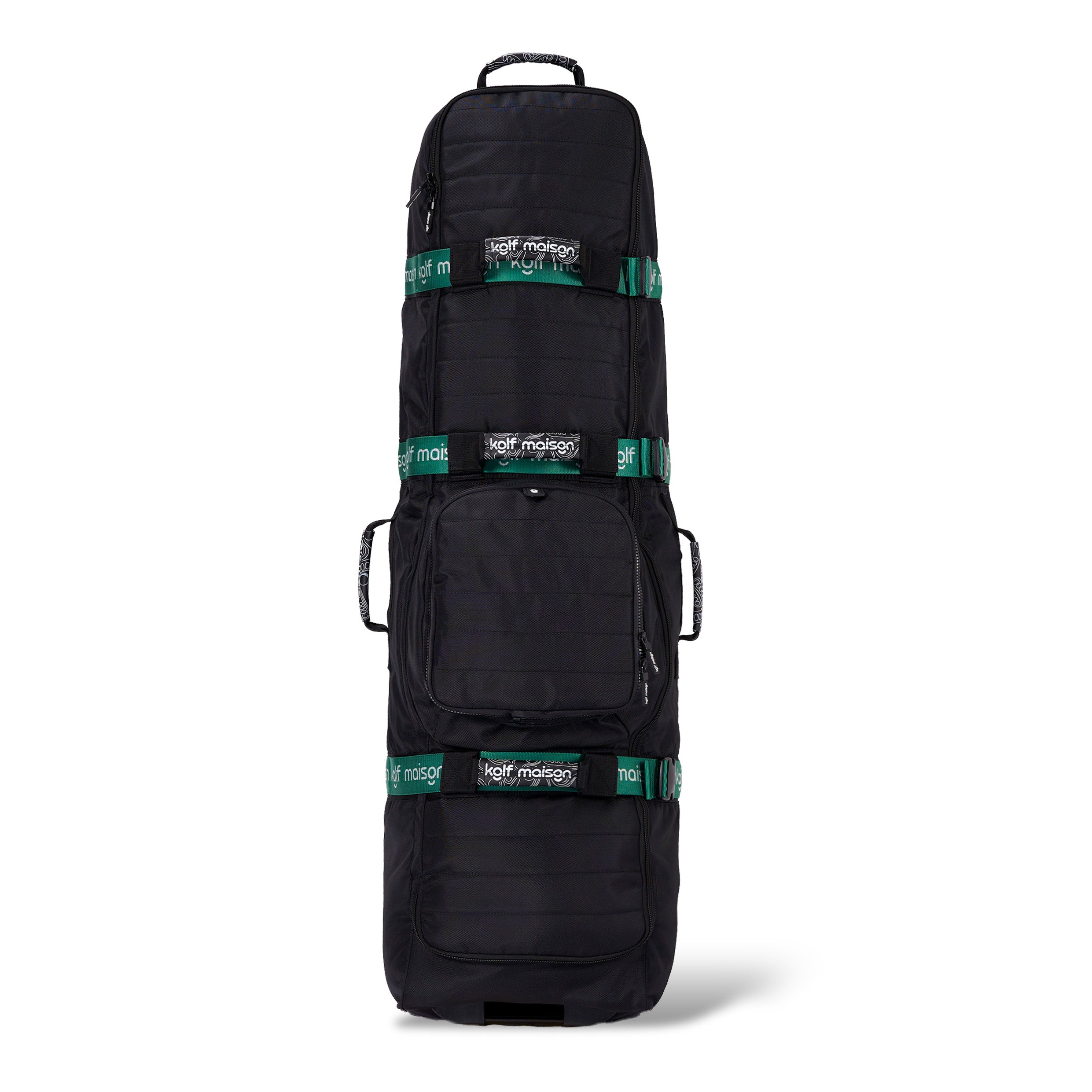
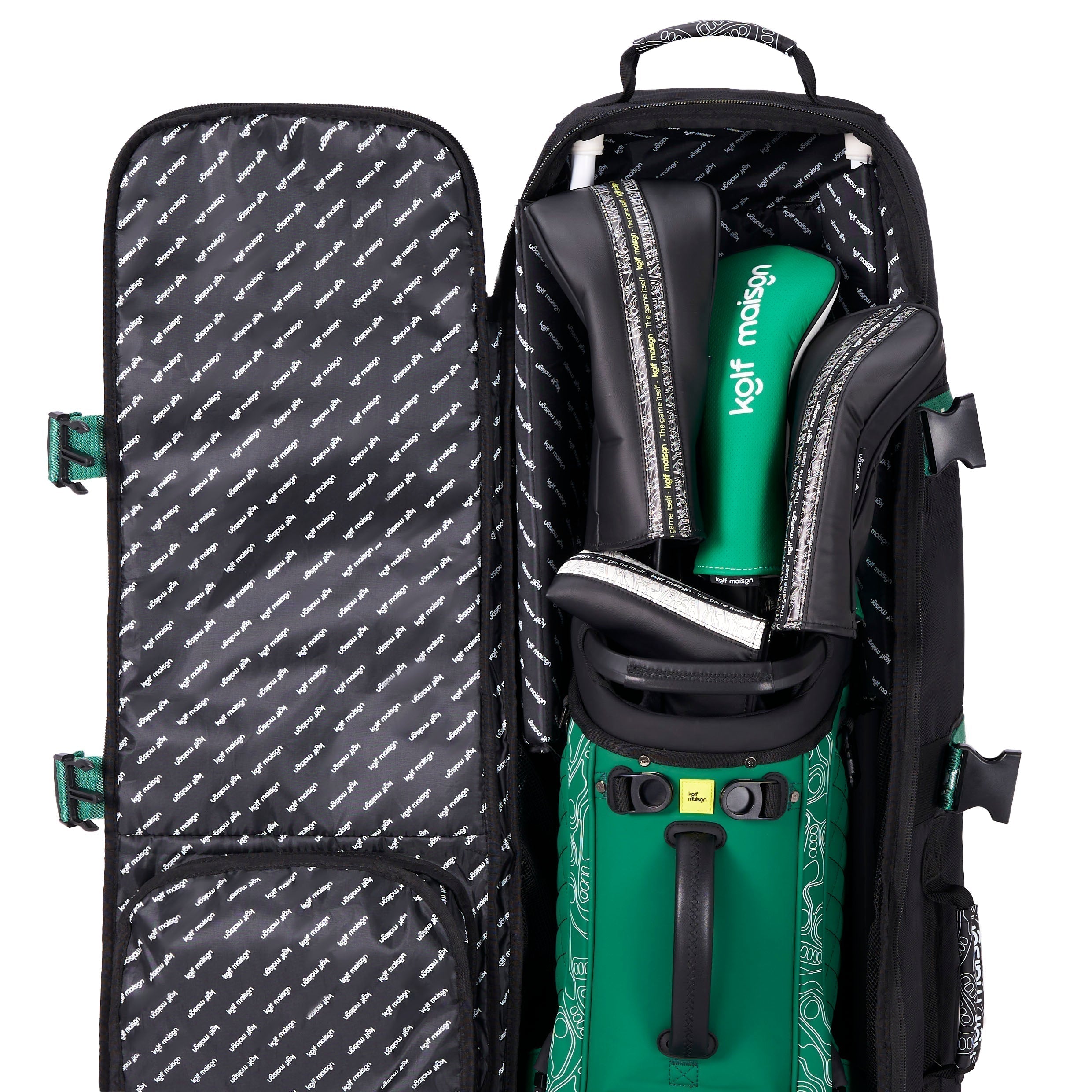
For golfers who also travel with their clubs, the Aura Travel Bag extends the same organizational discipline to the transit phase — every club protected, everything in its place from cart to baggage claim. The full Paganica review covers how owners describe the pocket architecture in real-round use, consistently returning to the same theme: everything has a place, and every place makes sense.
Editorial resources like MyGolfSpy, Plugged In Golf, and Independent Golf Reviews all evaluate pocket architecture in their bag reviews — worth consulting before any purchase to understand how a bag's organization system performs under real course conditions rather than in a product photo.
A Bag Designed So Organization Is Not Optional
Magnetic pockets. Velvet-lined valuables zone. Oversized putter well. Dual bottle holders. Dedicated rangefinder space. The Paganica Stand Bag gives every item a home — designed in, not improvised.
Explore the Paganica Stand Bag →Frequently Asked Questions
Where should the driver go in a golf bag?
The driver belongs in the back row of the bag top — the row closest to the carrying straps when the bag is worn on the back. This positions the longest, heaviest club closest to the body's center of gravity during a walking carry, which reduces shoulder strain and prevents the bag from swinging away during movement. In a 14-way top, the driver ideally has its own dedicated slot to prevent the head cover from making contact with adjacent shafts.
Should wedges be separated from irons in a golf bag?
Yes. Wedges — particularly high-bounce models with sharp leading edges — should be grouped together at the front of the bag top, separate from the iron set. When wedges share slots with mid-irons, the leading edges make contact with iron faces and grooves during movement, causing surface scratches and groove wear over a season. A 14-way top isolates every club individually; a 7-way top should still group wedges separately from irons in dedicated front-facing slots.
How should I organize the pockets in a golf bag?
Assign each pocket a permanent category and never change it. The valuables pocket — always soft-lined — holds only phone, keys, wallet, and watch. The rangefinder pocket holds only the rangefinder. The ball pocket holds spare balls and a backup glove. The tee and accessory pocket holds tees, ball markers, divot tool, and pencil. The large side pocket holds apparel and wet weather gear. Bottle holders hold bottles. The moment any pocket becomes a catch-all, the system breaks down and retrieval during play becomes a search.
Does bag organization actually affect performance on the course?
Yes, in measurable ways. Consistent organization eliminates the cognitive interruption of searching for the right club or the right pocket between shots. When retrieval is automatic, the player can stay mentally on the shot rather than the bag. Over 18 holes, dozens of micro-interruptions add up. Professional caddies and tour players treat bag organization as a performance variable rather than a housekeeping task — the same logic applies at every level of the game.
What is the difference between organizing a stand bag and a cart bag?
Stand bags are accessed from above while walking, so the organization priority is reaching down into the bag top smoothly. Cart bags are accessed from the side while the bag is mounted, so frequently used clubs should be positioned on the outward-facing side of the top and pockets should be arranged for sideways access rather than top-down reach. Both bag types follow the longest-to-back, shortest-to-front club arrangement, but pocket priorities shift depending on whether access is from above or from the side.


Share:
How Long Do Golf Gloves Last? The Complete Answer
Titleist Golf Bags vs Kolf Maison: An Honest Comparison