



How to Pack a Golf Bag for a Trip
Golf travel is one of the pleasures of the game — destination rounds, club trips, international tournaments, and corporate golf days away from home. It is also one of the situations where a poorly prepared bag can turn an excellent trip into a frustrating one before you reach the first tee.
The good news: most travel damage to golf bags is preventable. It comes from a small number of consistently made mistakes — and correcting those mistakes takes no special equipment and very little extra time.
Before You Pack: The Pre-Trip Check
Two things to do before you start loading the bag. First, inspect the bag for any existing wear or weakness — specifically at zipper pulls, strap attachment points, and the stand mechanism legs. A minor issue at home becomes a significant problem after airline handling. Second, lay out everything you intend to pack and decide what goes in the bag and what goes in your carry-on or checked luggage separately.
This is also the moment to confirm that your rain hood is present and in good condition. The rain hood is your bag’s primary weather seal during ground handling — if it is missing or damaged, everything inside is exposed to rain, grit, and moisture at the airport apron.
Step 1: Remove Loose Accessories
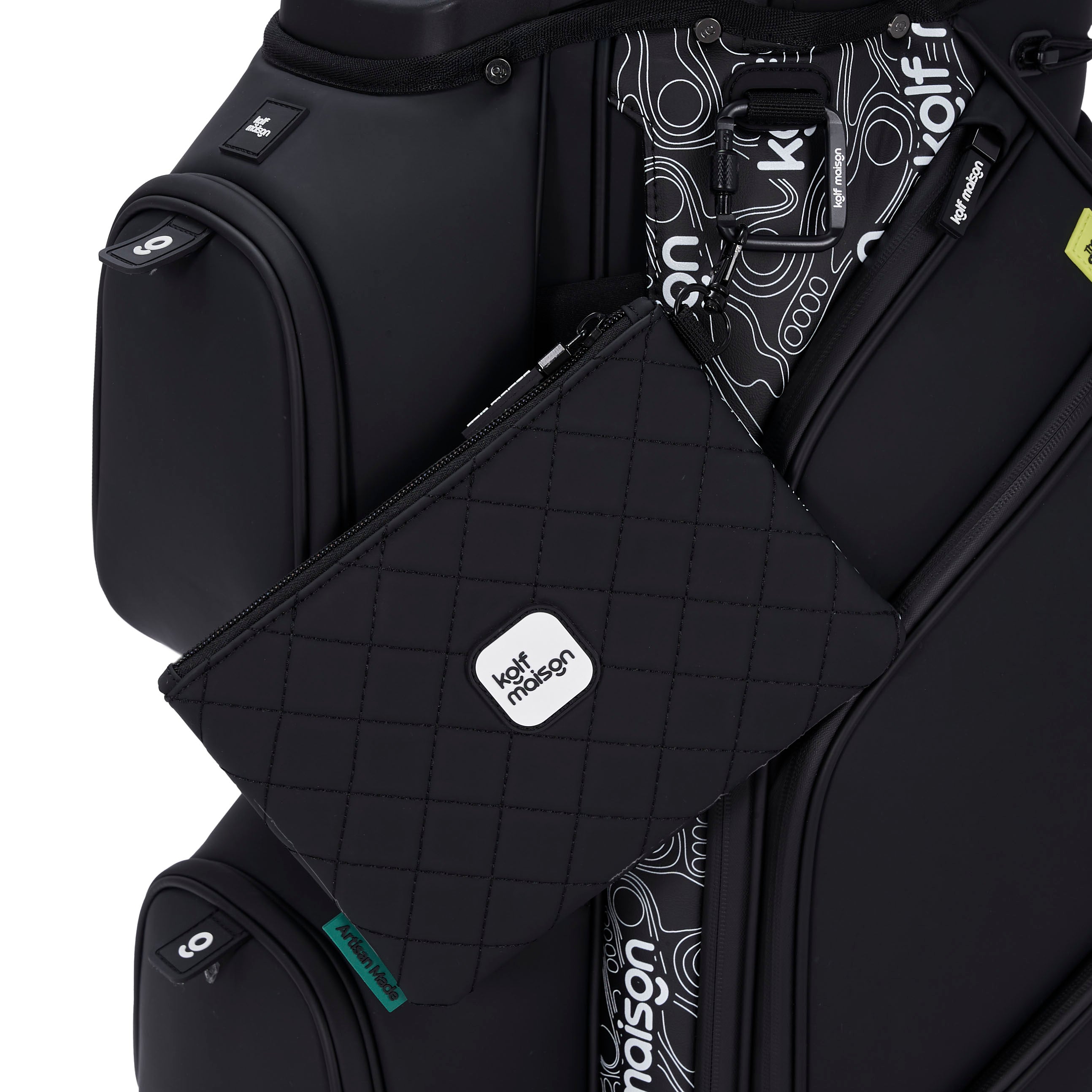
Everything in your bag’s pockets that is loose, fragile, or valuable should come out before travel. This includes your wallet, watch, phone, and anything in the valuables pouch. The Kolf Maison luxury valuables pouch is designed for on-course use — it is not an airline-grade security container, and it is not where valuable items should travel.
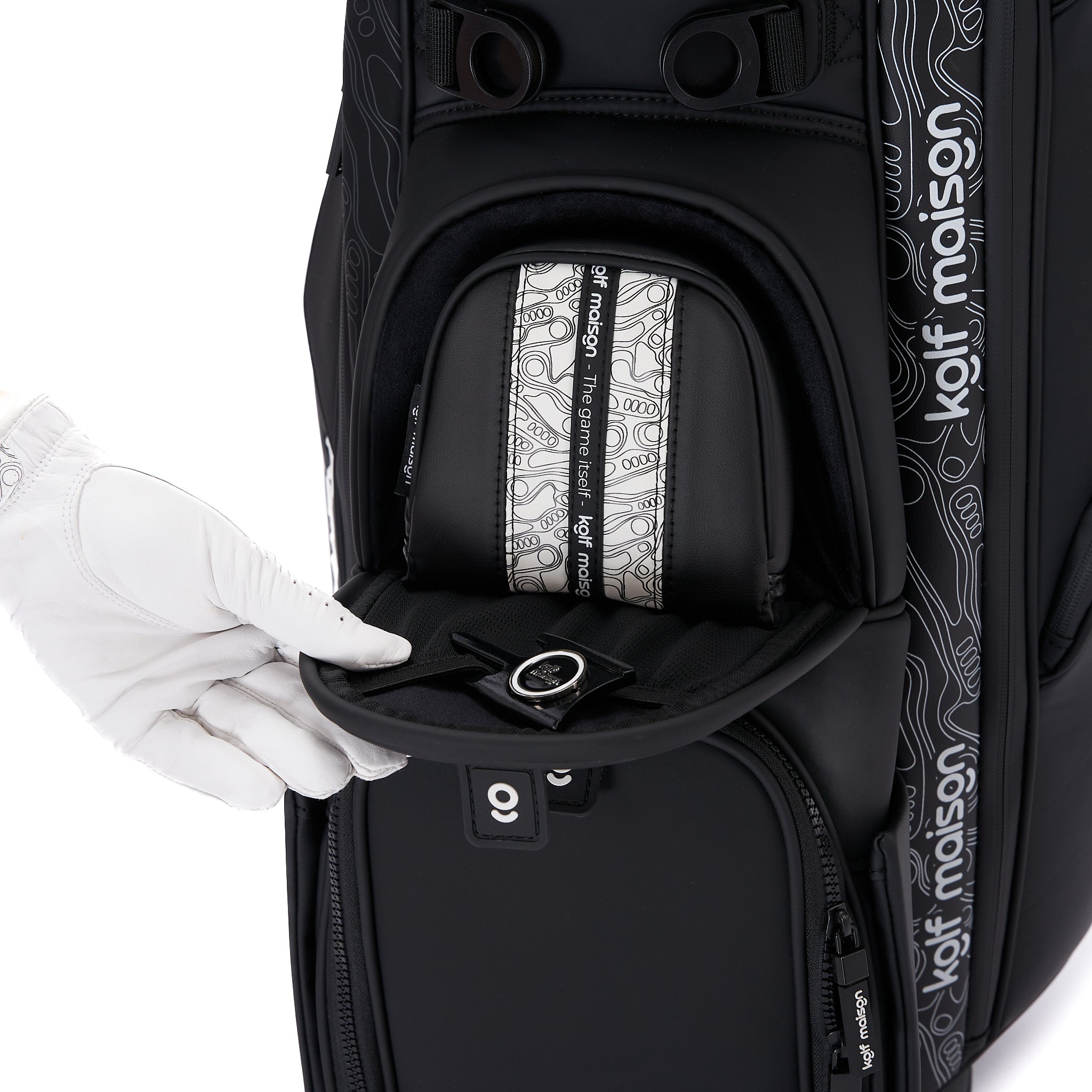
The divot tool, tees, ball markers, and other small items should also be removed from pockets and transferred to a small bag that travels in your hand luggage or main suitcase. Small loose objects in a checked golf bag move around during handling and can end up anywhere inside the bag or, if zippers fail, lost entirely.
Step 2: Protect the Club Heads
Club head damage during travel is almost entirely caused by impact inside the bag — not external impact to the bag. When a bag is handled roughly, clubs shift within the divider system and heads contact each other. The solution is to prevent that movement.
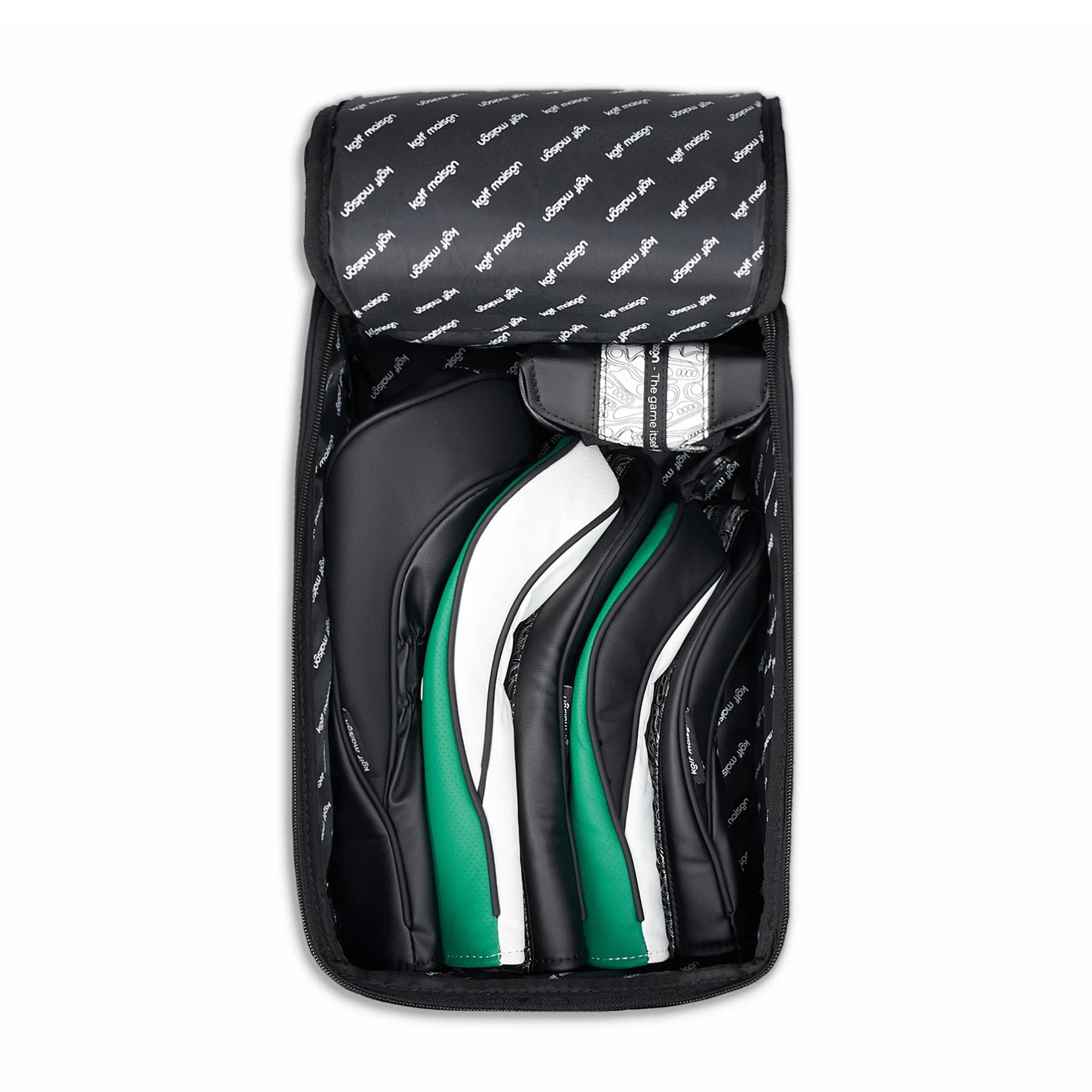
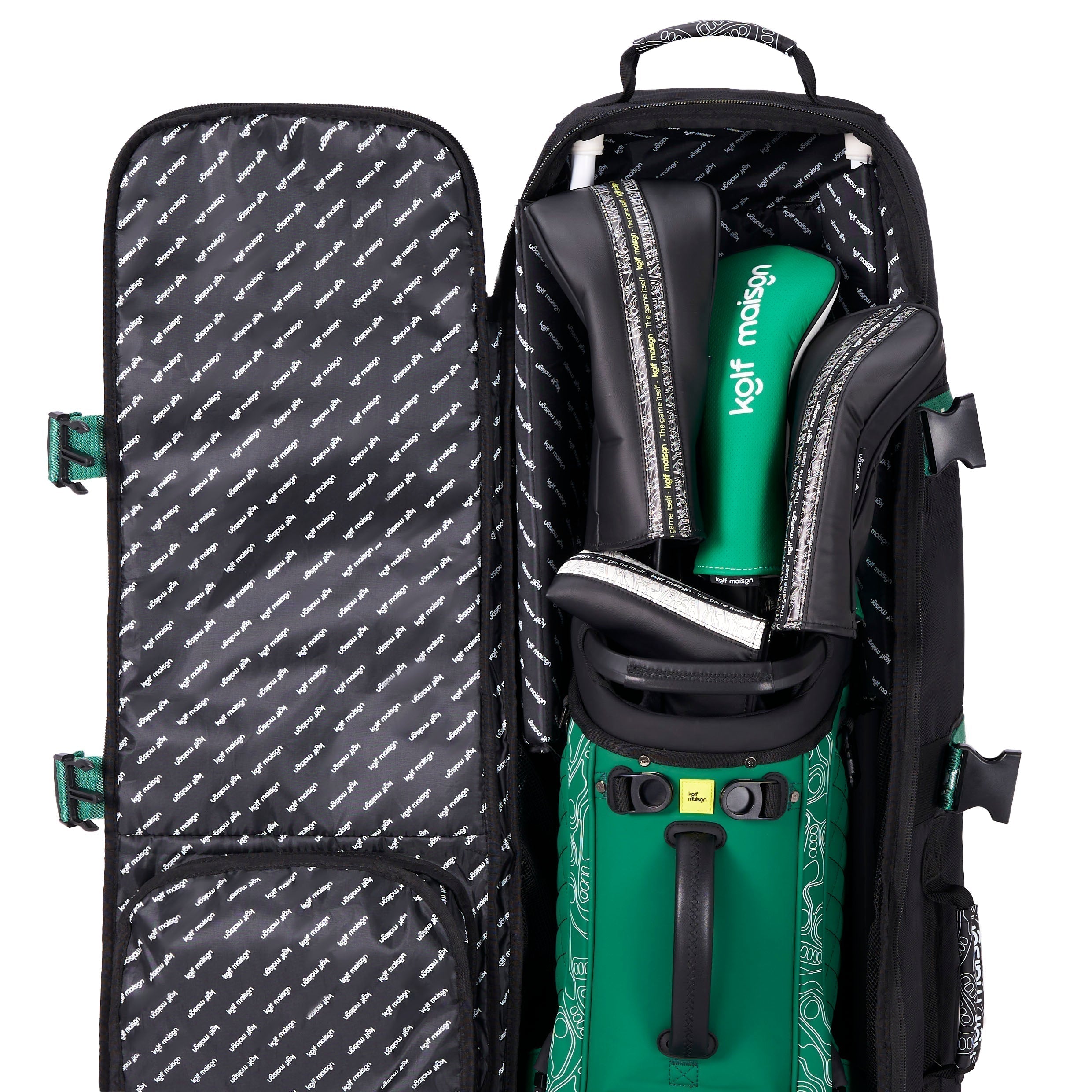
Options: purpose-made club protector rods (travel accessories that sit in the bag and extend above the club heads to protect against top impact), individual iron head covers, or — at minimum — towels rolled around the head section of each iron group to prevent metal-on-metal contact. The bag organisation guide covers the optimal divider layout for minimising internal movement.
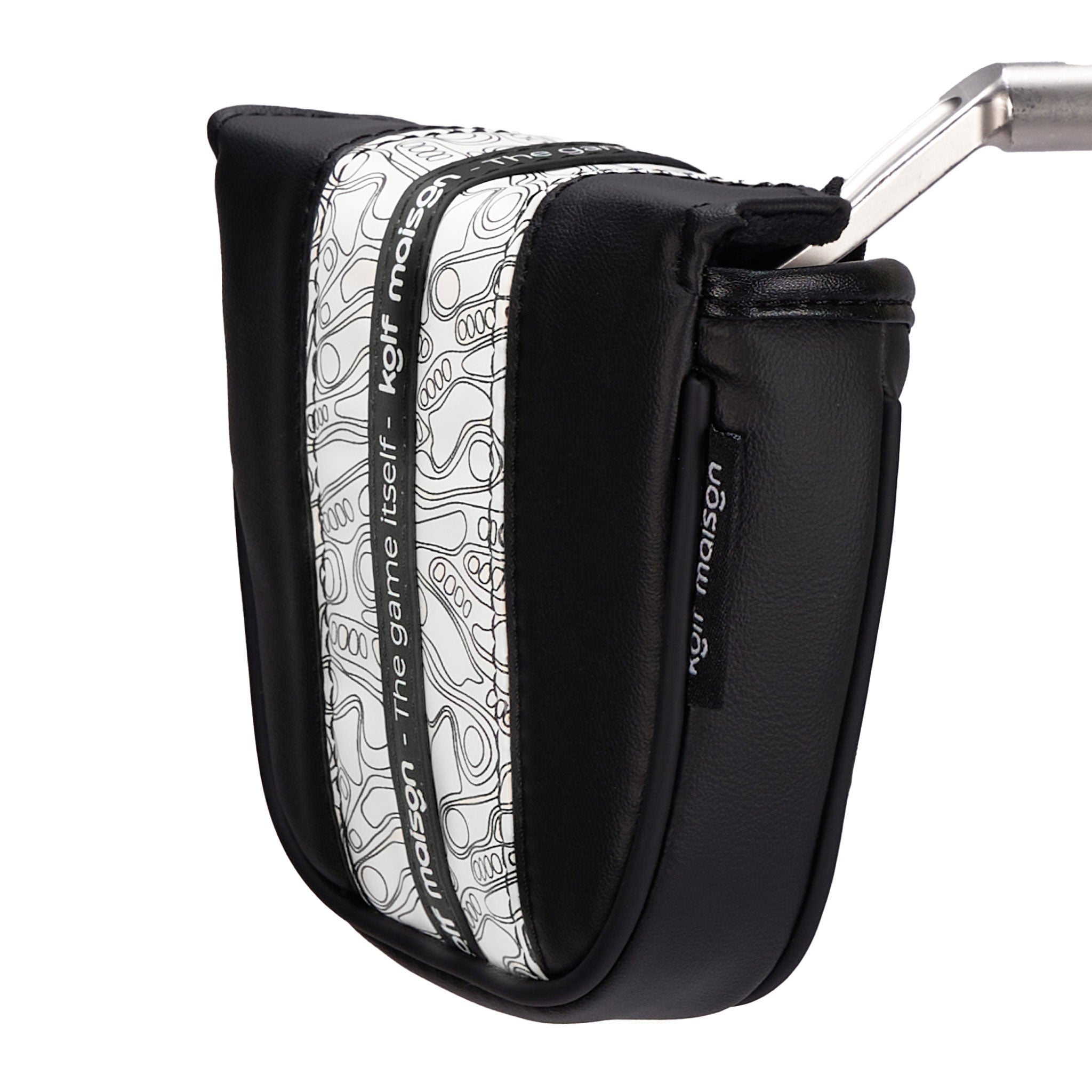
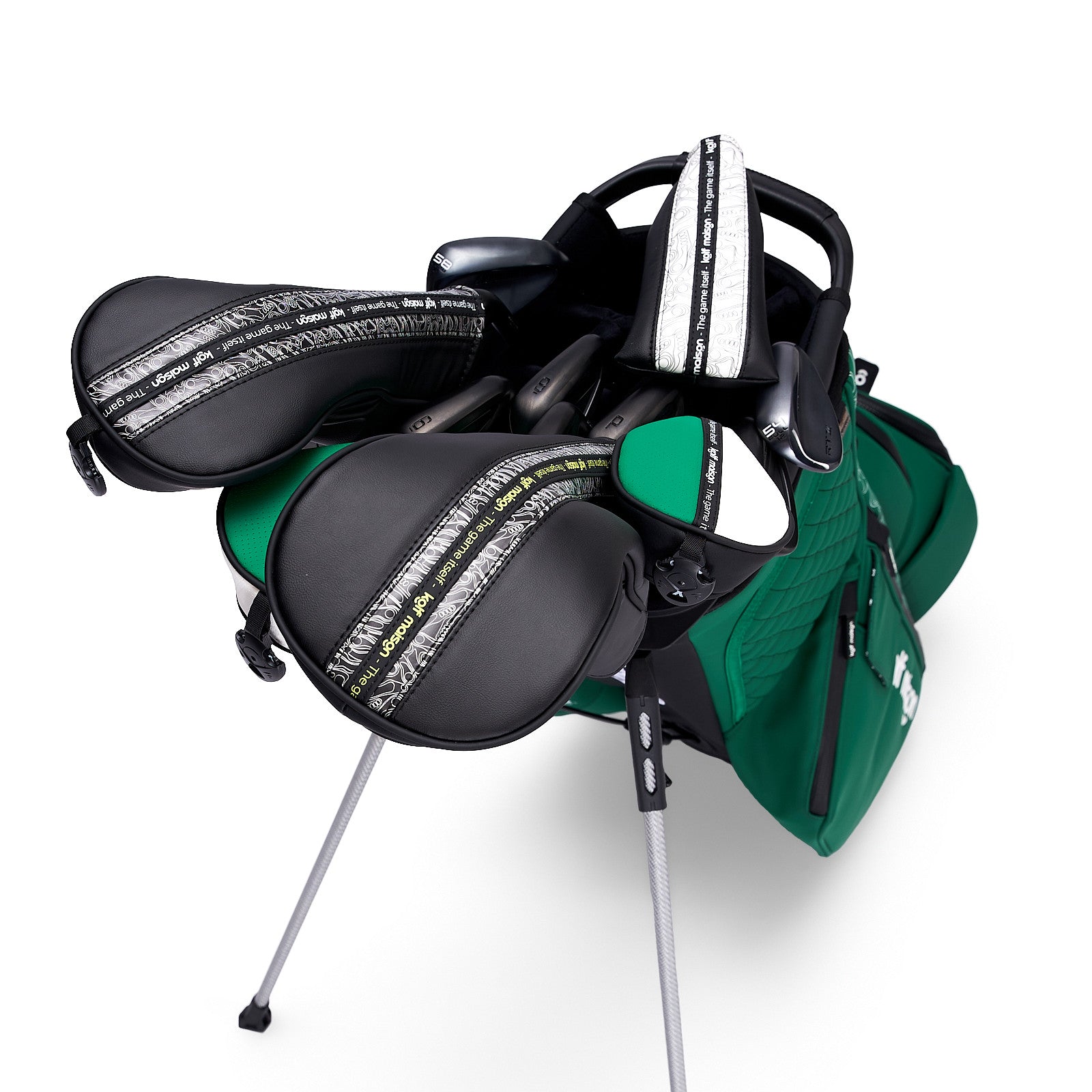
The putter deserves specific attention. Its head is often the most expensive individual piece in the bag. Use a dedicated putter cover (most putters come with one) and if your bag has a dedicated putter well, use it. Isolation from the rest of the clubs is the most effective putter protection available without additional accessories.
Step 3: Load the Bag in the Right Order
Weight distribution matters in transit just as much as it matters on the course. The correct loading order for travel:
| Position in Bag | What Goes Here | Why |
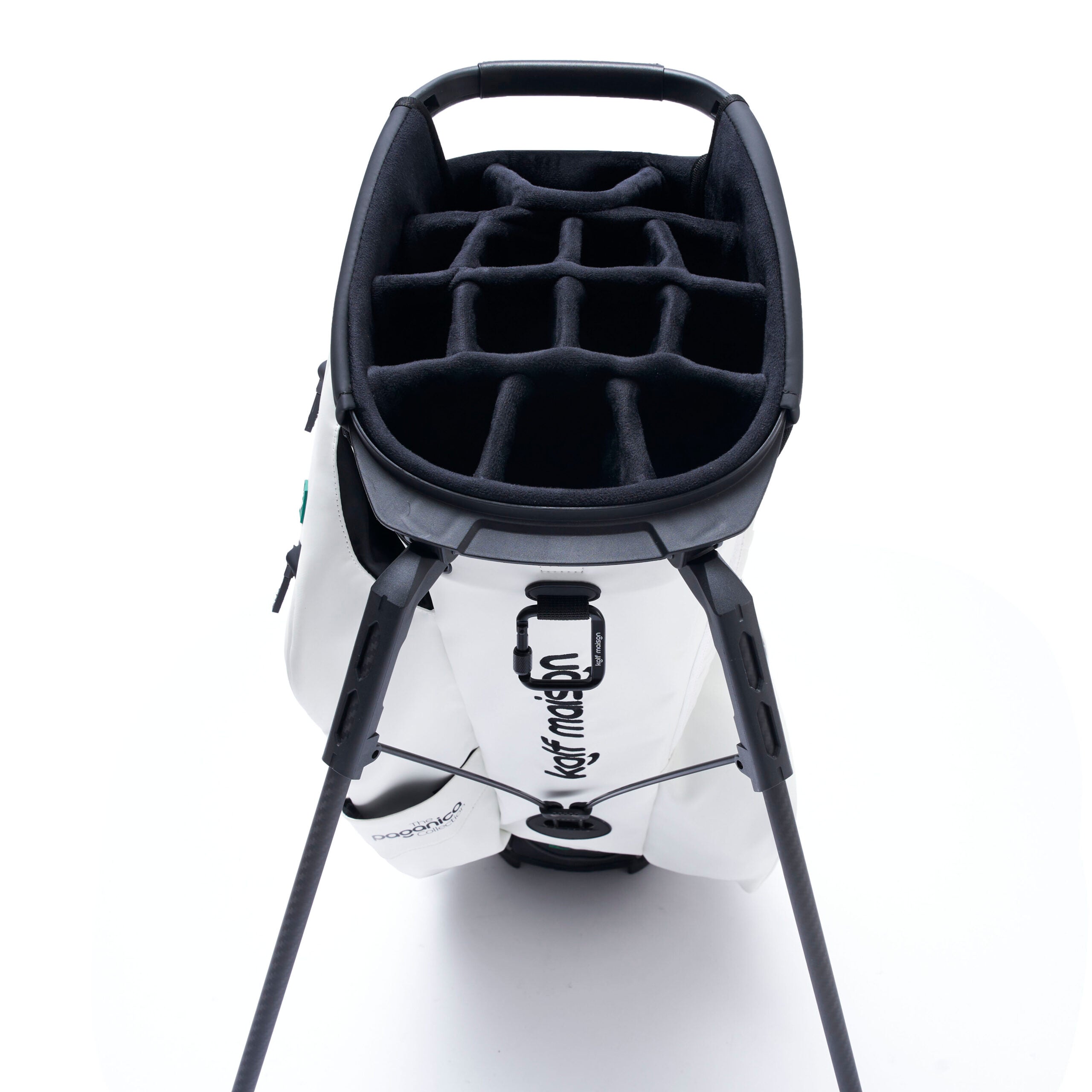
| Bottom of bag (lowest dividers) | Long irons, hybrids, fairway woods | Heaviest clubs at the base keeps centre of gravity low and reduces tip-over risk |
| Mid-section | Mid-irons, short irons, wedges | Graduated weight transition; shorter shafts sit in correct divider slots |
| Top / rear slot | Driver and woods, putter in dedicated well | Long shafts need top access; putter isolated from metalwork |
| Pocket (apparel pocket only) | A soft layer (towel, rain jacket) packed around shaft upper section | Reduces shaft movement at the point most exposed to external impact |
Step 4: Protect the Bag Body
The single most consistent source of cosmetic and structural damage to a premium bag during travel is contact with straps, cart handles, and luggage trolley rails. The abrasion happens slowly, invisibly, and relentlessly — until it isn’t invisible any more.
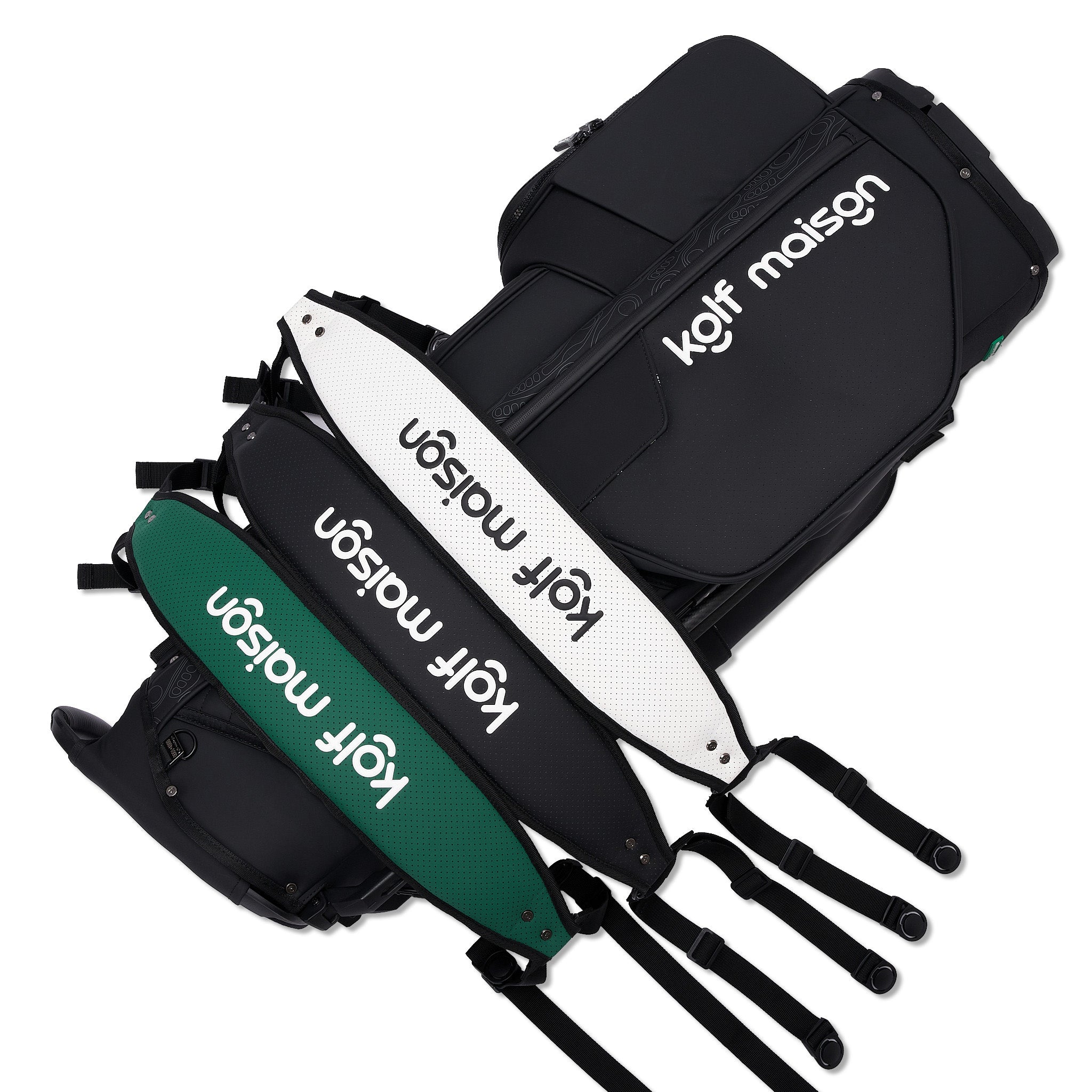
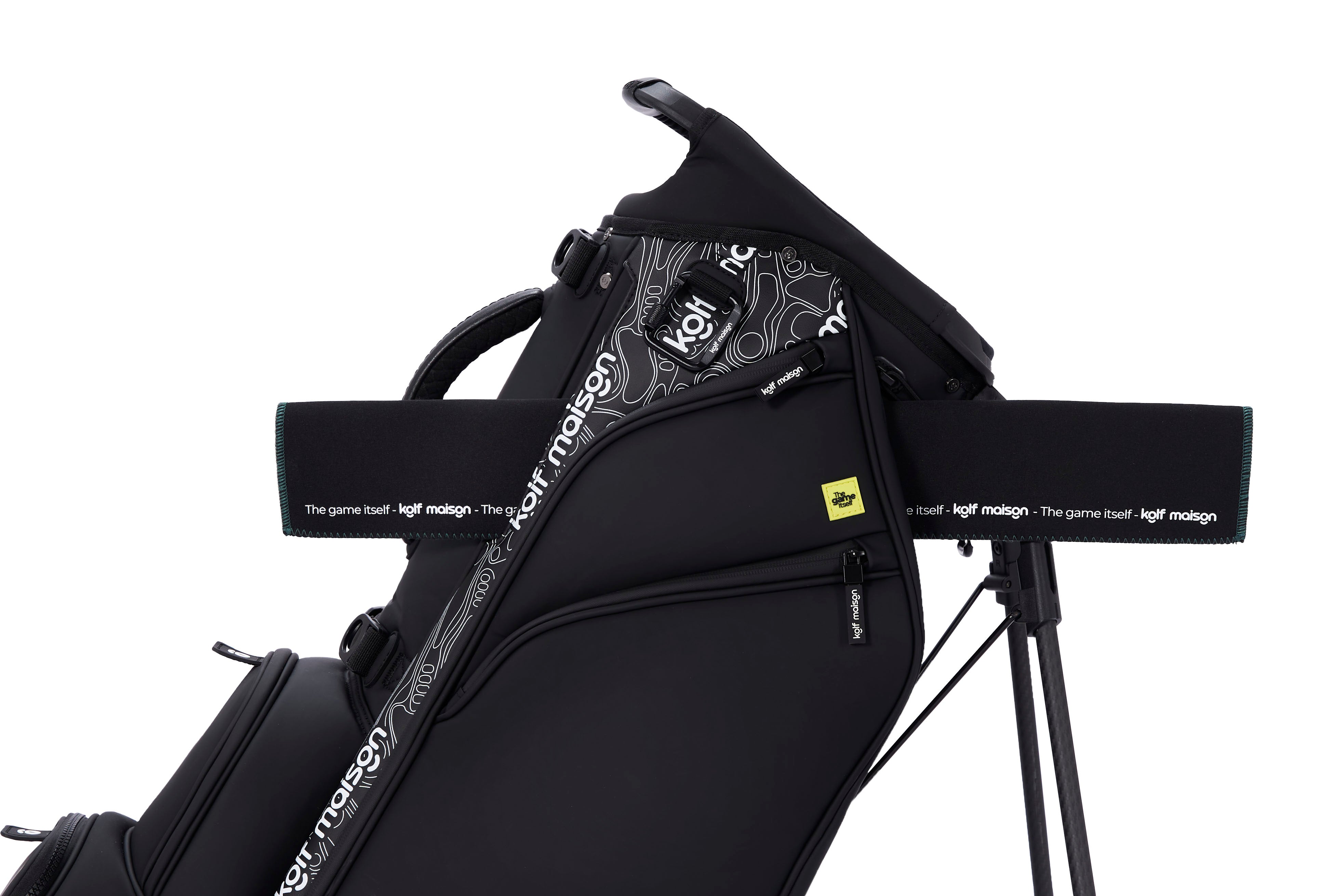
The Kolf Maison cart strap protection sleeve (included with every Paganica Stand Bag) exists specifically for this purpose. Fit it over the bag body at the point where strap or trolley contact is most likely before placing the bag in a travel case or trolley. This is a 30-second step that extends the cosmetic life of the bag by years.
Step 5: Fit the Rain Hood
The rain hood goes on before the bag goes in any travel case or vehicle. It serves two purposes in transit: it keeps weather out if the bag is exposed to rain at any point during ground handling, and it keeps grit, debris, and airport apron contamination out of the club sections and pockets.
Make sure the hood is fitted securely at all openings — any loose section becomes a scoop for airborne debris in baggage handling environments. The Kolf Maison matching rain hood is designed for full coverage of the club section and provides a secure perimeter seal when properly fitted.
The Five-Minute Travel Protocol
1. Remove all valuables and loose items. 2. Protect club heads individually. 3. Load in weight order (heavy at base). 4. Fit the cart strap sleeve. 5. Secure the rain hood. 6. Photograph the full setup. Done in five minutes — and your bag arrives ready to play.
Step 6: Document Before You Check In
Photograph your bag before it goes into a travel case and before you hand it to airline check-in. A time-stamped photo of the bag in good condition is your evidence if it arrives damaged. Without it, any claim against an airline is significantly more difficult to pursue.
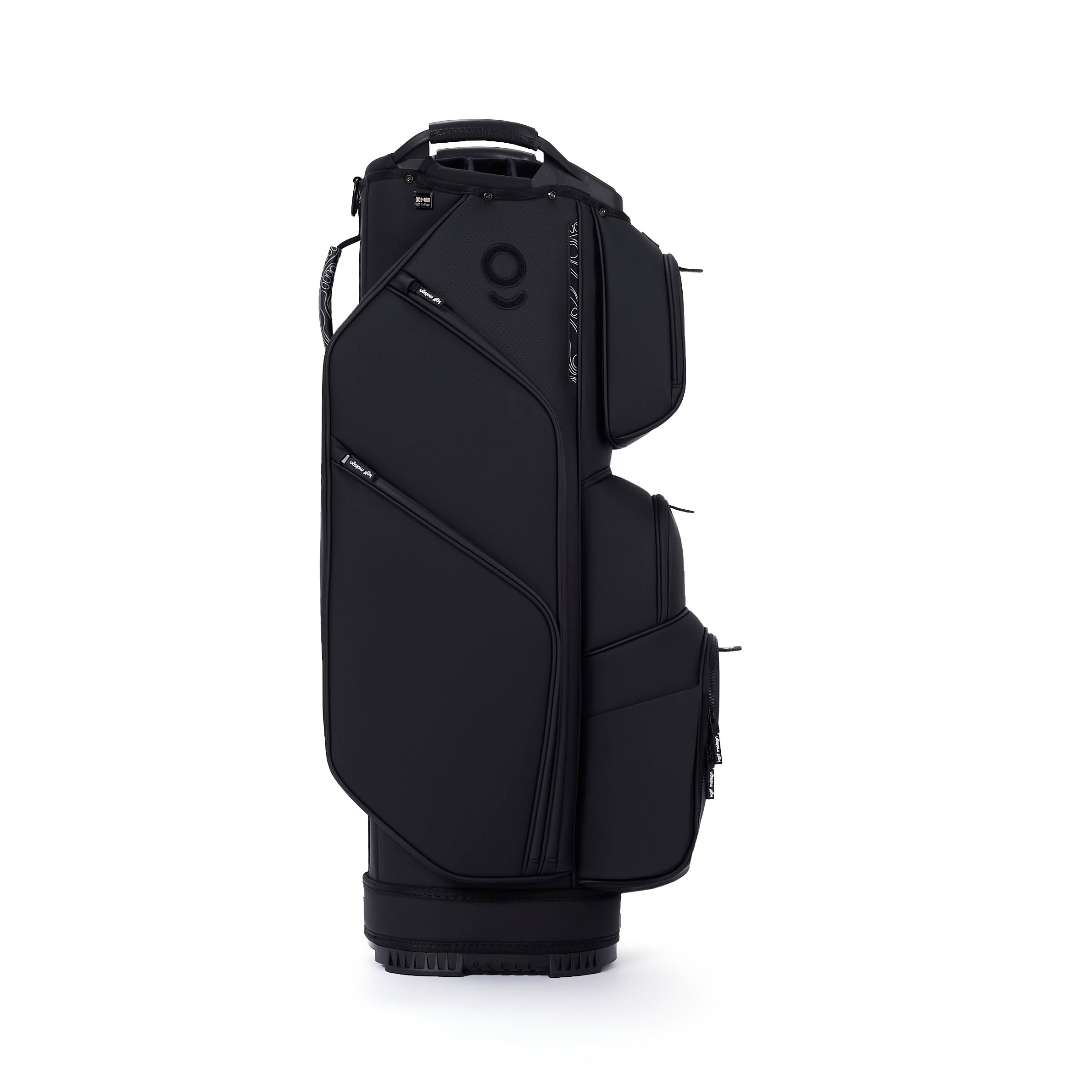
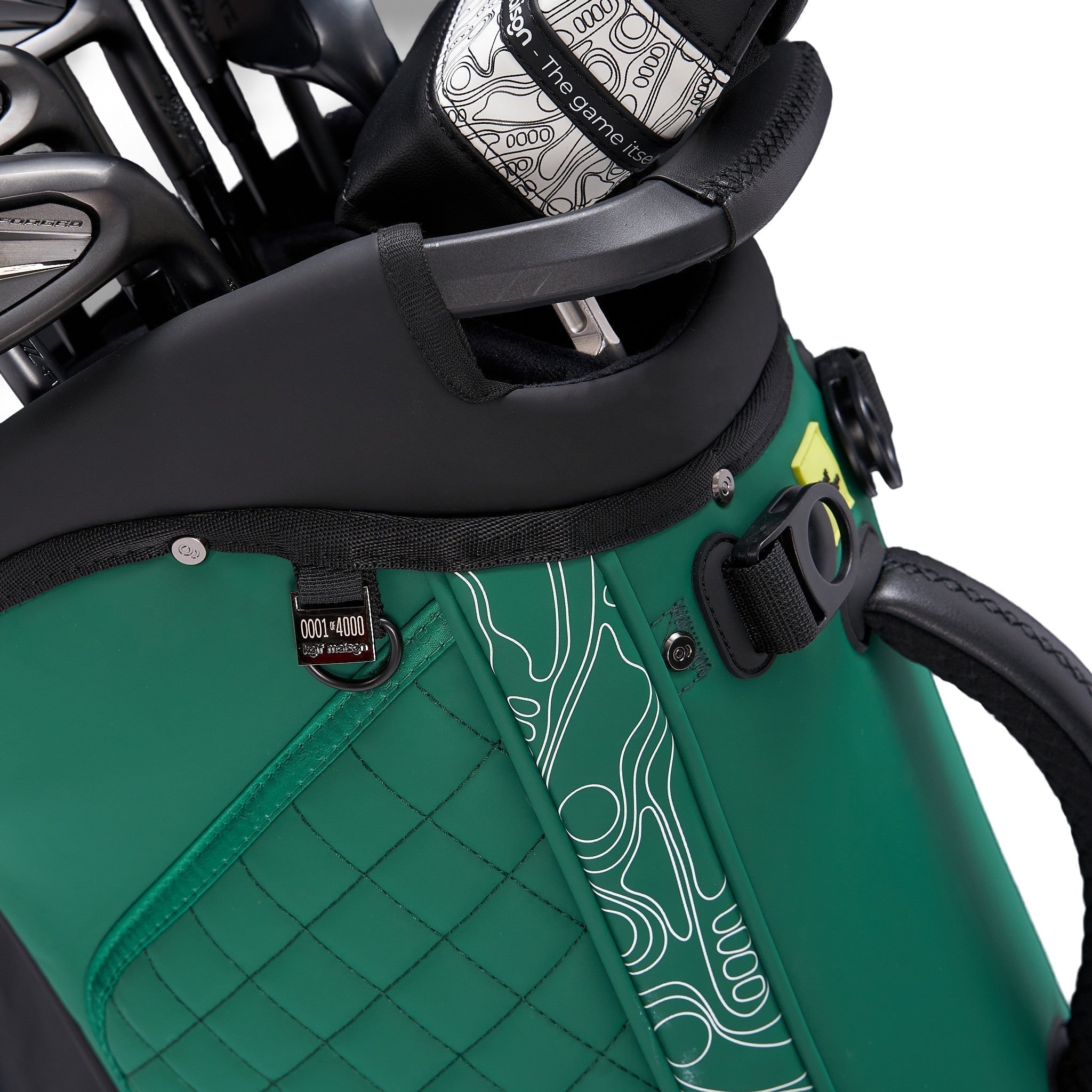
For a serial-numbered bag like the Kolf Maison Paganica, note the serial number in your pre-travel photo if it is visible. This adds provenance documentation to your travel record — useful if the bag is ever lost or significantly damaged in transit.
Air Travel vs. Road Travel: Key Differences
| Factor | Air Travel | Road / Car Travel |
| Primary risk | Impact from rough baggage handling, stackage under other luggage | Movement in boot, abrasion against boot sides |
| Best practice | Hard-shell travel case or padded soft travel bag; club protector rods | Lay bag flat if space allows, or brace it vertically against boot wall with luggage |
| Rain hood needed? | Always — apron handling exposes bag to weather | Recommended if loading in any rain or from a wet ground surface |
| Cart sleeve needed? | Yes — travel case straps create same abrasion as cart straps | Useful against boot floor abrasion |
Arriving at Your Destination
When the bag arrives, inspect it before leaving the baggage claim area. Check zippers, the stand mechanism, strap attachment points, and the outer fabric. If there is damage, report it immediately — most airlines require damage to be reported before you leave the airport for a claim to be valid.
Remove the rain hood, reorganise the clubs per your standard setup (the organisation guide has the full protocol), and return loose accessories from your hand luggage. You should be ready to walk to the first tee within five minutes of arriving at the course.
For golfers who travel to corporate golf days or client entertainment events, the executive golfer’s complete bag setup covers the full picture of arriving presentably and professionally at high-stakes golf events away from home.
Built for the Golfer Who Travels
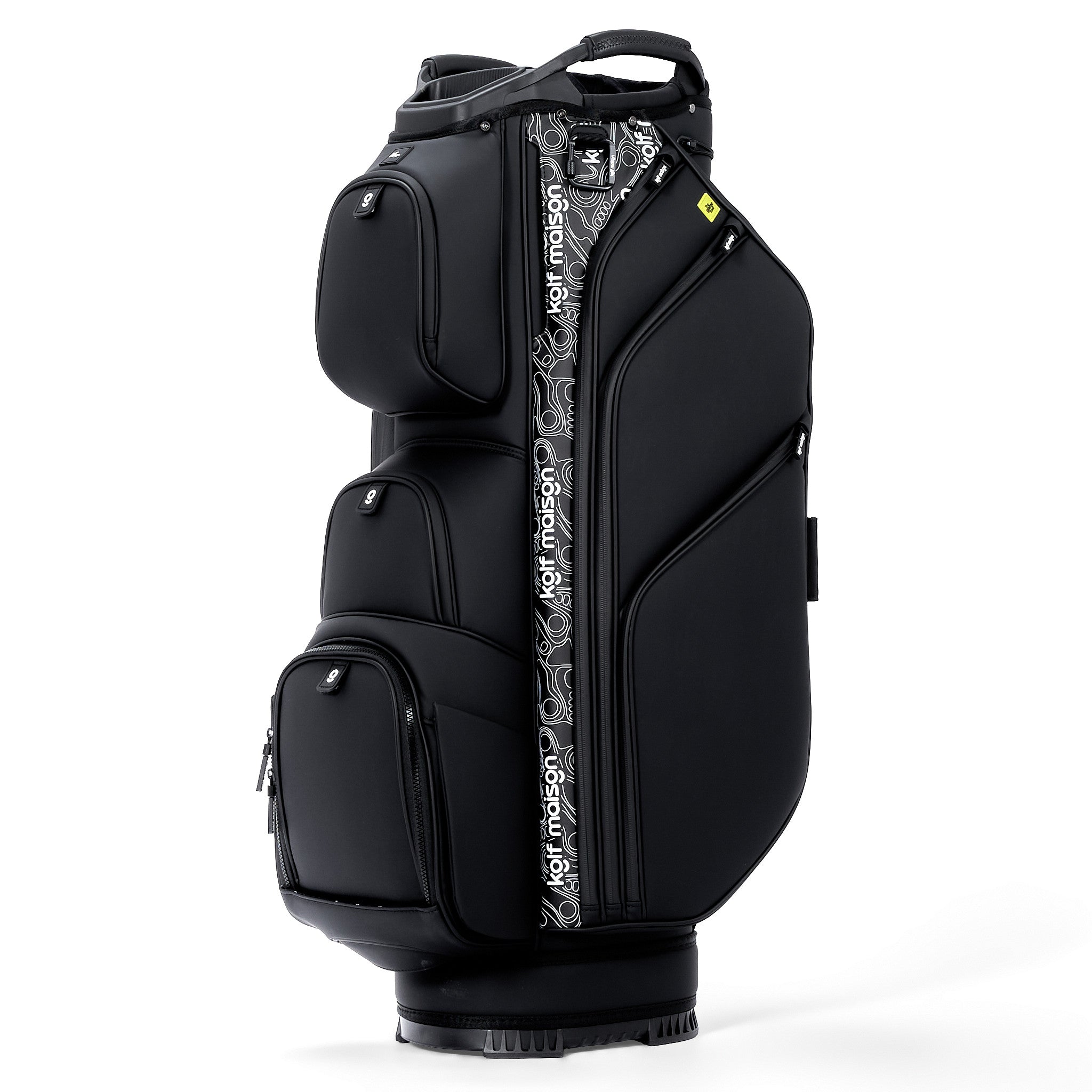
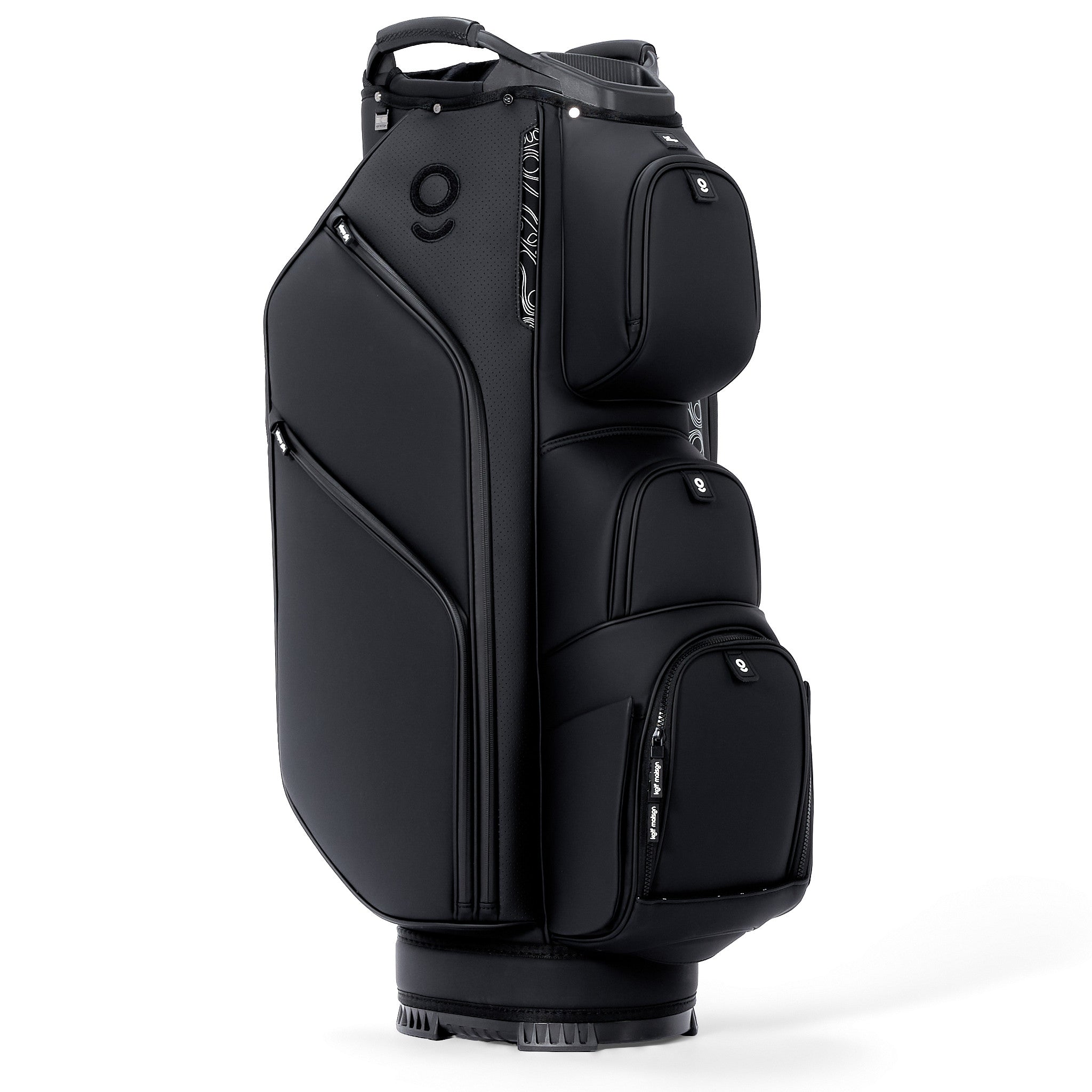
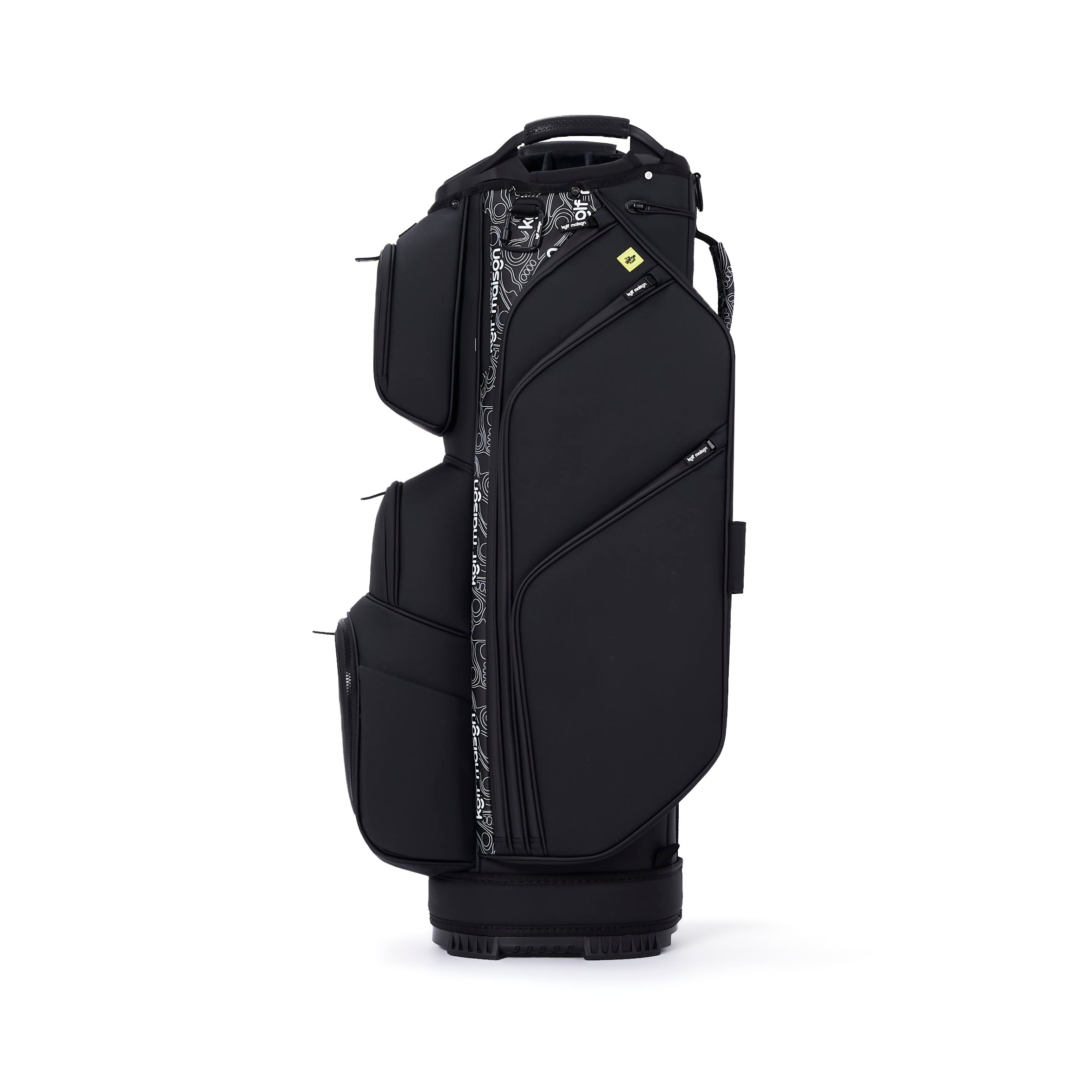
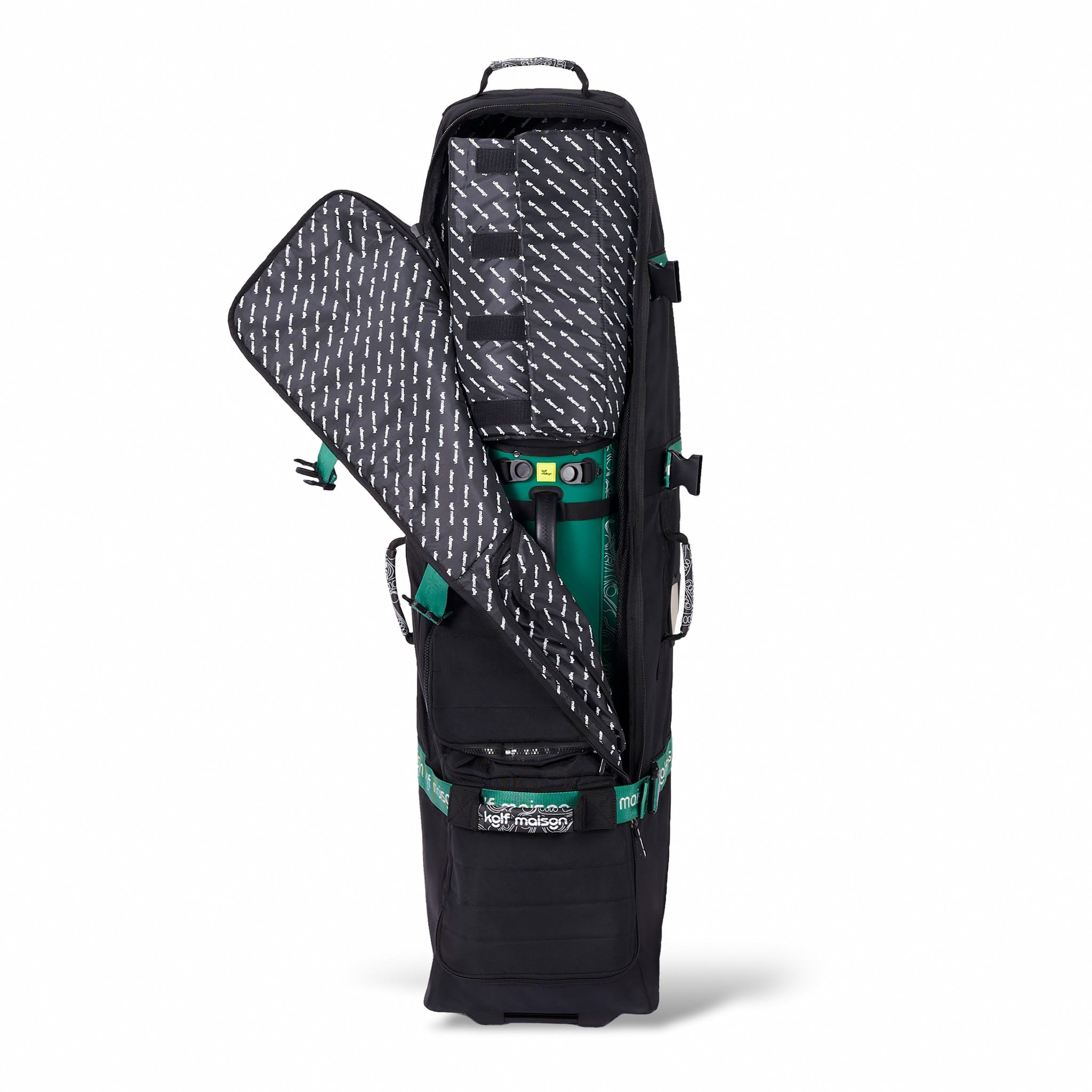
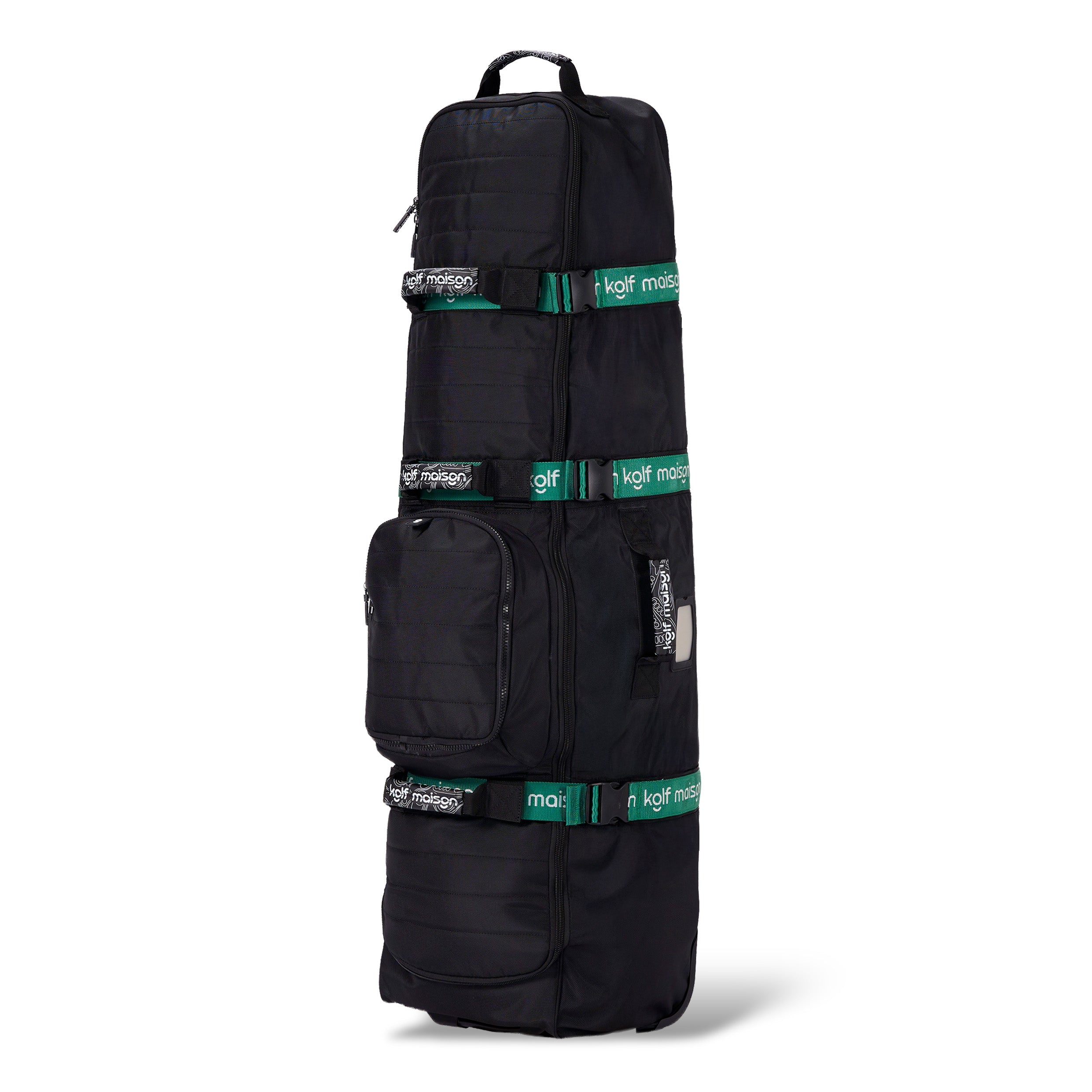
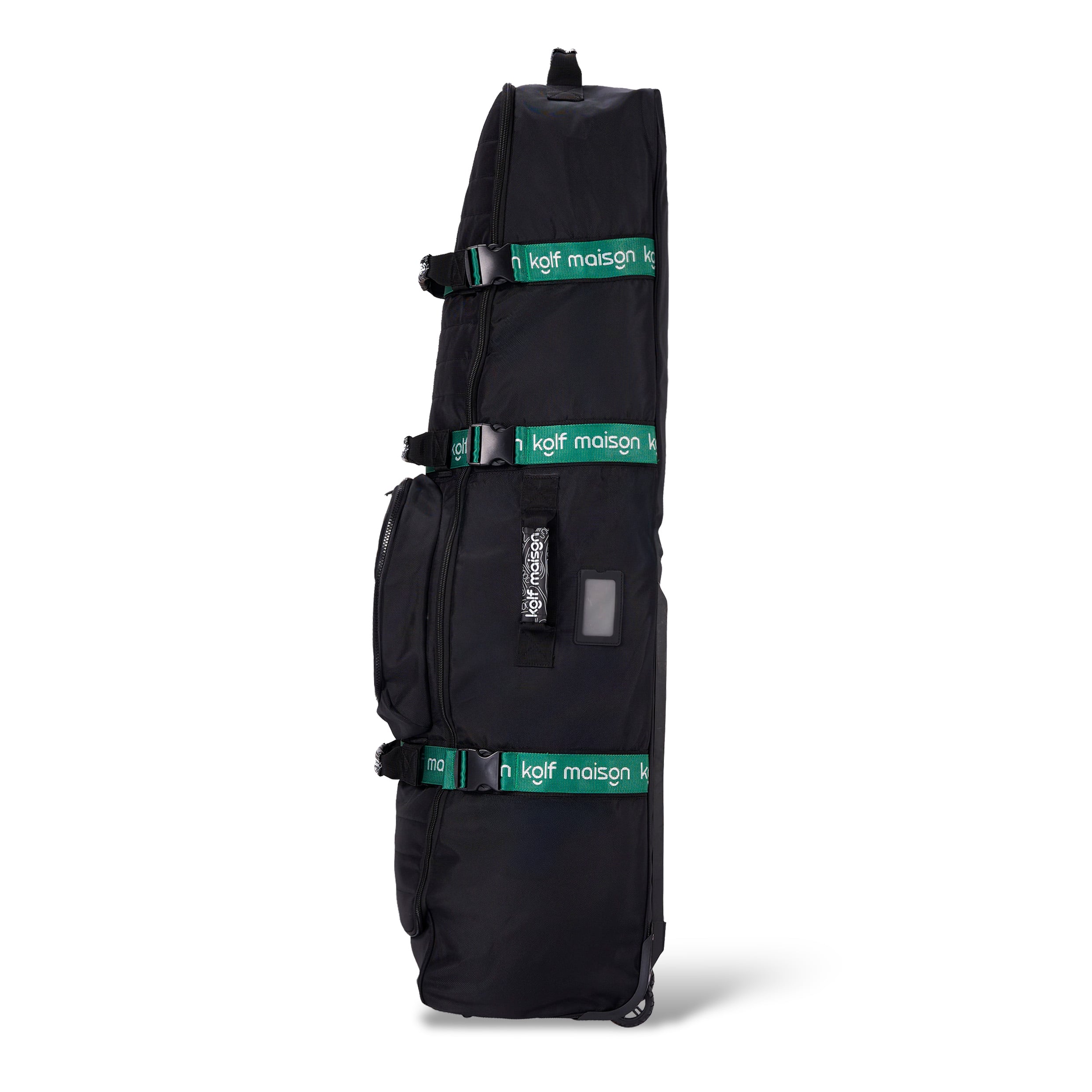
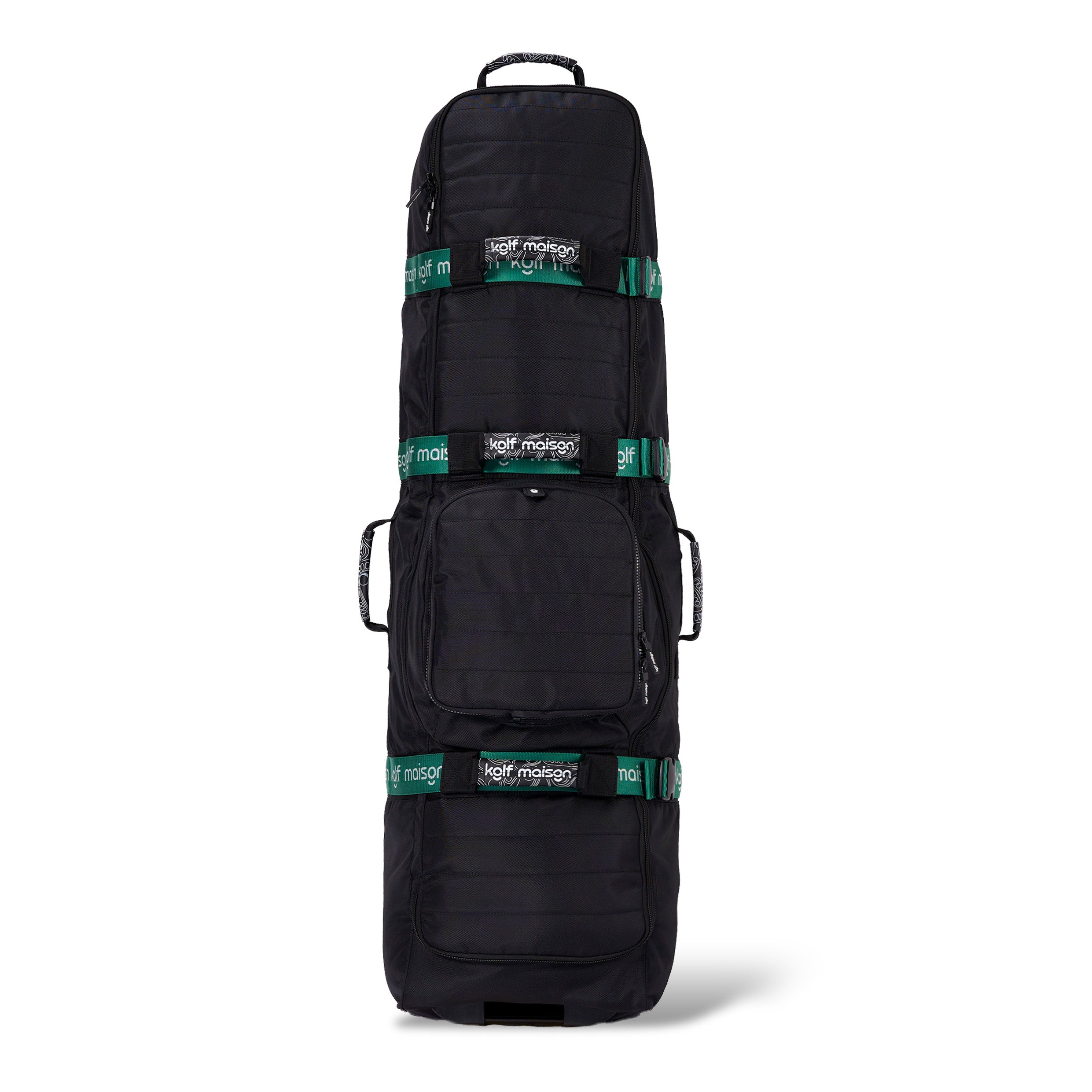
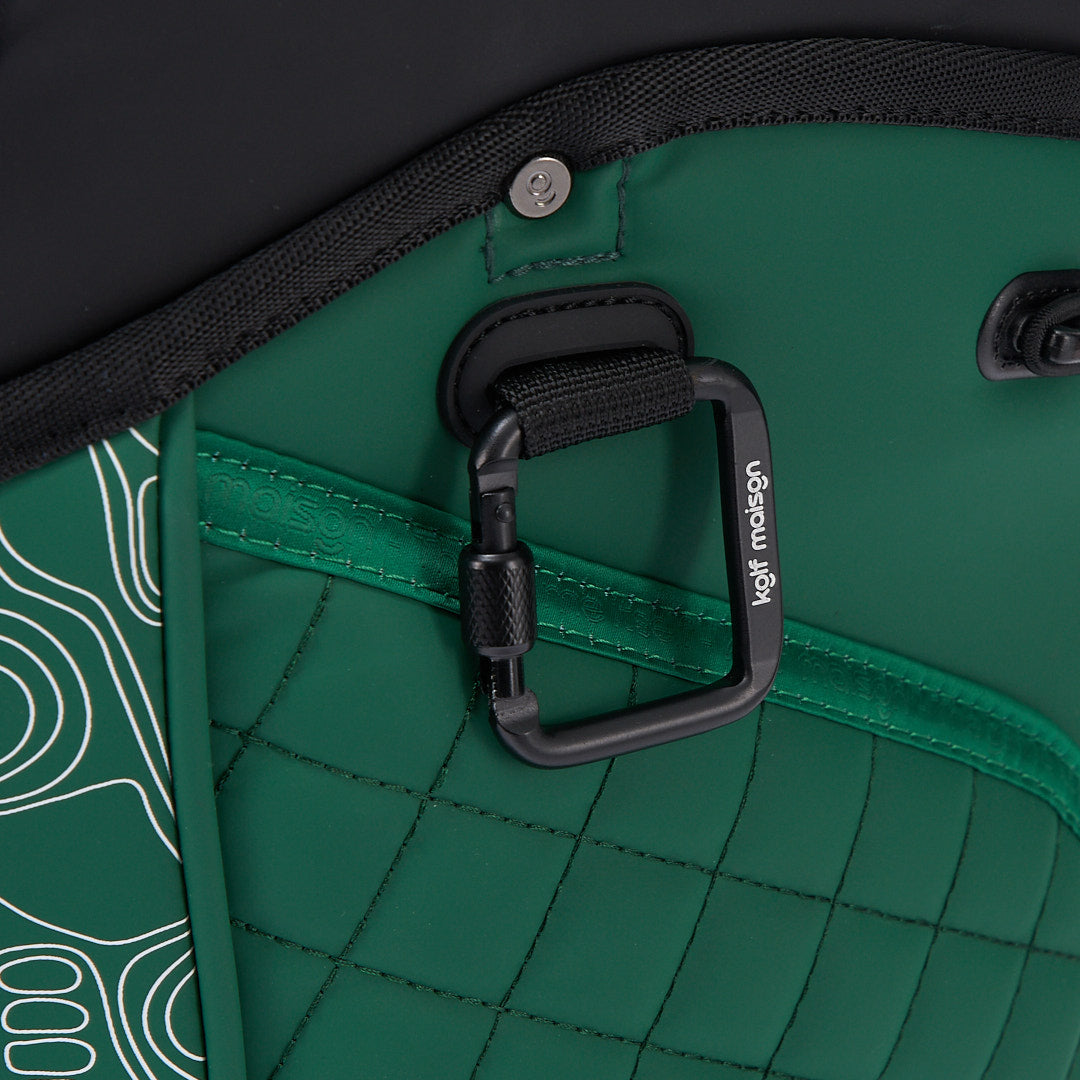
The Kolf Maison Paganica includes a cart strap sleeve and matching rain hood — the two accessories most critical for protecting a premium bag in transit. Serial numbered. Limited to 4,000 per year. Rated 4.98/5 by 81 verified buyers.
View the Paganica Stand Bag →Frequently Asked Questions
Can I check a golf bag as regular luggage on a flight?
Yes, but golf bags are typically treated as oversized or sporting equipment and charged accordingly. Most airlines allow one golf bag as checked sports equipment. Check the specific airline’s policy before travel, including weight limits and any restrictions on club count or bag dimensions.
Do I need a hard-shell travel case for my golf bag?
For regular air travel with a premium bag, a hard-shell case provides significantly better protection than a soft travel bag. The additional cost of the case is worth it once you consider the replacement cost of a damaged premium stand bag. If you travel infrequently, a well-padded soft travel bag with a club protector system is a reasonable compromise.
What is the most common cause of golf bag damage in travel?
Club head impact inside the bag — caused by clubs shifting and contacting each other during handling. This is almost entirely preventable with individual iron covers or a club protector rod system, combined with correct loading order (heavy clubs at the base).
Should I leave balls and tees in the bag when flying?
Golf balls can remain in the bag. Tees and small loose items should be transferred to a zip bag inside your luggage — they can find their way through zipper gaps in rough handling, and they contribute to minor internal abrasion over a long flight.
How do I protect a premium bag from strap abrasion during travel?
Use a cart strap protection sleeve over the bag body at the point of contact with any travel case strap or trolley rail. The Kolf Maison Paganica includes this sleeve as a standard accessory. It is a simple, lightweight solution to one of the most consistent sources of long-term cosmetic damage to premium bags in transit.


Share:
Golf Bag Material Encyclopedia: A Complete Reference Guide
Stitch Golf vs Kolf Maison: American Heritage Against Architectural Precision